
South Africa seeks to move from participant to contributor in global electron microscopy
South Africa is strengthening its capacity to contribute to global scientific research through investment in advanced research infrastructure, specialised skills and partnerships. The Centre for High Resolution Transmission Electron Microscopy (CHRTEM) at Nelson Mandela University (NMU) is an example of this progress, marking 15 years of supporting research, training and scientific advancement.
The Director-General of the Department of Science, Technology and Innovation (DSTI), Dr Mlungisi Cele, addressed participants of the International Scientific Workshop on Recent Advances and Future Prospects in the Applications of Aberration-Corrected Transmission Electron Microscopy, hosted at NMU in Gqeberha on 12 and 13 October 2026.
"The centre has supported and trained more than 1 000 students and academics, contributing to the development of scientific talent. By providing access to advanced microscopy facilities for postgraduate researchers from diverse institutions across South Africa and the broader African continent; by training specialised operators and by providing expert consultancy to industry, the centre demonstrates South Africa's capacity not only to access global scientific knowledge, but also to generate new knowledge and contribute to scientific advancement," said Dr Cele.
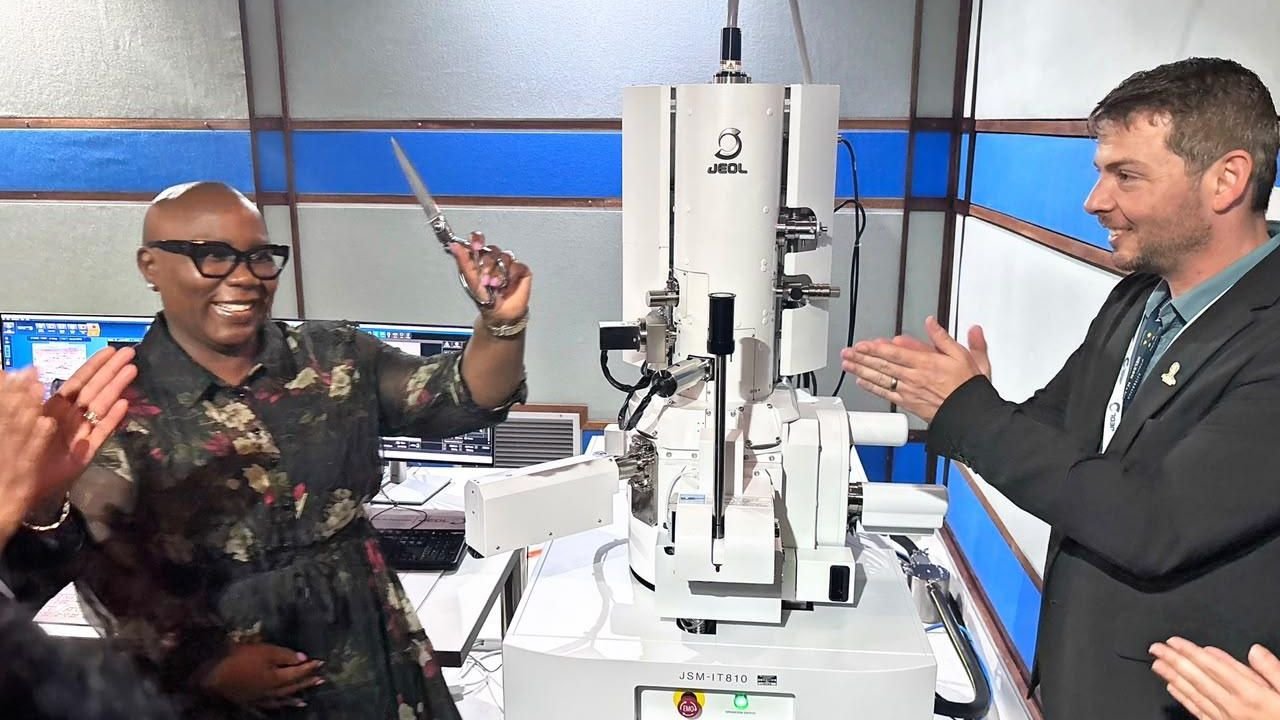
Established through a partnership between government, the National Research Foundation, academia and industry, the CHRTEM was launched by Minister Blade Nzimande on 11 October 2011. It is home to the only double aberration-corrected transmission electron microscope on the continent.
Over the past 15 years, it has developed expertise in electron microscopy and materials science, including analytical spectroscopy and quantitative and computational techniques.
The CHRTEM is also developing capabilities in artificial intelligence-enabled image reconstruction, automated high-throughput microscopy and emerging quantum methodologies. These developments support more detailed analysis of materials and matter at atomic and nanoscale levels, while strengthening South Africa's scientific and technological capabilities.
Dr Cele said the centre's work aligns with the 2019 White Paper on Science, Technology and Innovation, particularly the need to future-proof national capabilities and develop the specialised skills required to support priority economic sectors and the digital economy.
He emphasised that transformation and inclusivity must remain central to the development of South Africa's science system. He also highlighted the importance of strategic foresight to anticipate emerging scientific and technological developments and maintain the country's global competitiveness.
"Through frameworks like the South African Research Infrastructure Roadmap, the DSTI remains firmly committed to supporting strategic research infrastructure. We believe that continued investment in these capabilities is crucial for South Africa's sovereignty and its position as a destination for international scientific collaboration," said the Director-General.
The DSTI's continued support for strategic research infrastructure is intended to strengthen national research capacity, develop high-level skills and create opportunities for collaboration with international partners.
The 15-year milestone of the CHRTEM highlights the role of sustained investment and partnerships in building South Africa's ability to participate in and contribute to scientific research that addresses national and global challenges.
NMU's Deputy Vice-Chancellor Research for Innovation and Internationalisation, Prof. Azwinndini Muronga, traced the development of the CHRTEM to the university's early scientific work, noting that its foundations date back to pre-2004, when the institution was known as the University of Port Elizabeth. The acquisition of the first transmission electron microscope in 1966 marked an important step in building this capability.
He said successive generations of researchers, technical specialists and students had contributed to developing the expertise and scientific capacity associated with the facility.
"Scientific capability of this kind grows through sustained inquiry, training, institutional support and lasting relationships. It also requires people who can recognise what is possible and are prepared to do the considerable work needed to realise that potential."
Prof. Muronga also acknowledged the university leadership and institutional support that had helped establish the CHRTEM as a national scientific asset.
He highlighted that the CHRTEM's contribution extends beyond the Department of Physics and the Faculty of Science as it supports research across the university, including Engineering, the Built Environment and Technology, and Health Sciences. He said the CHRTEM brings together fundamental and applied research, postgraduate training, innovation and partnerships, reflecting the university's commitment to transdisciplinary research, internationalisation and collaboration.
"The centre's contribution therefore extends from its home department to the faculty, the university and the wider scientific community," he said.
Director of the CHRTEM, Prof. Jaco Olivier, said it operates under a national research infrastructure platform and is mandated to support research across various disciplines, including academia and industry. This involves ensuring that advanced equipment remains operational and accessible, while providing users with the expertise needed to use the facility effectively.
Established to provide scientists, engineers and students with access to state-of-the-art equipment, the CHRTEM enables the study of materials at microscopic scales and helps address complex materials-related challenges in development and innovation.
Prof. Olivier said the CHRTEM had continuously adapted its services to meet the changing needs of researchers. Its priorities include improving microscope availability, retaining skilled scientists, providing specialised technical support and strengthening the computational infrastructure required to process and store increasingly large volumes of research data. Its support ranges from instrument-specific training to comprehensive assistance with sample preparation, materials characterisation, data analysis and the research process.
He explained that the CHRTEM's hands-on approach helps students develop the skills needed to conduct research more independently. Its staff also provides advanced training and support to researchers from other laboratories and institutions.
The CHRTEM's contribution is reflected in more than 40 000 instrument hours devoted to research and its involvement in over 700 research projects. It is also approaching 300 direct peer-reviewed publications and has contributed to more than 500 conference presentations.
The CHRTEM has worked directly or indirectly with more than 100 national and international institutions across multidisciplinary fields, including science and materials research, engineering, health and biomedicine.
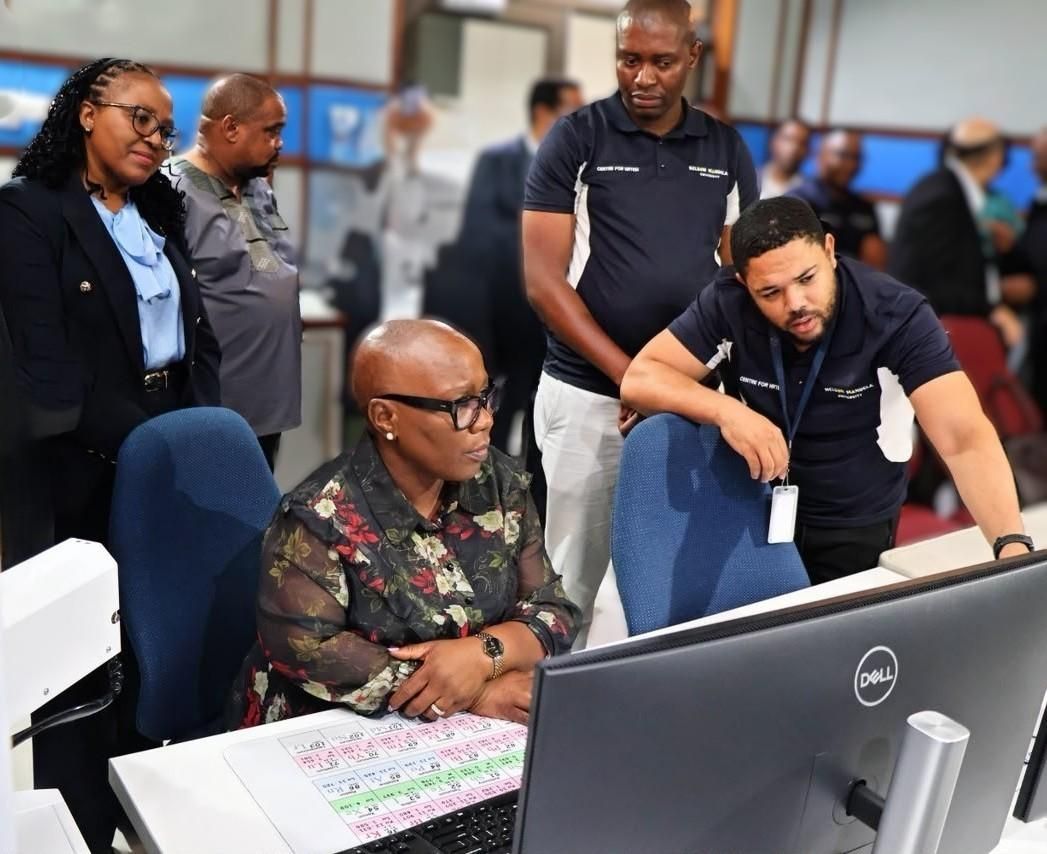
Prof. Angus Kirkland, Professor of Materials and Electron Microscopy at the University of Oxford, said the focus of a national centre such as this should be to build a single national ecosystem rather than a collection of isolated instruments.
He explained that national capability should focus on scarce expertise, infrastructure and sample-preparation capabilities that could serve the wider research community.
"National facilities are complex to establish, operate and maintain. So, professional, transparent access is a key driver to selecting the best science. In addition, instrumentation choice must be science-led and flexible, and operational architecture needs to be carefully considered," he said.
Ms Sarah Harper, Sales Director at Japan Electron Optical Laboratories (JEOL), highlighted the longstanding partnership between the company and the centre. JEOL is one of the centre's commercial partners and develops and manufactures electron microscopes, scientific instruments, industrial equipment and medical equipment.
She emphasised that the CHRTEM's achievements had been made possible through partnership, rather than simply through the purchase of equipment, underlining the importance of collaboration in building and sustaining scientific capabilities.
"We have learned from you that one well-run national facility can achieve and that the greatest technology can only deliver if it is managed correctly. The next 15 years should focus on expanding the CHRTEM's reach by serving more users, engaging more industry partners and extending its impact across Africa," said Ms Harper.