
News
DSTI strengthens partnerships with UWC to advance science and innovation agenda
DSTI
18 November 2026
3 min read
Back to all news
The Department of Science, Technology and Innovation (DSTI) is strengthening strategic partnerships with institutions of higher learning and the private sector to advance South Africa's science, technology and innovation (ST&I) priorities, transform the research landscape and build local technological capabilities.
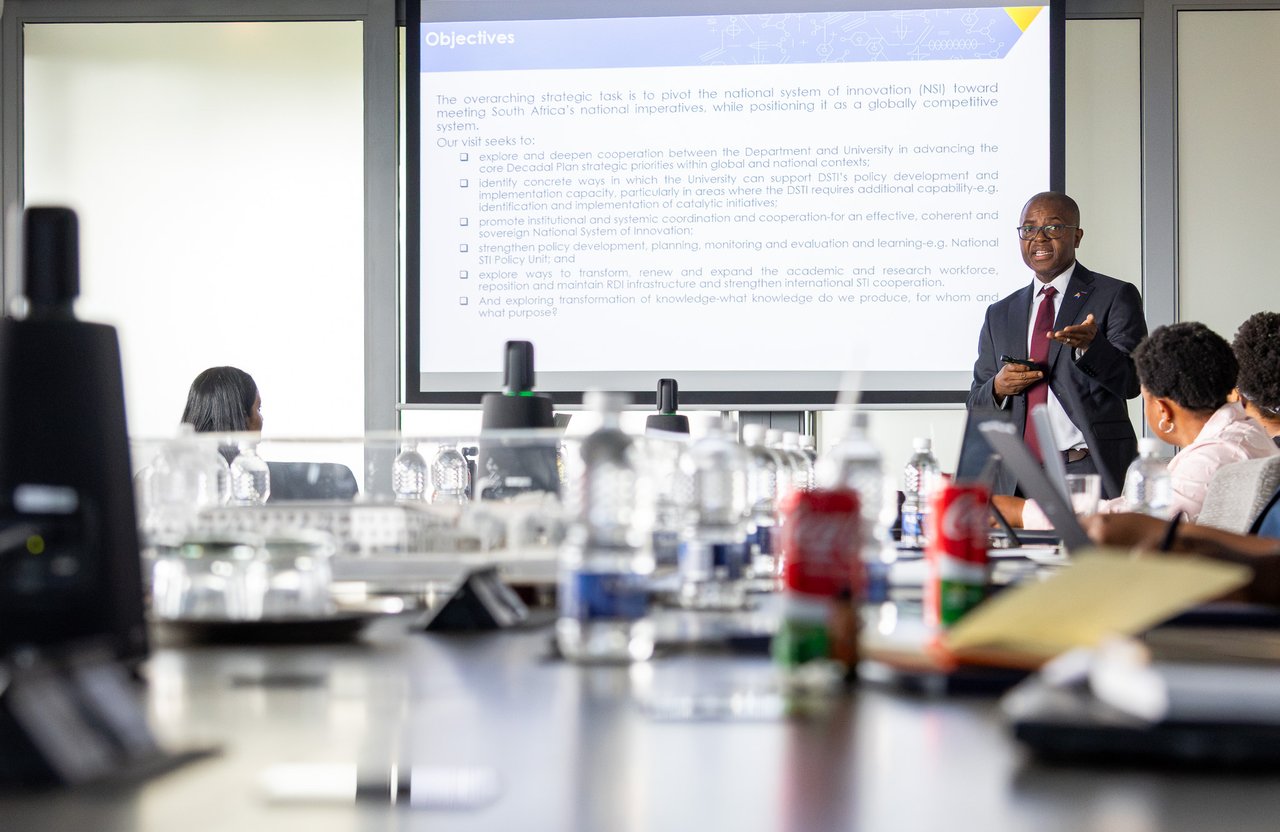
This commitment was underscored during an orientation visit by the DSTI Director-General, Dr Mlungisi Cele, to the University of the Western Cape (UWC) and the Biovac Institute on 5 and 6 November 2026.
The engagement was intended to explore areas of collaboration, assess UWC's contribution national innovation ecosystem and identify opportunities to align its work with the Department's policy priorities.
Dr Cele acknowledged UWC's significant contribution to strengthening South Africa's research and innovation capacity, particularly through its participation in several programmes supported by the DSTI and the National Research Foundation.
UWC currently hosts 32 operational chairs of the DSTI-NRF South African Research Chairs Initiative – more than any other university in the country. Of these, 17 were awarded through a dedicated call targeting historically disadvantaged institutions, demonstrating the Department's commitment to broadening participation and addressing historical inequalities in the national research system.
Dr Cele said that South Africa needed to move beyond establishing institutions and policies towards fundamentally transforming the ST&I system to respond to the needs of the majority of its people.
"The 2019 White Paper on Science, Technology and Innovation, together with the implementation of the Decadal Plan, provides a clear policy direction. Our task over the next decade is to pivot the system so that ST&I are more responsive to societal needs. This is in line with our mantra of placing ST&I at the centre of society, education and industry," said Dr Cele.
He emphasised that the visit was also intended to explore practical ways of deepening cooperation between the Department and the university, including strengthening the country's science policy capacity.
"We recognise that universities are important partners in shaping the national policy landscape. We need to strengthen our pool of policy analysts and create a broader national platform through which academic institutions can contribute to policy development. We are therefore inviting universities to raise their hands and become part of the national policy hub," added Dr Cele.
UWC Vice-Chancellor, Prof. Robert Balfour, described the partnership with the Department as critical to the university's research ambitions and its contribution to national development.
"It is a great opportunity to share the work we do. While it is important to acknowledge the history of this institution, it is equally important to reflect on our future strategy and the role of our partnership with the Department in advancing science and developing the next generation of leaders in this country.
"The Department's commitment to historically disadvantaged institutions has made a significant difference to UWC. Its support has enabled us to strengthen our research capacity and build an institution that produces credible, high-calibre research that is engaged with communities and makes a meaningful difference," said Prof. Balfour.
He further highlighted the significance of the university's 32 research chairs, noting that they reflect national confidence in UWC's research capabilities and institutional contribution.
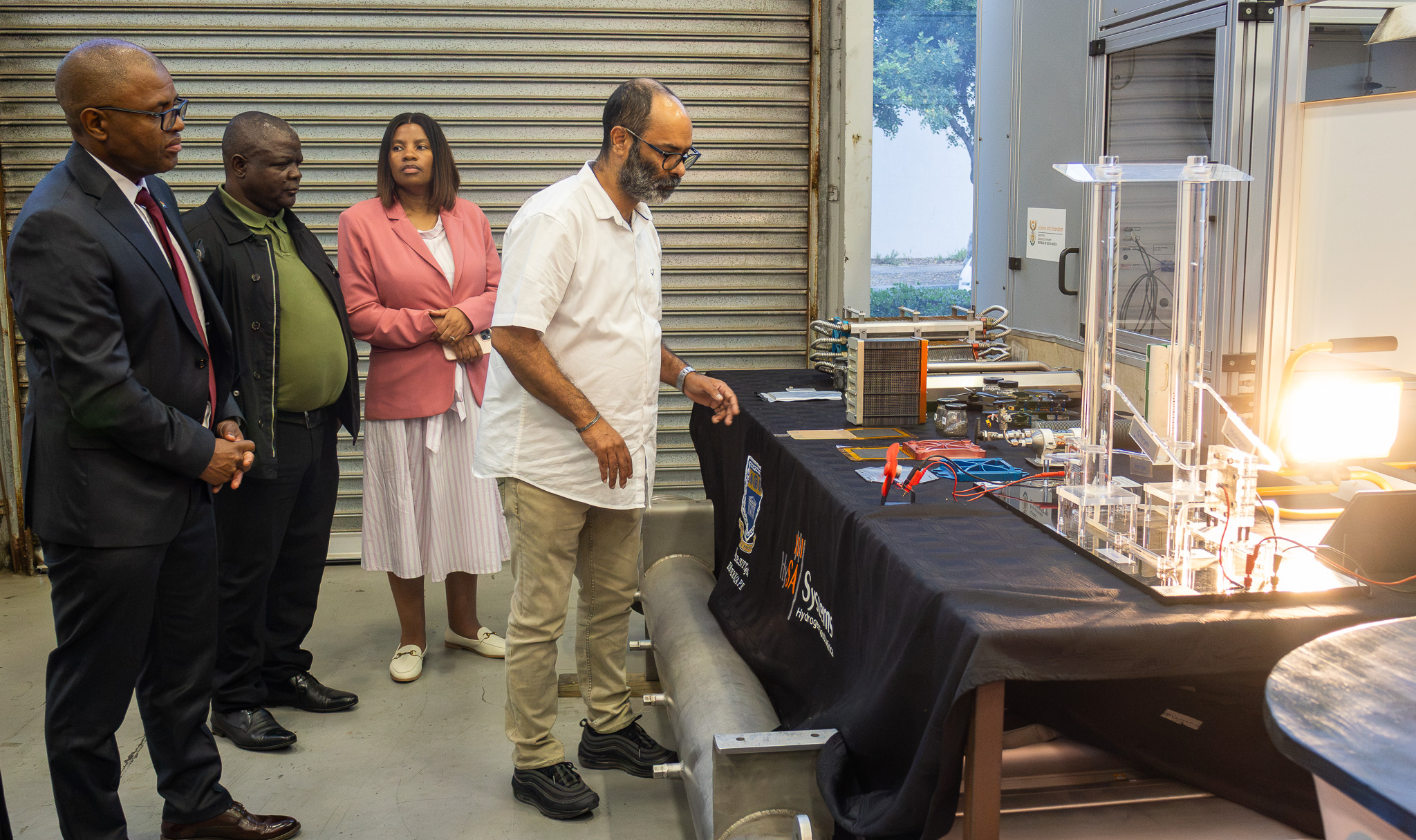 Through partnerships, the DSTI seeks to ensure that investments in ST&I translate into meaningful societal impact, strengthen institutional capabilities, create opportunities for future generations and contribute to a more competitive and resilient economy.
This commitment was underscored during an orientation visit by the DSTI Director-General, Dr Mlungisi Cele, to the University of the Western Cape (UWC) and the Biovac Institute on 5 and 6 November 2026.
The engagement was intended to explore areas of collaboration, assess UWC's contribution national innovation ecosystem and identify opportunities to align its work with the Department's policy priorities.
Dr Cele acknowledged UWC's significant contribution to strengthening South Africa's research and innovation capacity, particularly through its participation in several programmes supported by the DSTI and the National Research Foundation.
UWC currently hosts 32 operational chairs of the DSTI-NRF South African Research Chairs Initiative – more than any other university in the country. Of these, 17 were awarded through a dedicated call targeting historically disadvantaged institutions, demonstrating the Department's commitment to broadening participation and addressing historical inequalities in the national research system.
Dr Cele said that South Africa needed to move beyond establishing institutions and policies towards fundamentally transforming the ST&I system to respond to the needs of the majority of its people.
"The 2019 White Paper on Science, Technology and Innovation, together with the implementation of the Decadal Plan, provides a clear policy direction. Our task over the next decade is to pivot the system so that ST&I are more responsive to societal needs. This is in line with our mantra of placing ST&I at the centre of society, education and industry," said Dr Cele.
He emphasised that the visit was also intended to explore practical ways of deepening cooperation between the Department and the university, including strengthening the country's science policy capacity.
"We recognise that universities are important partners in shaping the national policy landscape. We need to strengthen our pool of policy analysts and create a broader national platform through which academic institutions can contribute to policy development. We are therefore inviting universities to raise their hands and become part of the national policy hub," added Dr Cele.
UWC Vice-Chancellor, Prof. Robert Balfour, described the partnership with the Department as critical to the university's research ambitions and its contribution to national development.
"It is a great opportunity to share the work we do. While it is important to acknowledge the history of this institution, it is equally important to reflect on our future strategy and the role of our partnership with the Department in advancing science and developing the next generation of leaders in this country.
"The Department's commitment to historically disadvantaged institutions has made a significant difference to UWC. Its support has enabled us to strengthen our research capacity and build an institution that produces credible, high-calibre research that is engaged with communities and makes a meaningful difference," said Prof. Balfour.
He further highlighted the significance of the university's 32 research chairs, noting that they reflect national confidence in UWC's research capabilities and institutional contribution.
Through partnerships, the DSTI seeks to ensure that investments in ST&I translate into meaningful societal impact, strengthen institutional capabilities, create opportunities for future generations and contribute to a more competitive and resilient economy.