
DSTI mobilises stakeholders to accelerate innovation and competitiveness in agriculture, forestry and aquaculture
To all media
15 October 2026
DSTI mobilises stakeholders to accelerate innovation and competitiveness in agriculture, forestry and aquaculture
The Department of Science, Technology and Innovation (DSTI) is advancing the development of a Science, Technology and Innovation (ST&I) Roadmap for Agriculture, Forestry and Aquaculture to guide policy and investment, strengthen innovation and productivity and position the three sectors for sustainable growth and increased competitiveness.
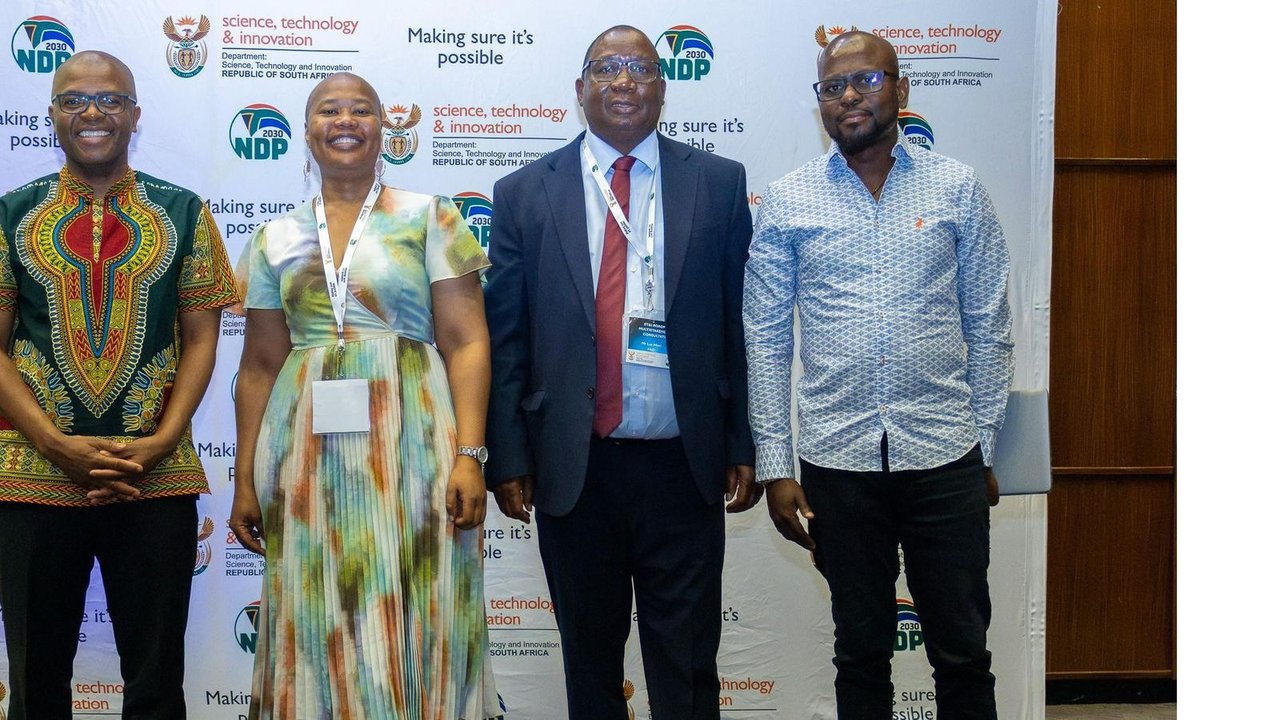
Addressing a multistakeholder consultation workshop held at the Council for Scientific and Industrial Research in Pretoria on 12 and 13 October 2026, DSTI Director-General, Dr Mlungisi Cele, emphasised that the roadmap must serve as a practical instrument for transforming the sectors and strengthening South Africa's bioeconomy.
"The ST&I roadmap that brings us together today is much more than a policy exercise. It is a strategic instrument intended to modernise the agriculture, forestry and aquaculture sectors and strengthen the foundational base of the bioeconomy through the contribution of ST&I to economic recovery, revitalisation and competitiveness and sustainable development," said Dr Cele.
Dr Cele noted that the DSTI has established the necessary structures to advance the roadmap, including steering and advisory committees, and had signed a technical assistance programme with the United Nations Food and Agriculture Organization (UN-FAO).
"Stakeholder consultations have commenced, and a comprehensive draft situational and landscape analysis has been completed. These milestones provide a solid foundation for the development of a practical, evidence-based and action-oriented roadmap."
Dr Cele identified the six interconnected priorities that should inform the roadmap as climate resilience and sustainability; digital transformation; biotechnology, genetics, biosecurity and One Health approaches; agro-processing, value addition and the circular bioeconomy; research infrastructure, human resource development and innovation financing; and governance, coordination and investment alignment.
He challenged all participants to move beyond identifying what needs to be done and engage with how it should be done.
"The real measure of success will not be the publication of another policy document. Success will be reflected in increased productivity, improved food and nutrition security, greater technology adoption, stronger value chains, enhanced climate resilience, increased investment in innovation, sustainable job creation and improved livelihoods for our people," said Dr Cele.
Supporting the development of the roadmap, Ms Pumeza Nodada, Deputy Director-General for Forestry Management at the Department of Forestry, Fisheries and the Environment, reaffirmed the department's support for the initiative on behalf of the broader forestry and aquaculture sectors.
She said the roadmap was being developed at a time when South Africa was advancing policies and strategies aimed at harnessing the potential of the bioeconomy for economic growth, social development and environmental sustainability.
Ms Nodada highlighted opportunities to strengthen alignment with existing national frameworks, including the National Bio-economy Strategy, the White Paper on Conservation and Sustainable Use of South Africa's Biodiversity, the aquaculture research strategy and Operation Phakisa's Oceans Economy initiative.
She noted that climate change, environmental degradation, economic pressures and food security challenges were placing increasing demands on agriculture, forestry and aquaculture systems, making evidence-based and innovative solutions essential.
Mr Lot Mlati, Assistant Representative of the UN-FAO, commended the DSTI for convening the consultation and recognising the importance of ST&I in transforming agrifood systems.
He echoed Ms Nodada's sentiments about the environmental and economic conditions placing increasing pressure on production systems, requiring scientific and innovative solutions.
The roadmap is also expected to contribute to the implementation of key national initiatives, including the Agriculture and Agro-processing Master Plan, the Forestry Sector Master Plan, the Aquaculture Research and Technology Development Programme, and the DSTI's Agricultural Bio-economy Innovation Partnership Programme.
Following the multistakeholder consultation, the DSTI will share a fully consulted draft of the roadmap and incorporating an action plan. Stakeholders will have a further opportunity to engage with the document during a national validation workshop. The roadmap will subsequently be refined for submission to Cabinet, with the aim of presenting it for consideration and approval by 31 March 2027.
For more information, please contact Ms Julian Leshilo-Sebake on 060 961 2194 or Julian.Leshilo@dsti.gov.za.
Issued by the Department of Science, Technology and Innovation.