
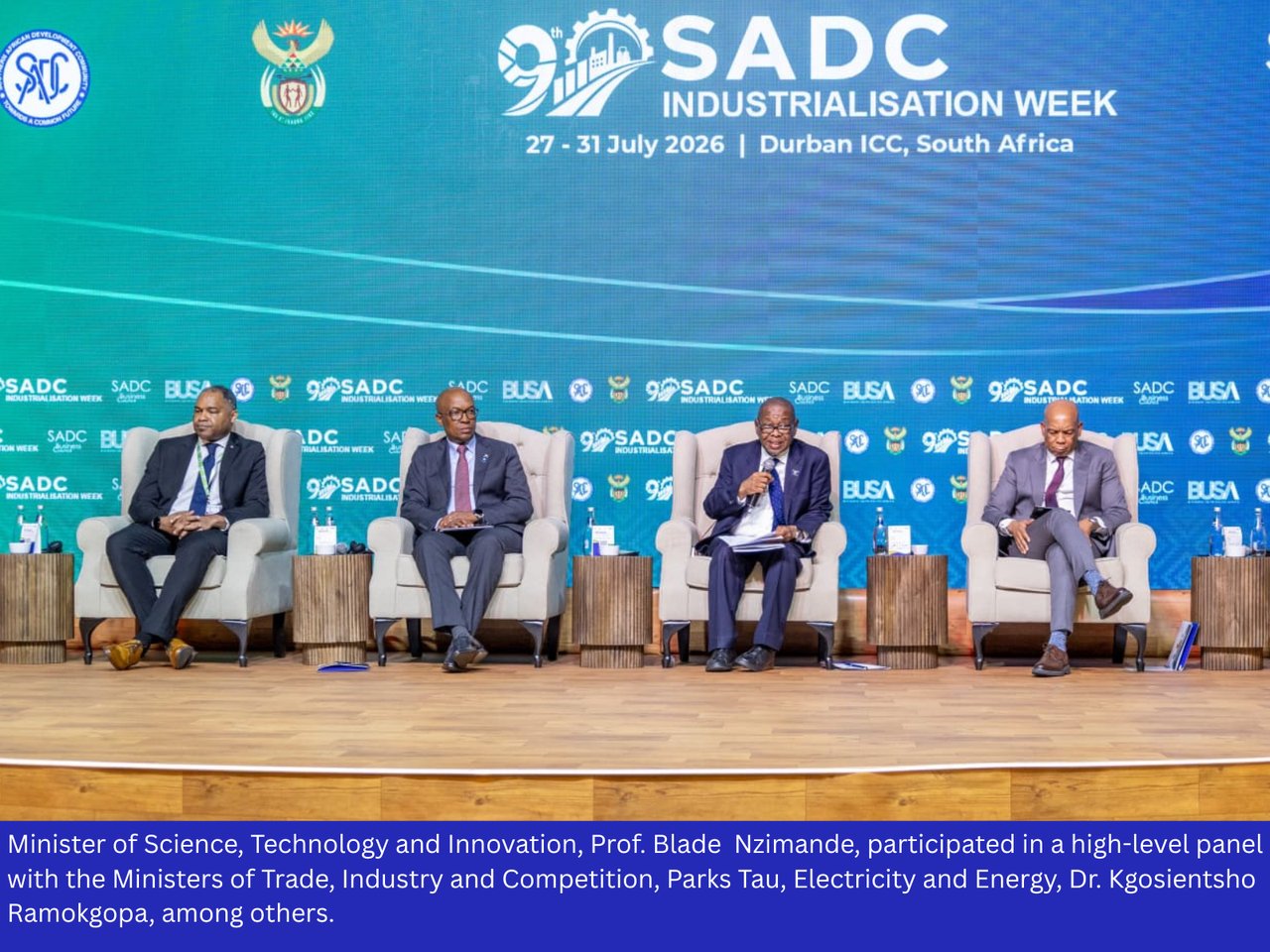
Day 1 of SADC Industrialisation Week focuses on use of critical minerals to advance industrialisation
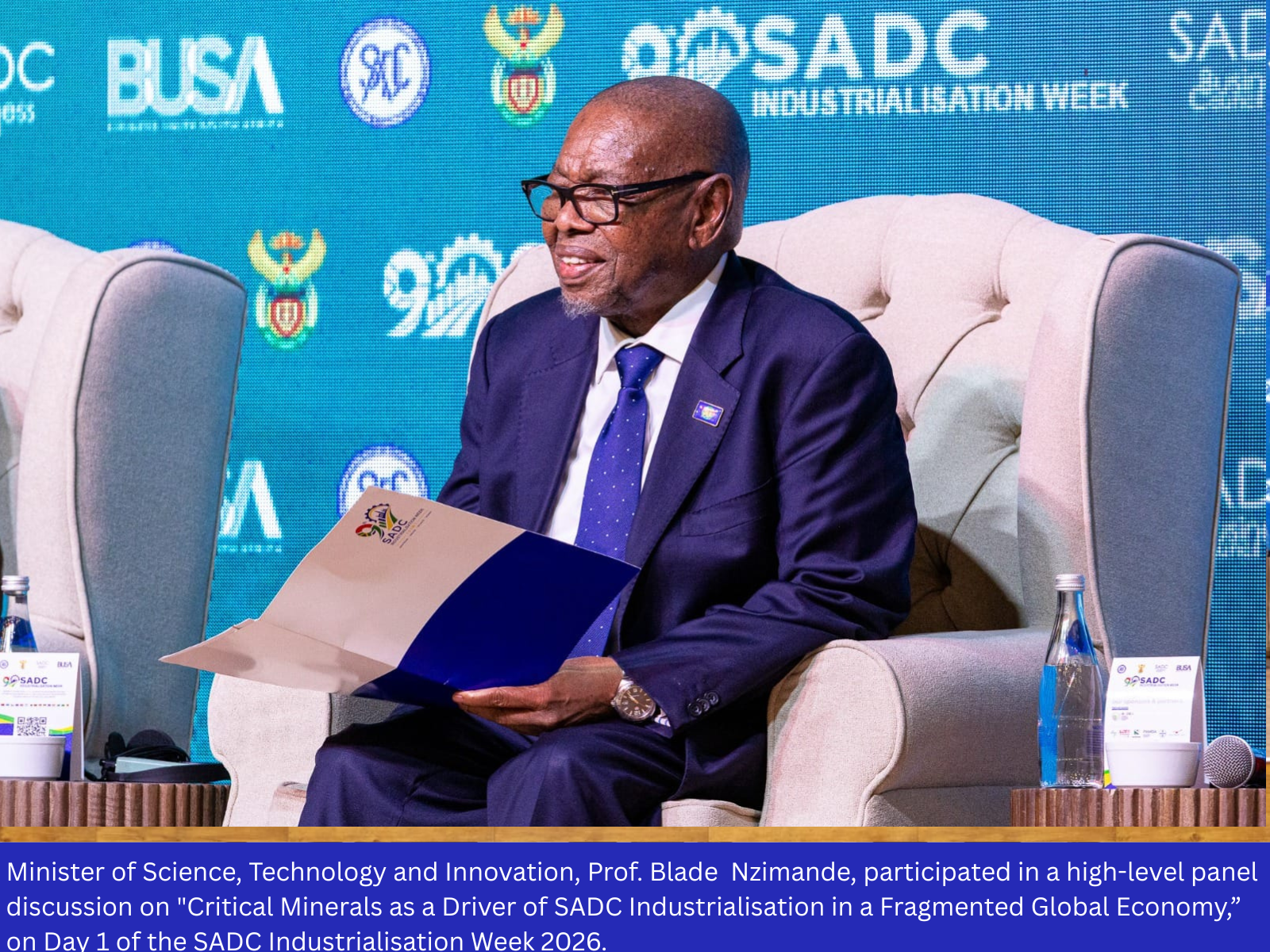
Speaking at a panel discussion on the first day of the 2026 SADC Industrialisation Week, the Minister of Science, Technology and Innovation, Prof. Blade Nzimande, said critical minerals are the key to economic growth, industrial competitiveness, energy security and the global transition to clean technologies.
"We are actively shifting the narrative from basic extraction to integrated, localised value chains," said Minister Nzimande.
The Minister noted that, by combining our vast mineral wealth with targeted science, innovation and regional cooperation, we will build resilient industrial economies, create quality jobs and secure a meaningful place in global green value chains.
Key policymakers, industry leaders and investors gathered for the start of SADC Industrialisation Week, which is taking place from 27 to 31 July at the Durban International Convention Centre. Participants included the Ministers of Energy, Trade, Industry and Competition, as well as the Deputy Minister of Mineral Resources and an executive representative from the Minerals Council of South Africa.
Discussions at the first session focused on how SADC member states can leverage critical minerals to drive local beneficiation, attract targeted investment, build robust infrastructure and position Southern Africa at the centre of global green value chains.
Prof. Nzimande highlighted two priority pillars of the Department of Science, Technology and Innovation (DSTI) to unlock the value of the green transition. The pillars, which are set out in the DSTI Decadal Plan (2022 – 2032) are building the hydrogen economy and the battery economy.
Building on the Hydrogen South Africa strategy, the DSTI has set up infrastructure for hydrogen production.
"We have established three Centres of Competence, focusing on catalysis, production/storage and systems integration," said the Minister.
Recent milestones include the handover of a Mobile Hydrogen Refuelling Station (developed with North-West University and Toyota SA Motors) to decarbonise the transport sector; and a Rapid Prototype Training and Testing Facility (developed with North-West University and African Rainbow Minerals) to scale water electrolysis technologies from the lab to industrial application.
The DSTI is developing the second pillar by aggressively supporting lithium-ion battery development and energy storage. "Through our energy storage research, development and innovation flagship programme, we are focusing on value-added manganese precursor materials," the Minister said.
Notably, the DSTI is partnering with the University of Limpopo and the Manganese Metal Company to develop battery-grade manganese sulphate directly from local ore.
The Department's strategic objective for supporting high industrialisation is to develop the technologies, knowledge systems and technical skills required to capture greater value from our mineral resources.
"By combining our vast mineral wealth with targeted science, innovation and regional cooperation, we will build resilient industrial economies, create quality jobs and secure a meaningful place in global green value chains," the Minister concluded.
SADC Industrialisation Week continues to serve as an essential forum for aligning public policy, science and industry toward a resilient, integrated economy.