
Innovation as the engine for South Africa's industrial renaissance
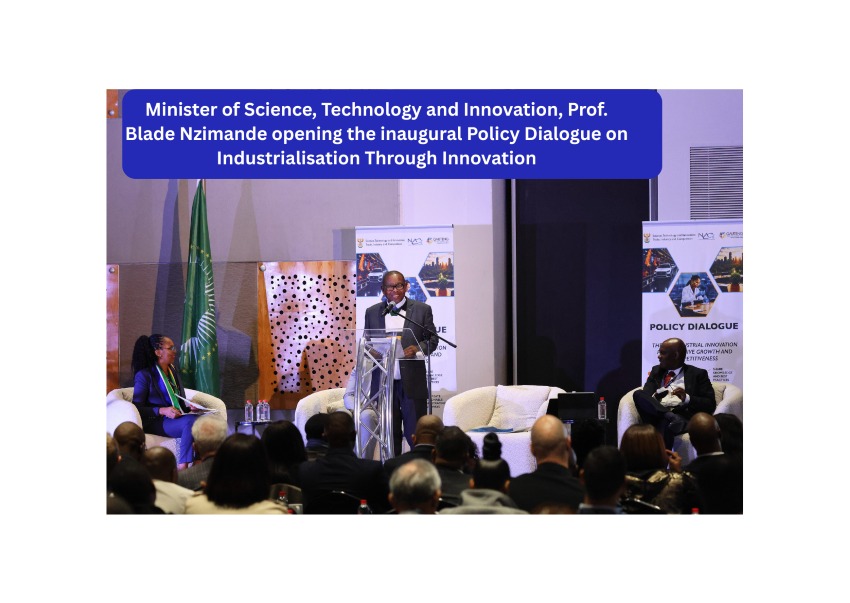
The global economy is undergoing seismic shifts characterised by the reconfiguration of supply chains, intensifying technological rivalry, and deepening economic uncertainty. These pressures are compounded by persistent global inequality and renewed threats to multilateralism, said the Minister of Science, Technology and Innovation, Prof. Blade Nzimande, at the opening of the inaugural Policy Dialogue on Industrialisation through Innovation yesterday.
The policy dialogue aims to assess the current state of the country's industrial innovation landscape, identify systemic challenges and highlight best practices across key sectors of the economy. It also provides an opportunity to review existing policy instruments and interventions that support industrialisation and innovation, with a view to strengthening their effectiveness and impact.
In his address, the Minister noted that national capacity to innovate is the most sustainable way to secure economic resilience and technological sovereignty.
He highlighted several key policy imperatives required to navigate global economic shifts. These include accelerating technological upgrading across core industries, ensuring greater coherence between industrial and innovation policies, and scaling up patient capital for strategic sectors.
"Innovation-led industrialisation must directly address the challenges of poverty and unemployment by fostering youth empowerment, supporting emerging industries, and establishing fully integrated science and innovation parks," Minister Nzimande added.
The Minister said that the inaugural Policy Dialogue on Industrialisation through Innovation was more than a talk shop; it was a war room for South Africa's economic future. By strengthening policy coherence, leveraging innovation and advancing continental integration, South Africa could build a resilient, innovation-driven economy.
"The blueprint is before us. It is now time for practical, actionable execution," the Minister concluded.
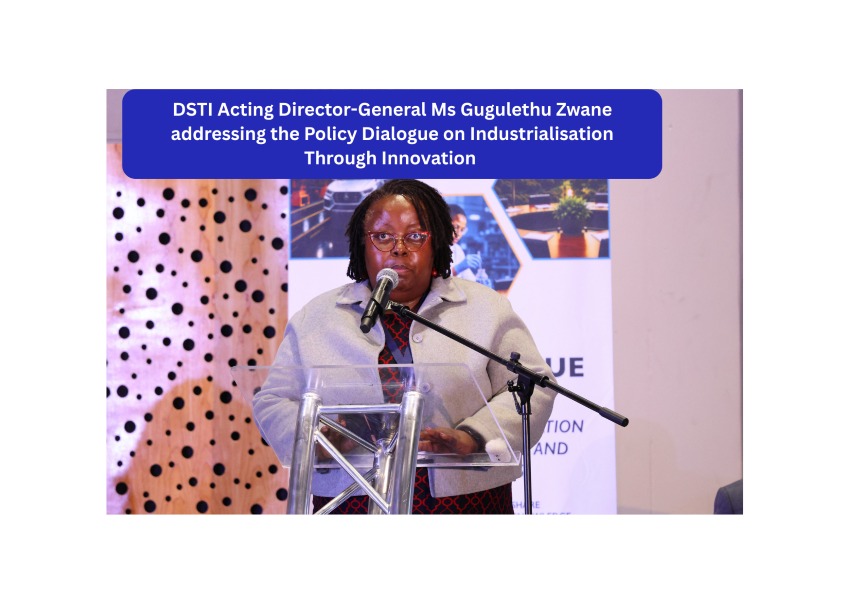
The dialogue was attended by delegates from the public and private sectors, development institutions, multilateral organisations and academia.
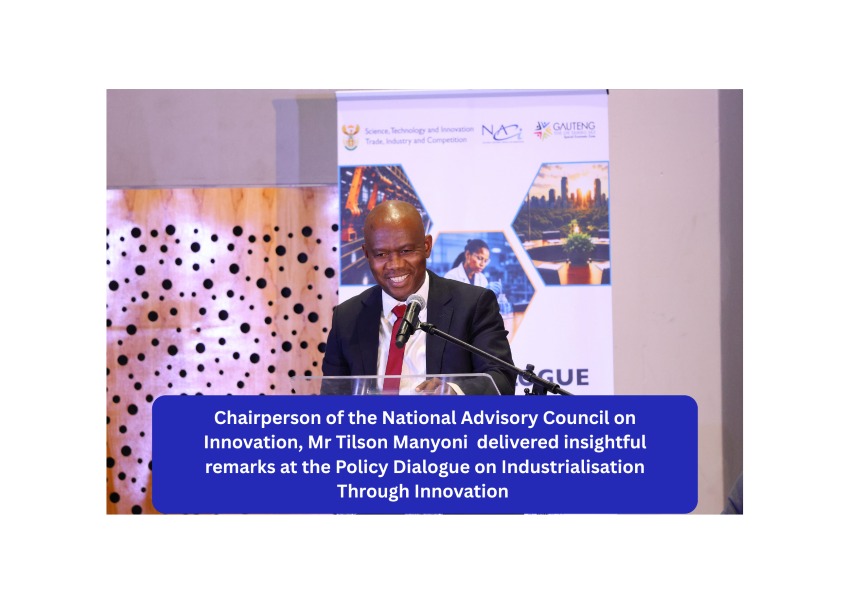
In his address, Chairperson of the National Advisory Council on Innovation, Mr Tilson Manyoni, emphasised that industrialisation was not the responsibility of a single sector, but required a collective, coordinated national effort.
Mr Manyoni highlighted several critical drivers of economic transformation, which included bridging the gap between technological capabilities and industrial production; leveraging special economic zones, such as the OR Tambo SEZ, as critical platforms for technology localisation; investment attraction; global competitiveness; and strengthening the vital partnership between the Ministry of Science, Technology and Innovation and the Ministry of Trade, Industry and Competition.
He challenged all stakeholders across government, business and academia to translate research and policy into concrete actions that supported manufacturing growth and job creation.
During a session on funding innovation, Ms Smita Kuriakose, a lead economist at the World Bank, emphasised the financing challenges faced by early-stage technological ventures. She noted that commercial banks and venture capital firms were often reluctant to support innovation initiatives due to their elevated risk, which was why it was important to have government intervention at the seed funding stage. However, she said that strategic management was needed alongside public sector funding.
The dialogue continues today and will conclude with a call to action.