
Summit drives investment in indigenous knowledge-based innovation and entrepreneurship
The inaugural Indigenous Knowledge (IK)-Based Technology Innovation Investment Summit, which ended yesterday at the Birchwood Hotel in Boksburg, provided further evidence that IK systems (IKS) are central to South Africa's development agenda and innovation future.
The three-day summit that took place from 2 to 4 June 2026 brought together government leaders, researchers, investors, industry stakeholders, IK holders, students and entrepreneurs to explore investment opportunities, commercialisation pathways, policy development, technology innovation and partnerships aimed at unlocking the economic potential of IK-based innovations.
The summit was hosted by the Department of Science, Technology and Innovation (DSTI) in partnership with the National Science and Technology Forum (NSTF), The Innovation Hub (TIH), and the universities of Venda, Limpopo and North-West.
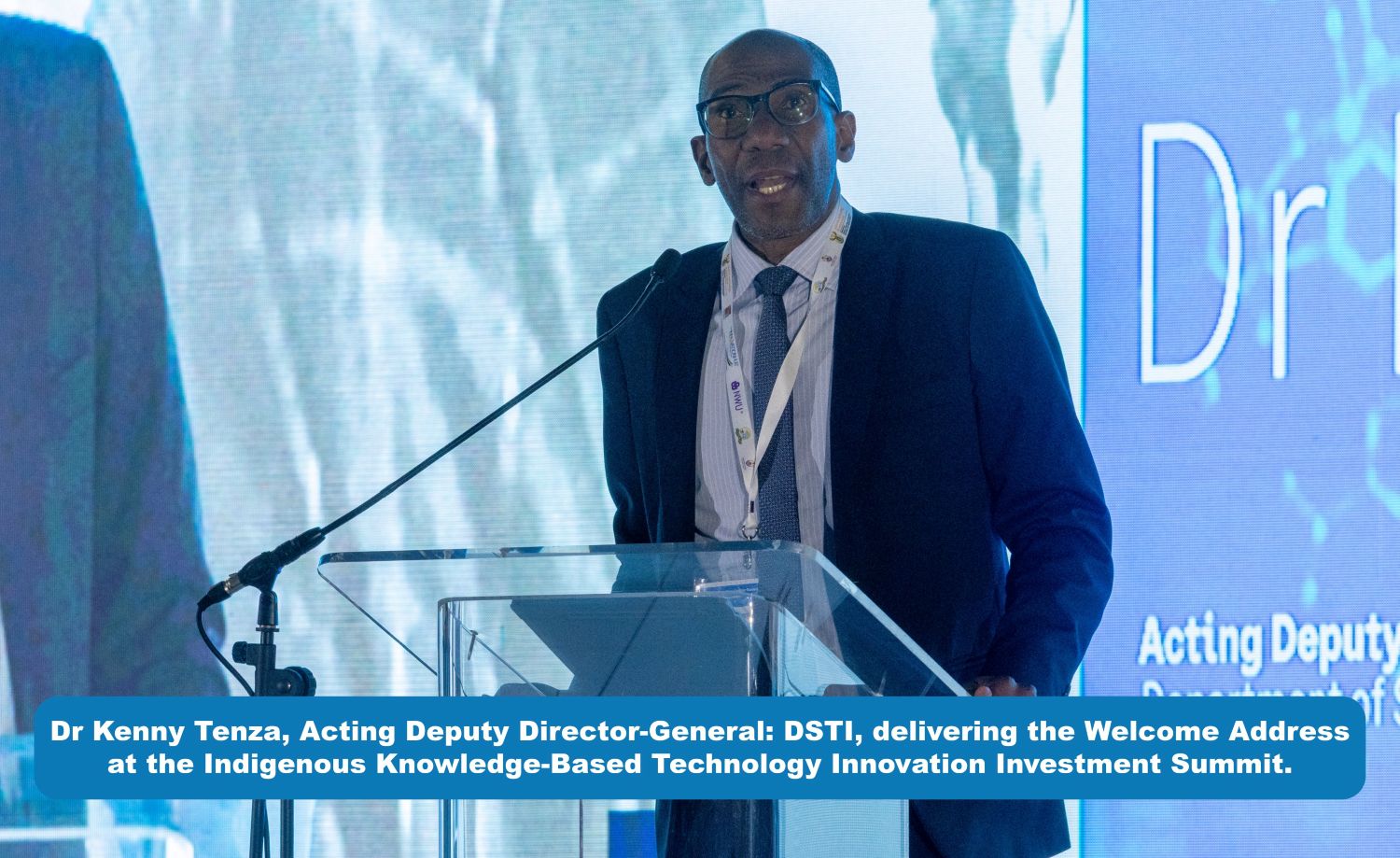
Delivering the opening address on behalf of the DSTI, Acting Deputy Director-General for Technology Innovation, Dr Kenny Tenza, said, "IKS are not a peripheral concern, but a strategic national asset with the power to shape South Africa's development path. The future of African innovation will be strongest when it draws confidence from its own knowledge systems while embracing the tools of modern science."
He noted that the DSTI's IK-Based Bio-Innovation Programme, established in 2007, has delivered significant outcomes through six flagship platforms that focus on African natural medicines, cosmeceuticals, nutraceuticals, health infusions, technology transfer and commercialisation.
"These are not abstract achievements; they are tangible proof that investment in IK-based innovation yields real developmental returns," he said.
The programme has graduated hundreds of postgraduate students, produced more than 300 peer-reviewed publications, generated 15 patents, supported the development of over 200 commercial products and assisted more than 100 small, medium and micro enterprises.
Dr Tenza also announced progress towards the establishment of an African Bio-Innovation Institute, which will coordinate teaching, research, manufacturing, commercialisation and industrialisation activities across the IK innovation value chain.
He said that the DSTI is supporting regulatory reforms and curriculum development initiatives aimed at integrating African natural medicines into healthcare systems and medical education.
In his address, Prof. Rasigan Maharajh, Professor of Public Affairs at the Tshwane University of Technology, underscored the importance of investing in IK as part of broader efforts to transform South Africa's innovation system and address historical injustices.
He highlighted that the world is experiencing profound geopolitical and technological shifts, with emerging economies strengthening their productive capacities and innovation systems to achieve technological sovereignty.
"The core of realising the Africa that we all want, need and demand is the urgent and active redressing of the systemic and structural epistemicide that originated in our colonial past of expropriation," said Prof. Maharajh.
"Addressing these historical and ongoing injustices is not merely a matter of redress; it is a fundamental precondition for genuine transformation. Investment in IK innovation is essential to building inclusive, sovereign and sustainable futures," he said.
CEO of TIH, Dr Jeffrey Mpangalasane, welcomed the summit and highlighted the relevance of IK in shaping modern innovation ecosystems.
"As CEOs, we often speak about artificial intelligence, digital transformation and disruption as the cutting edge of innovation. Yet being part of this summit is a humbling reminder that much of what we call innovation today is IK that has been perfected over centuries," he said.
He noted that indigenous communities have long ago developed solutions to challenges related to health, agriculture, environmental sustainability, food security and community development.
"At TIH we work to ensure that young people, innovators and IK holders in our communities are empowered to transform the knowledge into sustainable enterprises. We must ensure that we not only innovate but we also empower communities, commercialise, document and protect our intellectual properties."
Dr Mpangalasane reaffirmed the hub's commitment to supporting innovators, entrepreneurs and IK holders in transforming knowledge into sustainable enterprises.
"We must ensure that innovation translates into measurable impact, creates opportunities, generates wealth and improves lives. Together, we can transform knowledge into opportunity, innovation into impact and ideas into prosperity."
Representing the NSTF, Member of the Executive Committee, Ms Fhumulani Ratshitanga, said the organisation was honoured to serve as one of the summit's host partners.
"The NSTF views this summit as one of the platforms aligned with our mission of promoting science, engineering, technology and innovation (SETI), while encouraging collaboration across the national system of innovation," said Ms Ratshitanga.
She acknowledged the DSTI's continued support in advancing the NSTF's vision of a transformed South Africa where SETI contribute to an optimal quality of life for all citizens.
She said the summit came at a strategic moment for the NSTF as the institution is reflecting on the current strategy cycle and preparing for the next phase of growth and impact.
"The NSTF aims to strengthen its reach, relevance, visibility and impact while supporting initiatives of national importance. Our ultimate goal is to build on initiatives such as this summit and develop new strategies that position the NSTF as an engaged, relevant and impactful organisation that contributes meaningfully to South Africa's development," said Ms Ratshitanga.
Issued by the Department of Science, Technology and Innovation.
For more information, please contact Julian Leshilo-Sebake on 060 961 2194 or This email address is being protected from spambots. You need JavaScript enabled to view it..


