
Parliamentary portfolio committees briefed on South Africa's evolving intellectual property system
The National Intellectual Property Management Office (NIPMO) has highlighted the importance of intellectual property (IP) in transforming publicly funded research into innovations that deliver economic and social benefits for South Africa.
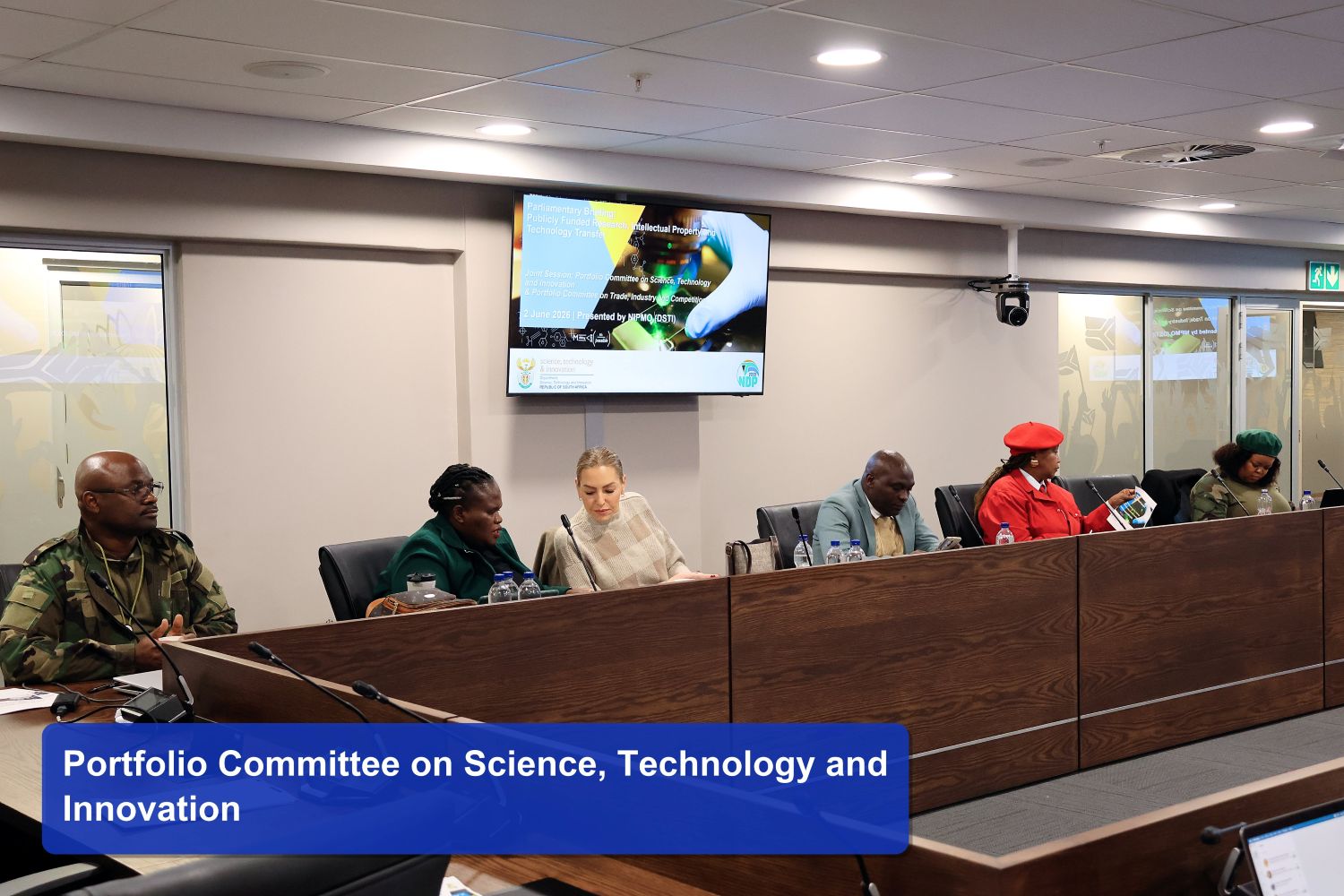
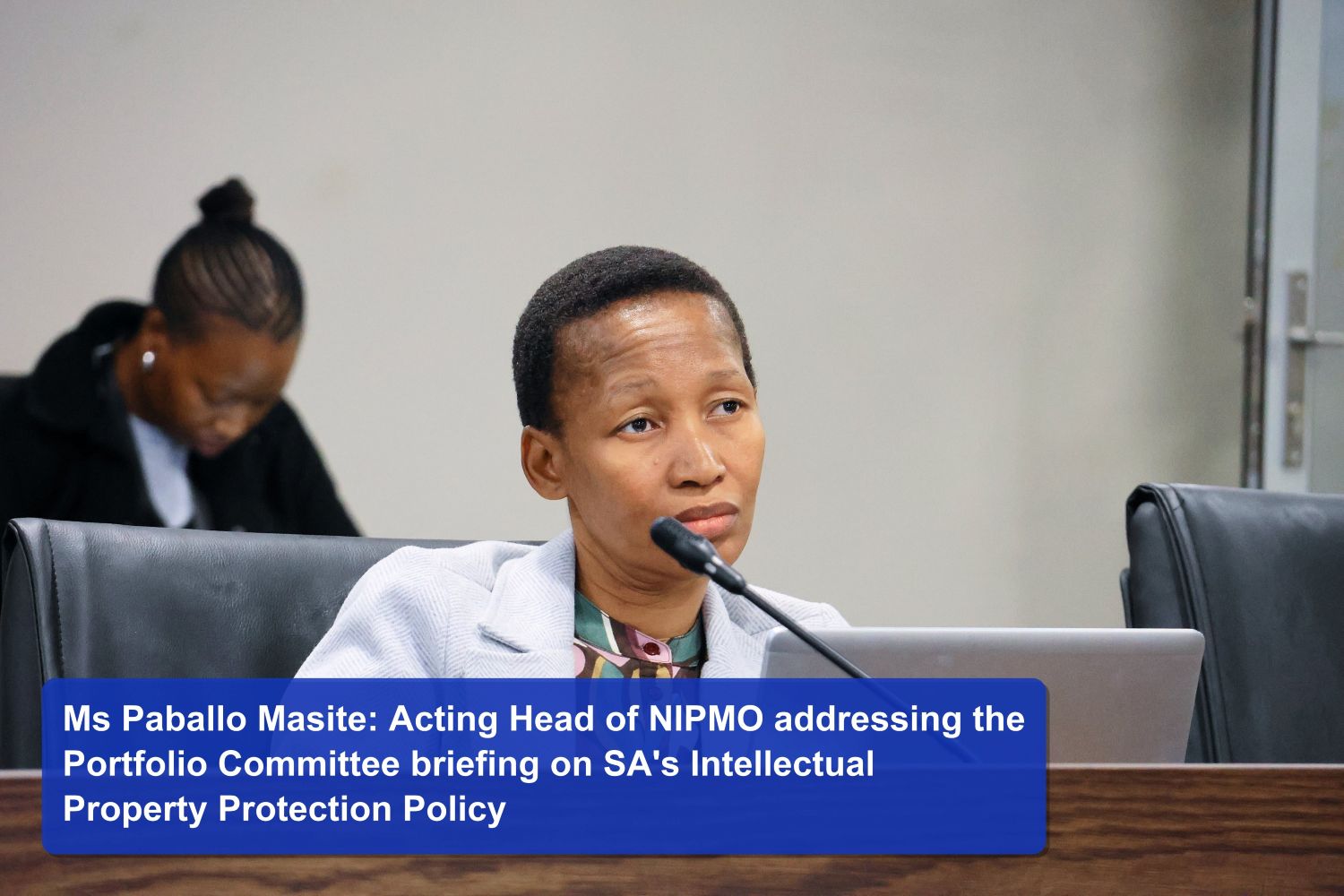
Addressing a joint session of Parliament's Portfolio Committees on Science, Technology and Innovation and Trade, Industry and Competition on 2 June 2026, Ms Paballo Masite, Acting Chief Director of NIPMO, outlined the role of publicly funded research, IP and technology transfer in supporting innovation and economic development.
The briefing formed part of parliamentary discussions on South Africa's IP protection policy and legislative framework.
Masite explained that NIPMO, a specialised unit within the Department of Science, Technology and Innovation, is responsible for overseeing IP arising from publicly funded research and development conducted at universities, science councils and other research institutions.
NIPMO's role under the IP Rights from Publicly Financed Research and Development Act, 2008 (IPR Act), Masite explained, is to ensure the effective identification, protection and utilisation of IP that arises from publicly funded research and development, while building capacity, raising awareness and enabling partnerships that unlock South Africa's innovation potential for economic and social development.
"We also promote IP awareness and institutional capacity building, administer the Offices of Technology Transfer Support Fund and the IP Fund, and operate as a regulatory enabler rather than a funder of research or a patent attorney," said Masite.
NIPMO mainly operates within the concept and development and pre-commercial phases of the innovation value chain, ensuring publicly funded research outputs are protected and translated into social and economic value.
Over the past 15 years, a key component of building South Africa's IP management system has been the development of skills and expertise in IP and technology transfer. To date, more than 3 100 IP and technology transfer professionals have been trained, with women accounting for more than 55% of participants.
Over the past decade, NIPMO's IP Fund, which provides financial support to institutions to secure and maintain statutory IP rights, has supported more than 30 institutions, with an average rebate payout of 48% on qualifying claims. During this period, institutions filed IP Fund claims totaling R500,5 million.
Over the past decade, institutions have reported an average of 249 invention disclosures annually, with 91% of institutions submitting at least one new disclosure. More than 3 300 active invention disclosures are currently recorded on NIPMO's confidential database. Importantly, approximately 14% of these disclosures have progressed to licensing or commercialisation, highlighting the growing potential of publicly funded research to generate economic and social value through the transfer of knowledge and technology.
Looking ahead, Masite outlined five key priorities for 2026 to 2029. These include finalising and adopting amendments to the IPR Amendment Bill, sustaining and expanding the support funding of offices of technology transfer, strengthening institutional support for technology transfer activities, improving national reporting, oversight, tracking of publicly supported IP and strengthening NIPMO's role as the national IP system coordinator by leveraging the five-yearly IP and technology transfer surveys.
Ms Xolelwa Mlumbi-Peter, the Department of Trade, Industry and Competition Deputy Director-General for Trade, outlined South Africa's IP policy, describing it as a framework aimed at advancing a coordinated and balanced approach to IP protection while responding to the country's innovation and development priorities.
She said the policy is informed by the values and principles of the Constitution and reflects South Africa's industrial policy and broader development objectives. It is also aligned with the country's goals of promoting local manufacturing and competitiveness, leveraging indigenous resources and heritage, fostering innovation, and recognising the role of IP in supporting the transition to a knowledge-based economy.
Ms Mlumbi-Peter further indicated that the policy reforms are being implemented through a phased approach, aimed at ensuring a balanced and sustainable transformation of the country's IP system.
She highlighted that these reforms are being advanced through the proposed Patents Bill and Designs Amendment Bill, which seek to align South Africa's IP regime with international best practice and improve access to the innovation system.
A key feature of the proposed reforms is the introduction of substantive search and examination (SSE) for patent applications. Unlike the current depositary system, where patents are registered without a detailed assessment of whether they meet patentability requirements, SSE enables patent examiners to assess applications against recognised criteria for novelty and inventiveness before patents are granted. This approach advocates the use of internationally recognised policy tools and mechanisms that support both the protection of IP rights and the country's developmental objectives.
At the Companies and Intellectual Property Commission (CIPC), work on the process of implementing the proposed patent system amendments, especially SSE, is well underway, including the recruitment and training of patent examiners and the development of a supportive information technology infrastructure for implementation.
Another feature of the policy is the use of flexibilities provided under the World Trade Organization's Agreement on Trade-Related Aspects of IP Rights.
"These measures are intended to strike a balance between IP protection and key national priorities such as public health, local manufacturing, research and development, innovation, food security, environmental sustainability, technology transfer and broader socio-economic objectives through, among other mechanisms, parallel imports and voluntary licenses," she said.
Echoing Ms Mlumbi-Peter’s remarks about South Africa's transition to an SSE system, CIPC Commissioner, Adv. Rory Voller, said that patent examiners are experts in their respective technical fields, with a significant number holding doctoral qualifications.
Adv. Voller added that the examiners have undergone both theoretical and practical training through South African institutions and international organisations, including the World IP Organization. They have also received training from several leading patent offices around the world, such as those in the UK, Denmark, Switzerland, Japan and BRICS member countries, to ensure that South Africa's patent examination system is aligned with international best practice.
Addressing the need for coherence between the IPR Act, which is administered by NIPMO, and the broader commercial IP framework administered by CIPC, Adv. Voller said there is strong interdepartmental alignment between the two organisations, as the CIPC's mandate extends to the implementation of IP legislation, including patents, designs, trademarks and copyright.
He added that the CIPC has a memorandum of understanding with NIPMO on initiatives such as IP education and awareness, Technology and Innovation Support Centre initiatives, the WIPO-SA Summer School on IP and Technology Transfer, the Inventor Assistance Programme, World IP Day activities and IP commercialisation workshops.
"Our shared goal is to build a South Africa where innovation is protected, rewarded and converted into economic and social value for all. While the CIPC and NIPMO operate under different legislation, serve distinct mandates, and report to different government departments, both offices are integral to a national IP ecosystem that supports innovation, competitiveness and inclusive development," concluded Ms Masite.