
South Africa advances vaccine manufacturing with expanded Biovac facility
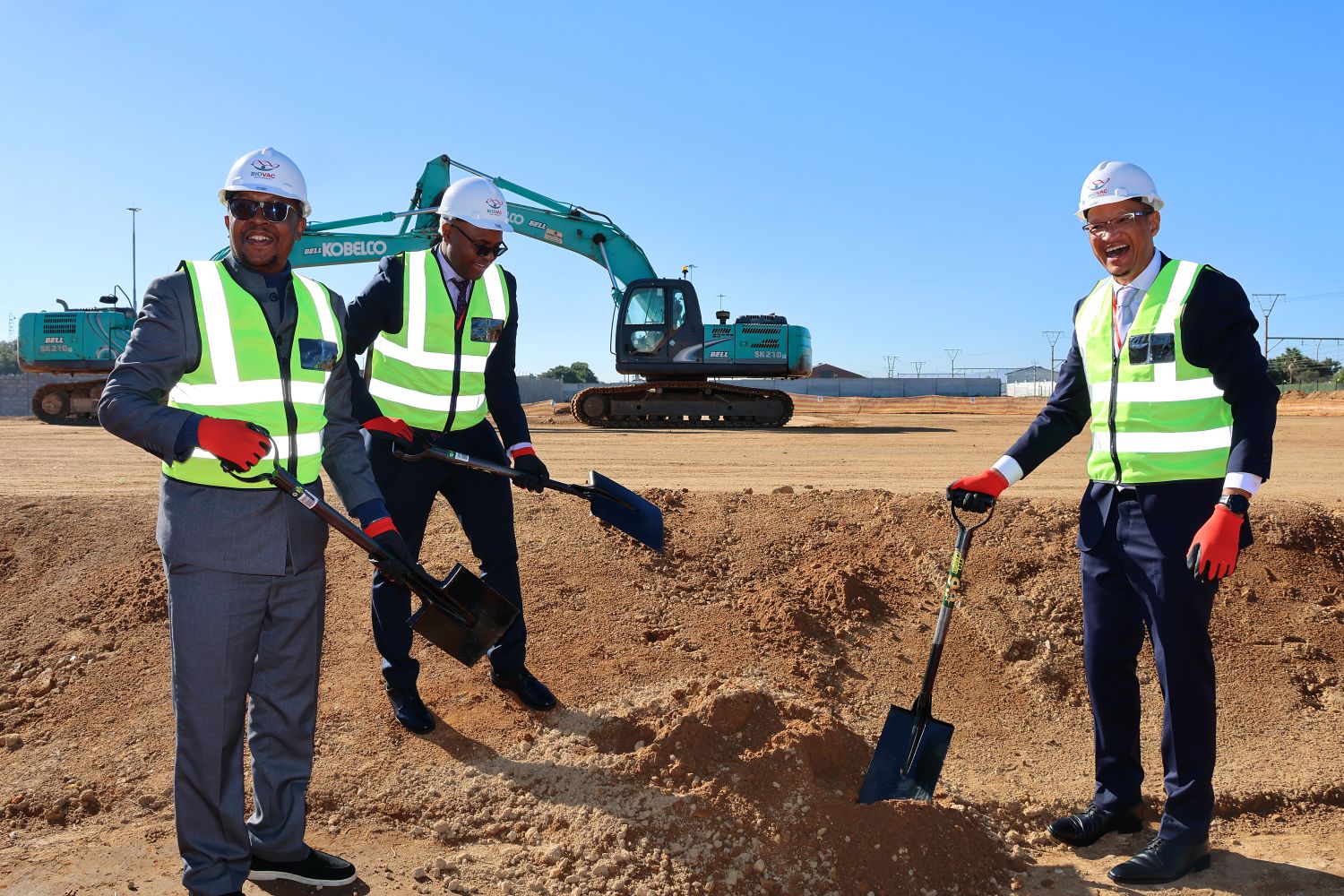
Mr. Parks Tau, Minister of Trade, Industry, and Competition, Dr. Mlungisi Cele, Director-General of the Department of Science, Technology, and Innovation, and Dr. Morena Makhoana, CEO of Biovac, at the Biovac Facility expansion site and soil turning ceremony in Cape Town.
South Africa took a significant step towards strengthening local vaccine production with the launch of Biovac's expanded vaccine manufacturing facility in Cape Town on 25 May 2026.
Among those who delivered remarks at the launch were the Director-General of Science, Technology and Innovation, Dr Mlungisi Cele; the Minister of Trade, Industry and Competition, Mr Parks Tau; and the Chairperson of the European Parliament's Foreign Affairs Committee, Mr David McAllister.
Speaking at the launch, Dr Cele described the expansion of Biovac as further testimony of the company's critical role in strengthening South Africa's vaccine manufacturing capabilities and advancing pandemic preparedness for the African continent.
He noted that the Department of Science, Technology and Innovation (DSTI) had established Biovac in 2003 as a strategic joint venture with private partners aimed at rebuilding the country's human vaccine manufacturing capacity, enhancing regional medical sovereignty, and supporting the Department of Health's Expanded Programme on Immunisation.
Cele spoke of the urgent need for Africa to strengthen its sovereign vaccine innovation and manufacturing capabilities. Referring to the 2021 Ibrahim Forum Report, he noted that, while Africa accounts for nearly 18% of the global population and about a quarter of global vaccine demand, the continent produces less than 0,1% of the world's vaccines and still imports most of its routinely administered vaccines.
The Ibrahim Forum Report also indicated that global vaccine manufacturing remained heavily concentrated in Western Europe, North America and Asia, with most vaccines supplied by a few major Asian manufacturers.
The scale of the challenge facing Africa was particularly obvious at the height of the Covid-19 pandemic, when millions of Africans depended on vaccine exporters from outside the continent.
Cele noted that vaccine manufacturing capacity on the continent remained limited, with only a small number of vaccine value-chain players, concentrated mainly in North Africa, South Africa and Nigeria, while many African countries had no manufacturing presence at all. He described this as a "bitter irony" given Africa's rich indigenous biological wealth, from which natural compounds were extracted and modified to produce the very same modern vaccines and drugs sold to the continent.
"We must address this contradiction by harnessing our continent's biological wealth and the scale of our population as sources of competitive strength. We must also see ourselves as a market for the products and services we produce. In this regard, there are important lessons to be drawn from countries like China," he said.
He told the gathering that the DSTI had positioned health innovation as one of the strategic pillars of South Africa's Science, Technology and Innovation Decadal Plan (2022-2032), with a focus on pandemic preparedness, and vaccine innovation and manufacturing. He said that the DSTI was working in collaboration with the Department of Health and the Department of Trade, Industry and Competition.
Apart from its role in the establishment of Biovac, the DSTI had also been involved with the World Health Organization-supported mRNA Vaccine Technology Transfer Hub, which aims to boost Africa's next-generation vaccine research and development capabilities.
The Director-General emphasised the importance of continental and global partnerships in strengthening Africa's pandemic preparedness and vaccine manufacturing capabilities. He highlighted the Department's partnership with KfW and the German Agency for International Cooperation, supported by the European Union and the German government, to advance vaccine development, manufacturing, regulation, research and skills development in South Africa and across the continent.
Dr Cele noted that these initiatives included infrastructure investments, support for local pharmaceutical production, strengthening regulatory systems, and the establishment of a high-end biomanufacturing training hub at the Council for Scientific and Industrial Research to address critical skills shortages in Africa's health manufacturing sector.
He also reaffirmed the DSTI's support for the Africa Centres for Disease Control and Prevention's Pharmaceutical Manufacturing Plan. The AU-led plan aims to ensure that at least 60% of vaccines used in Africa are produced on the continent by 2040 by expanding manufacturing capacity, establishing regional production hubs and harmonising regulatory systems.
Giving an overview of the facility's expansion, Dr Morena Makhoana, CEO of Biovac, said the project was part of a long-standing vision to transform the company into a fully integrated, end-to-end vaccine manufacturer.
He explained that the Covid-19 pandemic had shown the urgent need for Africa to strengthen its manufacturing capacity and health security, prompting Biovac to intensify its efforts to secure funding and partnerships for expansion. The company had engaged extensively with lenders, development partners and philanthropic organisations. Initiatives such as Gavi's African Vaccine Manufacturing Accelerator had helped to create a viable business case for African-made vaccines and obtain support from international development partners and funders. He also acknowledged the South African government's long-standing support and vision.
The Chairperson of the European Parliament's Foreign Affairs Committee, Mr David McAllister, expressed appreciation for the opportunity to witness first-hand the impact of Team Europe and Global Gateway's partnership in South Africa.
He recalled that, during the Covid-19 pandemic, the African Union had called for 60% of vaccines and medicines used in Africa to be produced on the continent by 2040. The European Parliament and the European Commission had responded by supporting efforts to strengthen local vaccine manufacturing capacity in Africa.
The first flagship project rolled out by the European Union in Africa under the Global Gateway investment programme in 2021 focused on pharmaceutical value chains and vaccine production in Africa for Africa. At the time, the EU approved an initial €50 million grant for Biovac.
Nearly five years later, the EU's support for Biovac expanded to €75 million through the Human Development Accelerator guarantee facility announced by the European Commission and the European Investment Bank.
"The contribution forms part of broader cooperation between the EU and member states, including Germany, France and Belgium," noted McAllister, describing the partnership as a model for the Global Gateway initiative.
Minister Tau said the expansion of Biovac's facilities sent a powerful message about confidence in South Africa's industrial base, innovation capabilities and long-term economic potential.
"Despite our challenges and high import dependence, South Africa has both the capability and the responsibility to play a leading role in advancing the continent's health security and self-reliance," he said.
He mentioned that the expansion project also advanced the broader industrialisation agenda by deepening local pharmaceutical manufacturing, expanding advanced production capabilities, supporting technology transfer, strengthening ecosystems and creating highly skilled employment opportunities.
"Importantly, this investment aligns strongly with the African Union's aspirations for health sovereignty, the AU's Partnerships for African Vaccine Manufacturing initiative, and the African Continental Free Trade Area's aim to build regional value chains and strategic industrial capability across the continent. At its core, this project demonstrates the critical link between industrial development and public health security," he added.
Tau highlighted government's commitment to creating an enabling environment for advanced manufacturing industries through localisation measures, investment support, skills development, innovation incentives and stronger public-private collaboration.
"We welcome the strong partnership demonstrated by the European Investment Bank, the International Finance Corporation, Proparco, the Industrial Development Corporation and the European Commission. We also acknowledge the impact of GAVI (the vaccine alliance) and the African Vaccine Manufacturing Accelerator (a $1,2 billion 10-year fund to support African vaccine manufacturers on their journey to sustainability)," he said.
The expanded Biovac facility will manufacture vaccines for cholera, polio, pneumonia and meningitis, with an annual production capacity of between 30 and 40 million doses. The project is expected to be completed by 2028, creating more than 340 skilled jobs and approximately 7 000 indirect jobs.
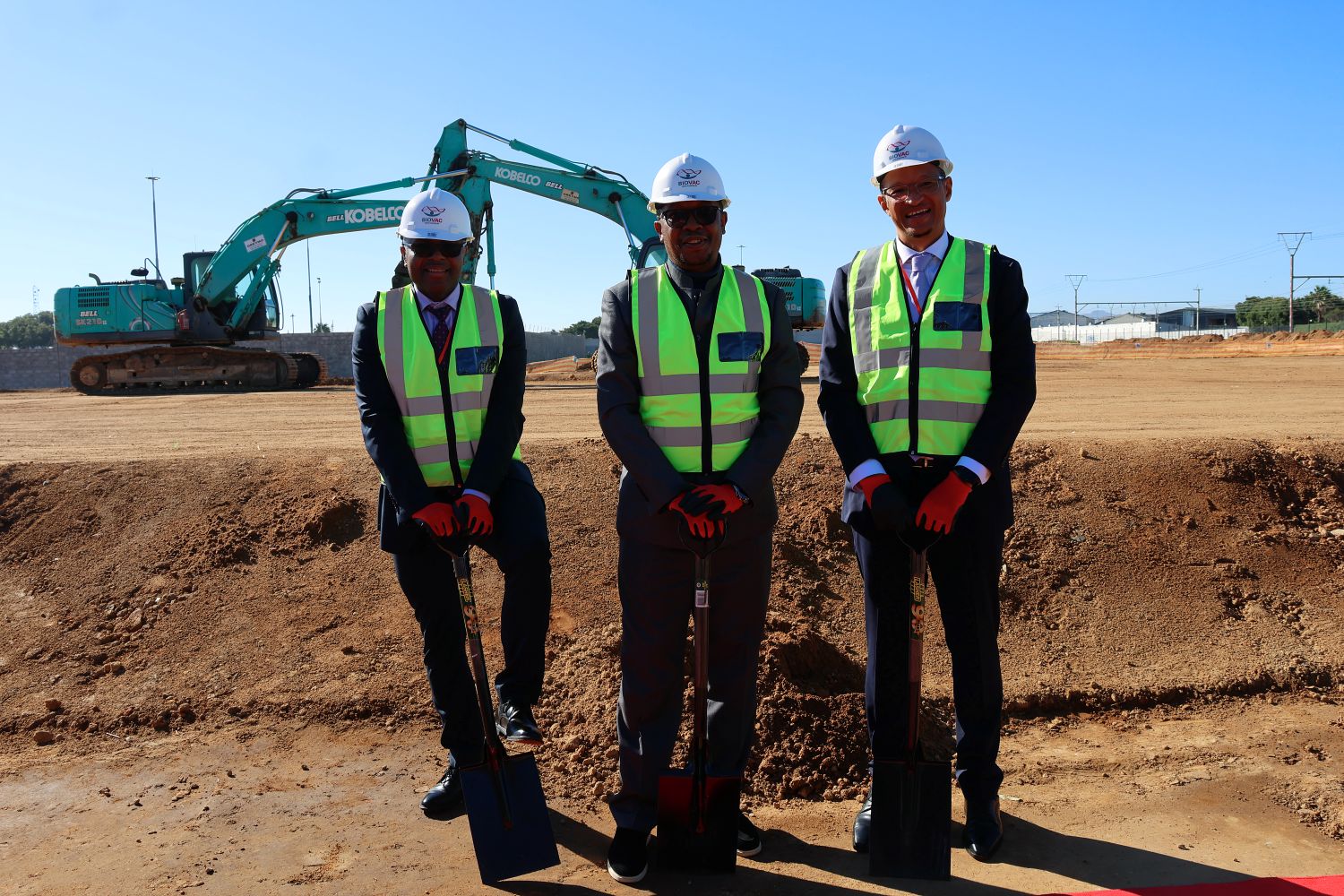
Dr. Mlungisi Cele, Director-General of the Department of Science, Technology, and Innovation, Mr. Parks Tau, Minister of Trade, Industry, and Competition, and Dr. Morena Makhoana, CEO of Biovac, at the Biovac Facility expansion site and soil turning ceremony in Cape Town.


