
Collaboration is the key to placing innovation at the centre of society
The Director-General of the Department of Science, Technology and Innovation (DSTI), Dr Mlungisi Cele, acknowledged that South Africa still needs to improve the coordination of support across the three spheres of government and create an ecosystem that enables innovators to grow and commercialise their ideas.
He believes that improved collaboration between the DSTI, the Department of Trade, Industry and Competition, and development financing institutions is critical to ensuring that innovators have continuous support from the early stages of development through production and market access.
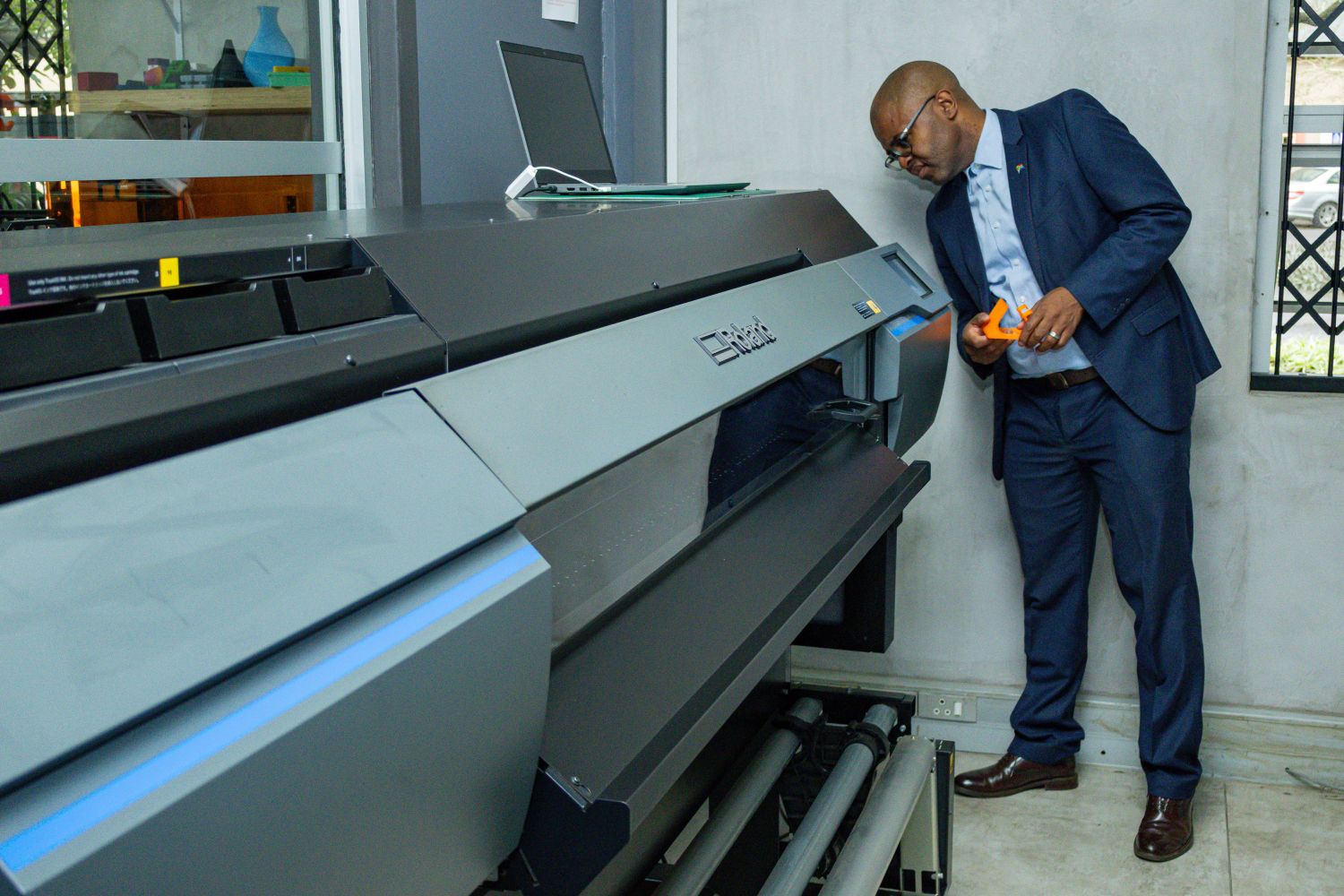
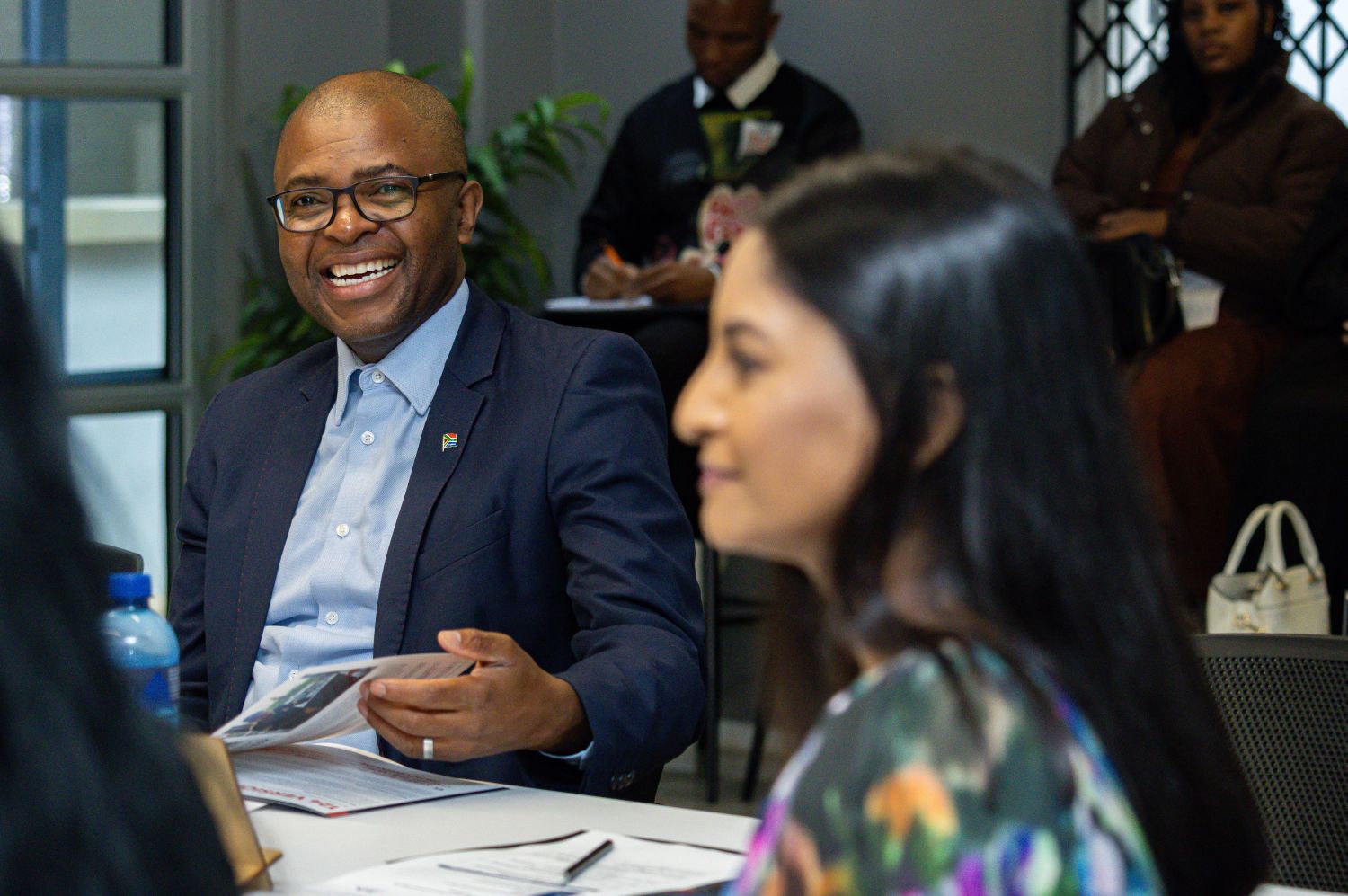
Dr Cele made these remarks during his visit to the Innovate Durban Living Lab in Cato Manor, KwaZulu-Natal, on 14 May 2026 as part of the DSTI's broader commitment to building an inclusive economy driven by science, technology and innovation (STI).
Innovate Durban is a non-profit organisation that was established to support and promote innovation through platforms that strengthen and develop the local innovation ecosystem. It focuses on local communities, including Richmond, Paulpietersburg and Bhongweni. This work aligns with the DSTI's plans to establish living labs across the country, which aim to encourage the co-creation of solutions at a community level and to drive local economic development.
"Innovation should not exist in isolation but should be at the centre of society – connecting government, industry, education and communities to address some of the country's most pressing challenges," said Dr Cele.
He said there should be no gaps between the innovation support provided by the Department, the Technology Innovation Agency (TIA) and other partners when innovators are ready to scale up their pilot projects.
He commended the lab for demonstrating how grassroots innovation grows local economic development and produces practical community solutions.
An example of this is the Bhongweni Community Learning Centre Living Lab, which has been established and supported by Innovate Durban. Located at the Bhongweni Skills Centre in Kokstad, it is a dynamic, community-driven workspace that operates as a collaborative hub for rural grassroots innovators, entrepreneurs and community members. It was awarded second place in the Outstanding Lab Supporting Grassroot Innovators category at the 2025 National Grassroots Innovation Awards.
The Director-General highlighted that many of the world's leading economies have invested heavily in science, technology and research – such as China, which transformed its economy through innovation and long-term investment in research and development. He said South Africa has the potential to move in that direction by supporting local innovators and scaling up community-driven solutions that can contribute to economic growth and improve livelihoods.
Dr Cele added that the Department wants to learn from innovators on the ground and explore ways to include some of their work in long-term national strategies for strengthening innovation ecosystems and empowering communities across the country.
The CEO of Innovate Durban, Ms Aurelia Albert, said the organisation's mission has always been centred on creating spaces for innovation and collaboration, while bringing together different stakeholders to strengthen entrepreneurship and innovation ecosystems. She explained that it was initially established within the eThekwini municipality before later becoming an independent agency and eventually a non-profit company, which enabled it to expand its support beyond eThekwini.
Ms Albert noted that, as early as 2014, Innovate Durban had already established stakeholder forums where partners met quarterly to discuss challenges, opportunities and collaboration around innovation and entrepreneurship. Many of the organisation's successful initiatives, including the Living Lab concept, emerged from those engagements and partnerships that have continued over the years.
The lab was launched in 2020, during the Covid-19 lockdown period, with support from the TIA and DSTI. Shortly after the launch, the facility was severely damaged during unrest in the area, with equipment stolen, infrastructure destroyed and the entire space vandalised. However, the organisation managed to rebuild thanks to strong partnerships and support received from government, private sector partners, funders, local businesses and community members who assisted in cleaning and restoring the facility.
"That is why our Living Lab has been successful – because it was never reliant on one sole partner. The community itself became part of rebuilding and protecting the space," she said.
She further explained that the Living Lab functions as a safe space that young people, entrepreneurs and innovators from the community visit daily to access laptops, technology, expertise and collaborative working spaces. They come to learn, work, experiment and attend programmes focused on innovation and entrepreneurship. She added that the organisation has also established community forums to address issues such as unemployment, poverty, skills development and crime through collaborative engagement and innovation-led solutions.
Ms Albert said the facility recorded approximately 1 300 unique users over the past nine months, with strong participation from women, youth and persons with disabilities.
The organisation has expanded its footprint through innovation hubs and projects in different communities, including KwaMashu, Richmond and other areas, where facilities such as solar-powered robotics centres and innovation hubs were established to provide communities with access to technology, infrastructure and entrepreneurship support.
Ms Albert mentioned the challenges of introducing innovation programmes in communities where people had little prior exposure to concepts such as entrepreneurship and innovation. In some areas, she explained, the organisation had to first run awareness and bridging programmes to introduce participants to innovation thinking before moving into product development and prototyping.
"Through exposure visits, design-thinking methods and mentorship, participants gradually developed confidence and began creating practical solutions to problems within their own communities," she added.
Ms Busisiwe Ntuli, Director for Technology for Sustainable Livelihoods at the DSTI, said the Living Lab Programme has so far assisted more than 300 beneficiaries through various innovation and entrepreneurship initiatives, while also contributing to community development with over R35 million invested since 2019.
Ms Ntuli described the Living Lab model as a globally recognised concept that places people at the centre of innovation. However, within the South African context, it is designed as a community-embedded real-life environment that combines physical infrastructure, support systems, training facilities and programmes aimed at driving innovation-led local economic development. She added that the initiative aligns with the country's national framework for innovation-driven development, which positions STI as a key driver of development outcomes at local government level.
According to Ntuli, the Living Labs programme supports communities through partnerships with government, industry, academia and community organisations. She explained that, in some cases, the programme partners with existing entities that already have facilities, while in other instances, infrastructure is refurbished and transformed into innovation spaces that offer programmes tailored to the needs of specific communities.
Each of the Living Labs operates through a multi-stakeholder partnership model and is guided by a project steering committee responsible for overseeing strategy, implementation and programme direction.
She noted that the Innovate Durban Living Lab had been transformed from a space with limited infrastructure into a creative innovation hub that now supports young innovators and entrepreneurs through various development programmes.
On the day, the lab hosted local innovators and entrepreneurs to exhibit and engage with the DSTI delegation. South African Rebuilders, Imali Wealth, Mind Blown League, Operation Songamanzi Student Organisation, Eco-Agro Enterprise, CareerKit, Nka'Thuto EduPropeller, and Electricoal were among the organisations that showcased and promoted KwaZulu Natal talent.