
DSTI Director-General visits UJ to strengthen strategic collaborations
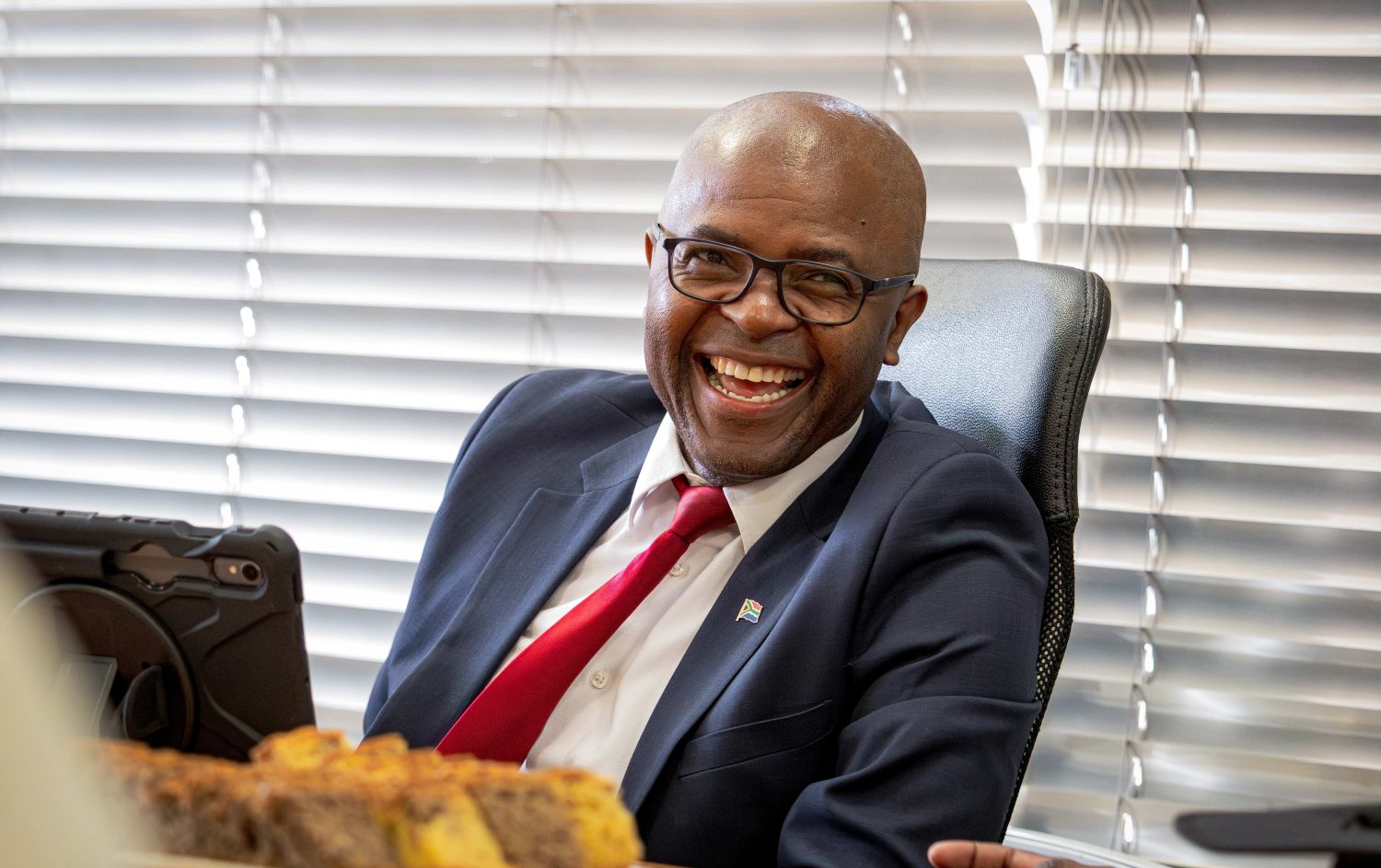
In a recent visit to the University of Johannesburg (UJ) on 7 April 2026, Dr Mlungisi Cele, Director-General of the Department of Science, Technology and Innovation (DSTI), emphasised stronger collaboration and less competition between the institutions that contribute to the country's science, technology and innovation (STI) system.
He believes this will help South Africa achieve its goals by bringing together policy and research to generate practical solutions, strengthening coordination within the national system of innovation and advancing the country's STI agenda.
"We are on our third visit to establish strong partnerships with universities. It is our department's responsibility to ensure that South Africa has a strong system of science, research and innovation – with universities playing a big role," Dr Cele said.
The Director-General's visit, led by UJ's Vice-Chancellor and Principal, Prof. Letlhokwa Mpedi, was part of ongoing efforts to strengthen relationships between government and higher education institutions. Earlier this year, he visited the University of Cape Town and Stellenbosch University.
Dr Cele said that technological sovereignty is essential for national success.
"We are living in an era characterised by hostile geopolitical dynamics that make it clear that countries that do not have technological sovereignty are doomed to fail. So, it is high time that as South Africa, we consolidate, build and enhance our own existing capabilities. Universities possess such," he said.
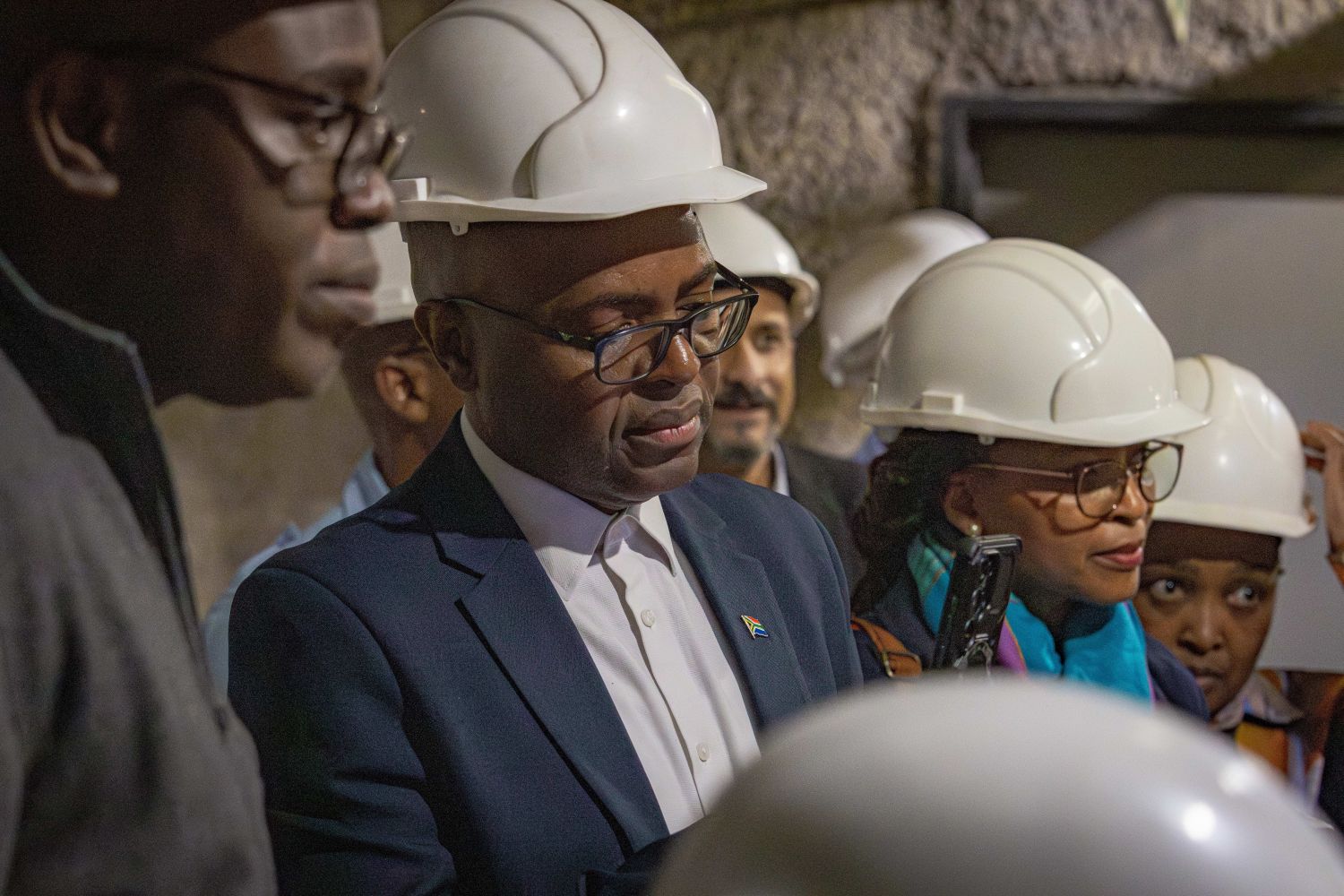
The visit included tours of several of UJ's key facilities that demonstrate the university's commitment to applied research and community impact.
These included, among other sites, the Rescue Centre, which supports emergency response training and preparedness; the Optometry Clinic, which provides essential eye care services to surrounding communities; and a Biokinetics Clinic, which focuses on rehabilitation and preventative healthcare. The Director-General also visited the Simulacrum Mining Facility and Centre for Sustainable Mining, which is a partnership between UJ and Sibanye-Stillwater spanning more than 10 years, with over R55 million invested in research and development, new technologies and practical training for mining students.
"One could see great work being done here," said Dr Cele. "UJ has a world-class optometry department, and I understand that it is one of four universities that offer optometry. We hope to assist UJ and other institutions in developing the required capabilities to address the myopia problem (nearsightedness), which experts predict will affect many people by 2050."
Prof. Mpedi noted that UJ maintains a strong working relationship with the DSTI, which includes the funding of several key projects.
"We work closely with the DSTI and have various initiatives funded by the Department. Through this visit, we are looking at several of our existing collaborative projects and exploring methods and means to collaborate more," he said.
One of these initiatives is a 3D-printing construction project, which investigated whether 3D-printed concrete could help solve South Africa's housing crisis.
Launched in 2023, the 3D Construction Printing for Sustainable Human Settlements Project (3DCP) is a technology demonstration funded by the DSTI and implemented by UJ in partnership with the KwaZulu-Natal Department of Human Settlements. In its pilot, the technology constructed an RDP-sized house in eight hours.
Guided by the STI for Sustainable Human Settlements Roadmap to achieve sustainable smart, green and resilient settlements, the 3DCP's objectives are, among other things, to demonstrate its potential in improving housing delivery and to investigate the costs and benefits of adopting the technology to speed up the delivery of houses.
Dr Cele expressed a strong willingness to work with the university and the Department of Human Settlements to scale this innovative solution nationally.
UJ and the University of Witwatersrand also co-host the DSTI-NRF Centre of Excellence for Integrated Mineral and Energy Resource Analysis (CIMERA), which has the primary goal of conducting high-quality economic geology research on mineral and fossil fuel resources across Africa.
CIMERA is a collaborative effort involving scientists from various South African universities and international institutions. This partnership aims to create an environment conducive to mineral and energy resource studies, with access to world-class research facilities and close cooperation with local and international geoscience research institutions.
Centres of excellence, an initiative of the DSTI, are physical or virtual research institutions that concentrate existing research excellence, capacity and resources so that researchers can collaborate across disciplines and institutions on long-term projects that are locally relevant and internationally competitive. Through this, they aim to further enhance the pursuit of research excellence and capacity development.
The Director-General was hopeful that the university's Centre for Ecological Intelligence Research, Training and Food Systems Hub could be reproduced nationally.
"Food security and nutrition are critical to protecting the planet, alleviating poverty and reducing inequality, while also creating jobs. Replicating this type of facility across the country will help address South Africa's triple challenges of poverty, inequality and unemployment.," he added.
The hub aims to eliminate synthetic products in agriculture, such as fertilisers and pesticides, focusing instead on organic methods and natural resources.
Dr Cele concluded the visit by praising UJ as a premier research institution and encouraging continued progress in life-changing innovation.
"We are very pleased. UJ is one of the top-performing research institutions – not only here in South Africa but in Africa as well. I want to encourage you not to sit on your laurels, but to continue making progress and advances in science, innovation and technology."