
South Africa and China deepen science and technology cooperation
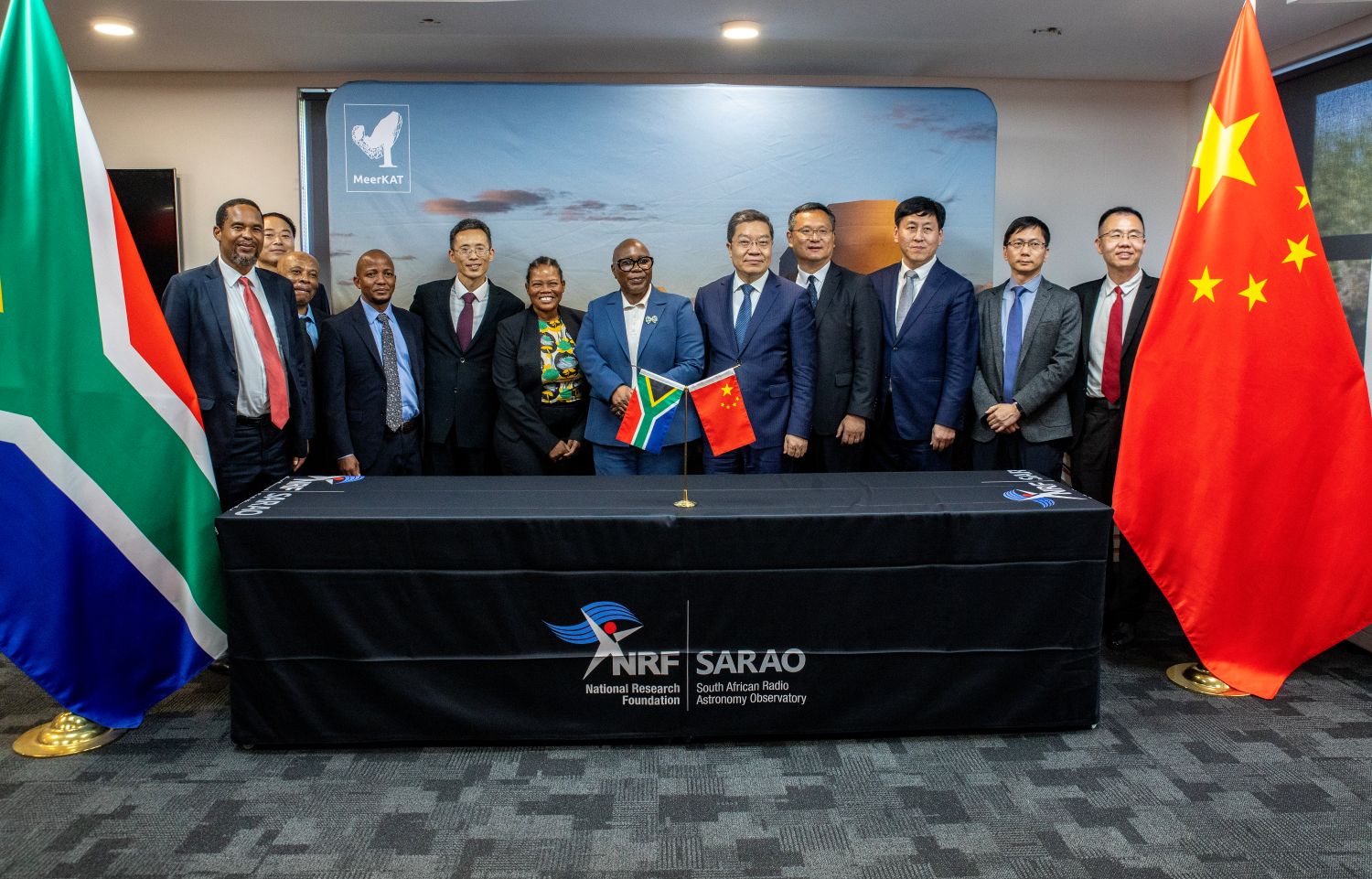
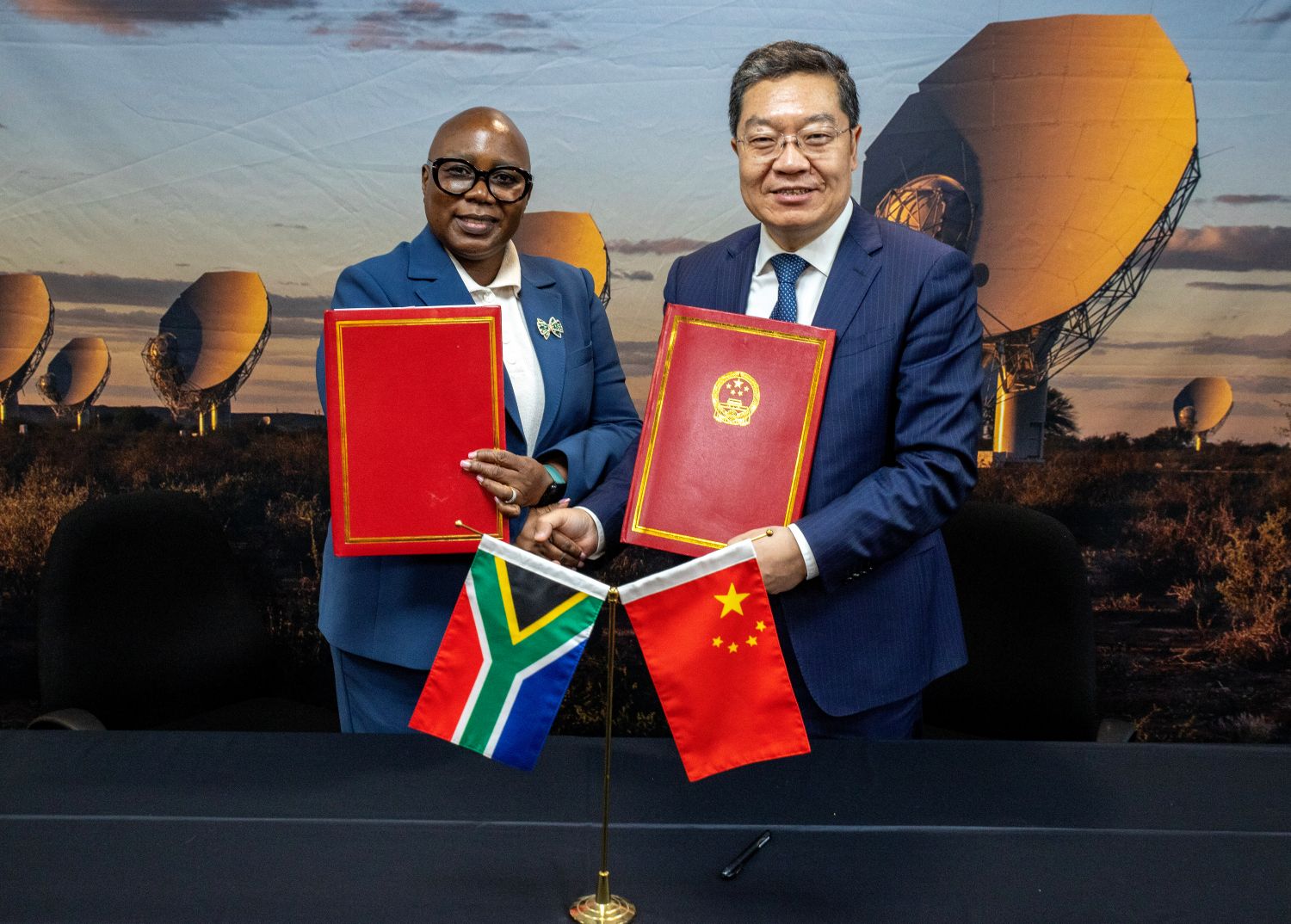
Deputy Minister of Science, Technology and Innovation, Nomalungelo Gina, hosted China’s Vice Minister of Science and Technology, CHEN Jiachang, during a courtesy visit at the South African Radio Astronomy Observatory (SARAO) in Cape Town on Friday.
The engagement followed the 9th South Africa-China Bi-National Commission, where Deputy President Paul Mashatile hosted China’s Vice President Han Zheng earlier in the day.
The two leaders reaffirmed the strong and long‑standing bilateral relations between South Africa and China, rooted in the 1999 Science and Technology Agreement between the Department of Science, Technology, and Innovation and China’s Ministry of Science and Technology, under which more than 150 joint R&D projects have been implemented.
Both Deputy Ministers reiterated their commitment to increasing exchanges between the two countries in science, technology, and innovation, including in open science and artificial intelligence.
Dr Gina expressed gratitude to China for its contributions to South Africa’s skills development, such as through the Young Scientists Programme, one of the outcomes of the People-to-People Mechanism held in China in December last year.
“South Africa and China continue to build a strong and forward‑looking partnership in science, technology, and innovation that delivers real benefits for our people and institutions,” said Dr Gina.
“As we prepare to conclude new agreements on space science and STI cooperation, and to relaunch initiatives such as the Young Scientists Exchange Programme, we reaffirm our shared commitment to innovation‑led development, skills exchange, and global cooperation on emerging technologies for a sustainable future,” said Dr. Gina.
The growing collaboration in astronomy was also highlighted, stressing the importance of expanding opportunities for researchers in both countries.
Vice Minister CHENG, reaffirming China’s commitment to the collaboration, said the friendship between South Africa and China has withstood the test of time, adding that the two countries were critical and important members of the global and developing world.
“We are thus proposing to use AI as a tool to explore the potential of scientific discovery – this is also where we can collaborate,” said the Vice Minister.
The Vice Minister invited South Africa to Chinese high-level initiatives, such as the Pujiang Innovation Forum, taking place in September in Shanghai, to create more opportunities. Established in 2008, this annual event is a leading international platform for scientific and technological exchange.
The two countries are planning to enter into new formal instruments this year to enhance cooperation in science and technology, including space science. Plans are to sign two new instruments: the “Agreement on Space Science and Peaceful Use of Outer Space” and a “Memorandum of Understanding on Science, Technology and Innovation”.
Deputy Minister of Science, Technology and Innovation, Nomalungelo Gina, hosted China’s Vice Minister of Science and Technology, CHEN Jiachang, during a courtesy visit at the South African Radio Astronomy Observatory (SARAO) in Cape Town on Friday.
The engagement followed the 9th South Africa-China Bi-National Commission, where Deputy President Paul Mashatile hosted China’s Vice President Han Zheng earlier in the day.
The two leaders reaffirmed the strong and long‑standing bilateral relations between South Africa and China, rooted in the 1999 Science and Technology Agreement between the Department of Science, Technology, and Innovation and China’s Ministry of Science and Technology, under which more than 150 joint R&D projects have been implemented.
Both Deputy Ministers reiterated their commitment to increasing exchanges between the two countries in science, technology, and innovation, including in open science and artificial intelligence.
Dr Gina expressed gratitude to China for its contributions to South Africa’s skills development, such as through the Young Scientists Programme, one of the outcomes of the People-to-People Mechanism held in China in December last year.
“South Africa and China continue to build a strong and forward‑looking partnership in science, technology, and innovation that delivers real benefits for our people and institutions,” said Dr Gina.
“As we prepare to conclude new agreements on space science and STI cooperation, and to relaunch initiatives such as the Young Scientists Exchange Programme, we reaffirm our shared commitment to innovation‑led development, skills exchange, and global cooperation on emerging technologies for a sustainable future,” said Dr. Gina.
The growing collaboration in astronomy was also highlighted, stressing the importance of expanding opportunities for researchers in both countries.
Vice Minister CHENG, reaffirming China’s commitment to the collaboration, said the friendship between South Africa and China has withstood the test of time, adding that the two countries were critical and important members of the global and developing world.
“We are thus proposing to use AI as a tool to explore the potential of scientific discovery – this is also where we can collaborate,” said the Vice Minister.
The Vice Minister invited South Africa to Chinese high-level initiatives, such as the Pujiang Innovation Forum, taking place in September in Shanghai, to create more opportunities. Established in 2008, this annual event is a leading international platform for scientific and technological exchange.
The two countries are planning to enter into new formal instruments this year to enhance cooperation in science and technology, including space science. Plans are to sign two new instruments: the “Agreement on Space Science and Peaceful Use of Outer Space” and a “Memorandum of Understanding on Science, Technology and Innovation”.