
Director-General calls for strengthened collaboration with higher education institutions and Centre for High Performance Computing
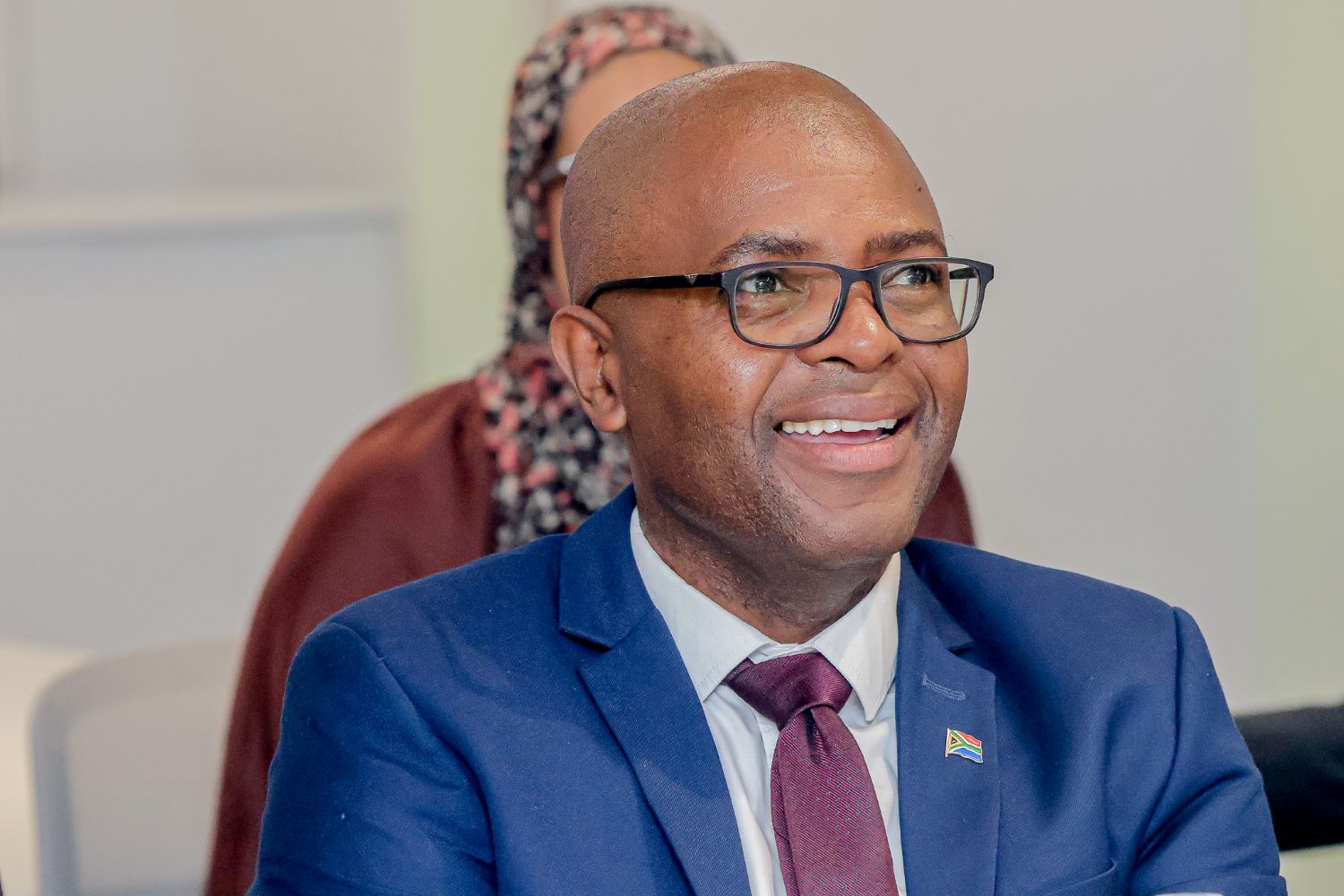
In an engagement aimed at advancing South Africa's science, technology and innovation agenda, Dr Mlungisi Cele, Director-General of Science, Technology and Innovation, visited Stellenbosch University and the University of Cape Town 26 to 27 February 2026 to strength collaboration between government and the higher education institutions.
The visits were part of a broader strategic drive to reposition South Africa's national system of innovation (NSI) to respond more effectively to national development imperatives while strengthening the country's global competitiveness.
Through engagements with the two universities, the Director-General sought to deepen cooperation in advancing the priorities of the Science, Technology and Innovation (STI) Decadal Plan, identify concrete ways to bolster policy development and implementation capacity, strengthen institutional coordination across the NSI, and enhance planning, monitoring and evaluation. He also wanted the Department of Science, Technology and Innovation (DSTI) and higher education institutions to explore pathways to transforming and expanding the academic and research workforce, renew research, development and innovation infrastructure, and advance international STI cooperation.
Cele said the world was facing the escalating effects of climate change, growing geopolitical tensions, and disruptive technologies that were transforming society at an unprecedented rate. He emphasised that progress without inclusion, ethics and sustainability could worsen inequalities and create new threats, calling for renewed science diplomacy, stronger institutions, and a new social contract between science and society to ensure that innovation served both national development and people across the globe.
The 7th administration, said Cele, had committed to driving inclusive growth and job creation, reducing poverty and tackling the high cost of living, and building a capable, ethical and developmental state. He was clear that science, technology and innovation were "indispensable to all our policy efforts to address these priorities", as encapsulated in Minister Nzimande's motto, "Placing science, technology, and innovation at the centre of government, education, industry and society".
Reviewing South Africa's STI policy landscape since 1996, Cele highlighted that the current guiding framework, the STI Decadal Plan, aimed to bring about accelerated, transformative, inclusive and sustainable socio-economic development. However, he was candid about systemic challenges. He said that, while the NSI was relatively productive, it was small, with an aging research workforce, and was lagging behind owing to inefficiency and underfunding. It was not yet fully inclusive, and the gap between innovation and commercialisation persisted.
Given the current connections between the DSTI and the two universities, as well as various areas of specialisation at Stellenbosch University, the Director-General posed profound questions about the STI policy mix in 2030 and beyond, particularly in terms of artificial intelligence.
For example, he asked questions about what role philosophy, ethics and wisdom would play, how safe, secure and trustworthy artificial intelligence could be developed, and what would remain of humankind if AI could learn, decide and adapt independently. How could people ensure meaningful human control over intelligent systems?
To address these challenges and harness the many opportunities that presented themselves, Cele proposed that the DSTI select specific areas for collaboration with each university.
There would be collaboration with both universities on their AI strategies, key AI assets, AI for sustainable development and localised large language models aligned with the core strategic priorities of the Decadal Plan, as well as regional innovation systems in the province, public sector innovation (leveraging technologies to strengthen local and district-level government capability in the province), innovation for inclusive development and service delivery, and staff development and secondment.
At Stellenbosch, the focus areas for collaboration would include policy analysis and evaluation, and data management. Examples include the formulation of the STI Act, the involvement of the Centre for Research on Evaluation, Science and Technology, the DSTI-NRF Centre of Excellence in Scientometrics and STI Policy, and the National STI Policy Centre.
Some of the other areas proposed for partnership included renewable energy research and development (with a focus on next-generation small, medium and youth-led enterprises in the green hydrogen value chain), solar and photovoltaic technologies, power storage technologies, the beneficiation of rare earth materials, climate adaptation technologies, and health innovation (specifically vaccine development through the Centre for Epidemic Response and Innovation).
Prof. Deresh Ramjugernath, Stellenbosch University's Rector and Vice Chancellor, outlined how he saw the university's role in enhancing the STI ecosystem to achieve its full potential.
Ramjugernath cited the university's Vision 2040, stating that the university was committed to inclusivity and innovation. While the university was a top research-intensive university, its impact was as important as its ranking.
"Ultimately, with everything that we do as an organisation – teaching and learning, research and innovation, the way we develop our graduates – we look at how it serves society and how it plays a role in uplifting society," he said.
He believed that increasing and strengthening partnerships could help the university present itself as a holistically sustainable institution, and that it had done well in strengthening partnerships with other universities and research organisations. The institution has over 385 collaborations in 65 countries throughout the world. However, Ramjugernath was clear that such partnerships would not create an environment conducive to impact and sustainability on their own.
"We believe in forming collaborations with the government and its agencies not only in South Africa, but across the African continent. We intend to strengthen partnerships with business, the private sector and civil society. So, we are establishing a separate partnership office to spearhead this type of activity," he said.
"This is the type of relationship we will have with national, local and provincial government in terms of logistical cooperation to advance the country's agenda. To have an impact on society, there must be collaboration. We have a partnership with the DSTI and want to take it a step further so that we can make an impact and advance the country's innovation ecosystem," concluded Ramjugernath.
Proposed areas of collaboration with the University of Cape Town (UCT) focused on strengthening strategic alignment between academia and government priorities. These included partnerships on policy development, analysis and evaluation, and engaging with the Vice-Chancellor's health innovation initiative to align medical technology advances with the DSTI's health innovation programme.
There would be continued collaboration with UCT's Catalysis Programme to support Hydrogen South Africa (HySA) and green hydrogen commercialisation outcomes, and the DSTI gave a briefing on the green hydrogen coastal belt initiative.
The DSTI would hold further engagements to examine UCT's climate adaptation and mitigation technologies, including carbon capture and use, and resilient public infrastructure solutions, including sustainable housing.
Prof. Mosia Moshabela, Vice Chancellor of UCT, discussed the university's important role in shaping social and economic development, saying, "As a university, we sometimes forget this as we focus on our day-to-day teaching and lose sight of how we are driving development. We do this in several ways, including the development of young professionals who enter the job market after graduation, which is critical.
"We do it by doing research that informs, advances and assists society in adopting new innovations. We aim to be as current as possible. But, most crucially, we must be precise about one thing: for society to grow, we must innovate, and while conducting research is beneficial, it does not necessarily imply that we are motivating society.
"So, the Department drives our policies, regulations and national priorities and strategies, and it helps when we collaborate on this, understanding where the government in general is going, and leveraging the university to drive talent development, new knowledge and innovation. This meeting is an intentional step towards fulfilling the purpose of advancing social and economic development. I hope that this is just the beginning of a productive conversation that will continue," said Moshabela.
In his engagements with both universities, Cele highlighted the necessity of turning research excellence into policy impact, innovation scale-up and socio-economic benefit. He emphasised the importance of stronger collaboration across government, universities and public research institutions to ensure that South Africa's STI investments provided significant results for communities, industry and the economy.
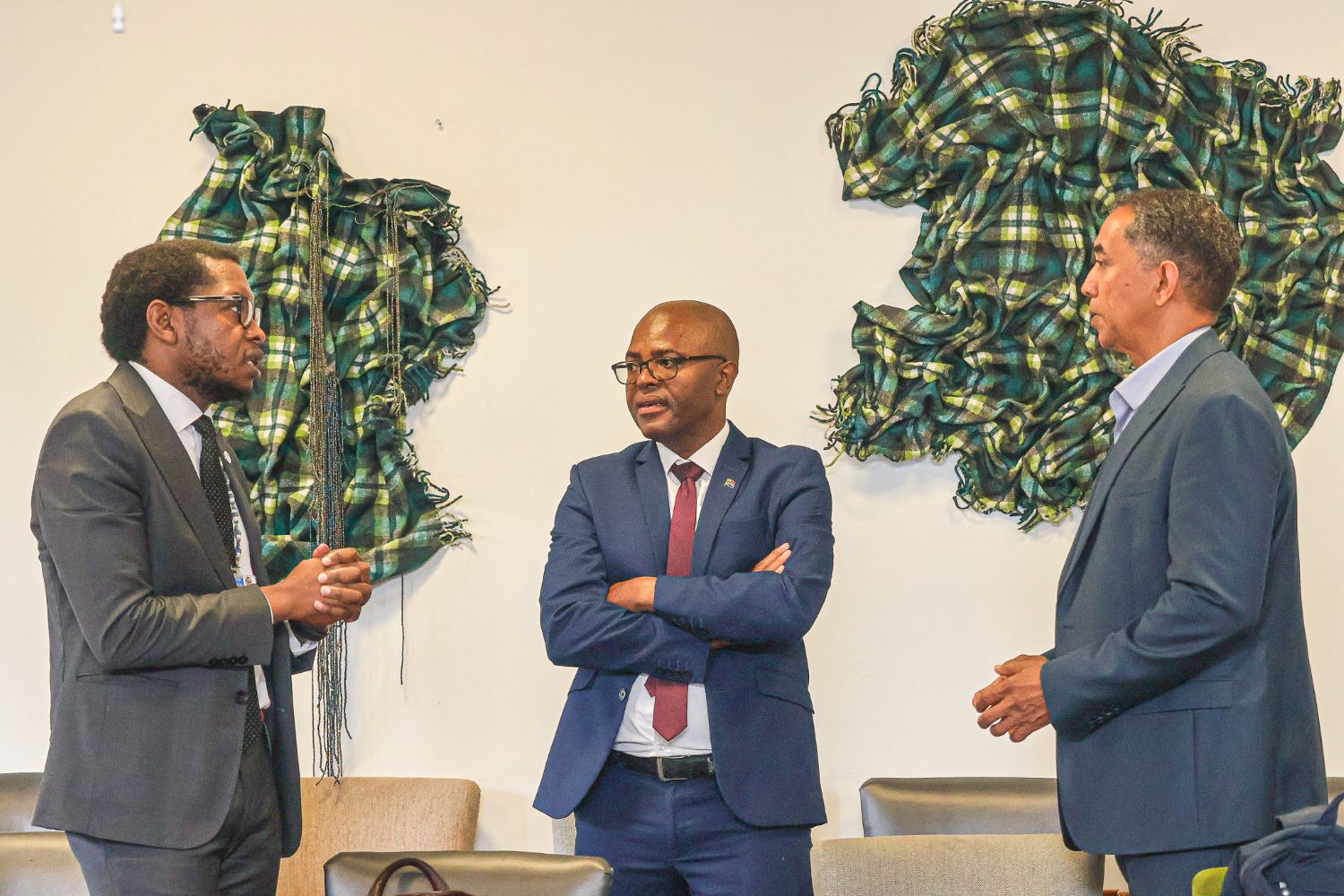
The Director-General also paid a visit to the Centre for High Performance Computing (CHPC) at the Council for Scientific and Industrial Research's Cape Town campus. The CHPC is one of the three pillars of the DSTI-supported National Integrated Cyberinfrastructure System.
Mr Mervyn Christoffels, Director of the CHPC, provided an overview of the centre's work, including its training and development activities and the new reality that it was enabling in a new era of science, for example, moving beyond traditional high-performance computers to digital research platforms. According to Christoffels, science is increasingly compute-centric, data-driven, AI-powered and hybrid, and digital sovereignty is a strategic objective.
Speaking at the CHPC, Cele said that it was important to examine the role that the CHPC continued to play, and explore how we could use its capabilities and local and international partnerships to move the country forward. He stated that, with the cooperation of all involved, the NSI was capable of operating as an effective, cohesive unit, that could help South Africa address current global threats. He urged stakeholders to seize opportunities as they arose, and to look beyond 2030 to see what next big thing would come from South Africa.