
Winners of inaugural SA Tech Challenge are innovating for good
Six innovators walked away with hundreds of thousands of rands in grant funding, with the winner scooping a whopping R1 million in the first ever South African Tech Challenge. Described as the most lucrative and exciting tech opportunity in South Africa to date, the initiative is a collaboration between the Department of Science, Technology and Innovation (DSTI), the Department of Small Business Development, the Department of Communications and Digital Technologies, the Innovation Bridge Portal (supported by the Council for Scientific and Industrial Research), The Technology Innovation Agency, the Companies and Intellectual Property Commission, and Wits University's Tshimologong Digital Innovation Precinct. The Tech Challenge aims to integrate the various government departments to support scaling up small businesses in the tech sector.
The winners were announced during the opening of the 10th Science Forum South Africa event underway in Pretoria. The milestone event was presided over by the Minister of Science, Technology and Innovation, Prof. Blade Nzimande. The DSTI Director-General, Dr Mlungisi Cele, also addressed the event.
Dr Cele said the Tech Challenge not only recognises outstanding innovators but also celebrates the launch of a new generation of policy thinking that believes innovation is not an accident of talent, but the result of deliberate national investment and design.
"The South African Tech Challenge is such an instrument. It is a way of turning policy into participation, transforming the abstract idea of 'innovation culture' into a living, breathing reality that every young South African can be part of," said Dr Cele.
In African economies, where innovation ecosystems are still emerging, tech challenges create low-barrier entry points for small and medium enterprises, youth and women innovators – fostering inclusivity while addressing national development priorities, said Dr Cele. “They strengthen the innovation value chain, enhance industrial competitiveness and catalyse high-impact solutions in areas outlined in the DSTI's Decadal Plan,” added the DG.
The SA Tech Challenge is part of the DSTI's broader Innovation Support and Enablement Programme, through which the Department aspires to build an ecosystem that equips innovators with the competencies to succeed, connects ideas to investment and markets and uses evidence and data to guide policy and funding decisions.
By introducing the SA Tech Challenge as part of broader policy instruments instead of a once-off event, the Department is embedding it as a core element of a continuous innovation pipeline that will help South Africa move discoveries from our laboratories and into our factories, markets and communities.
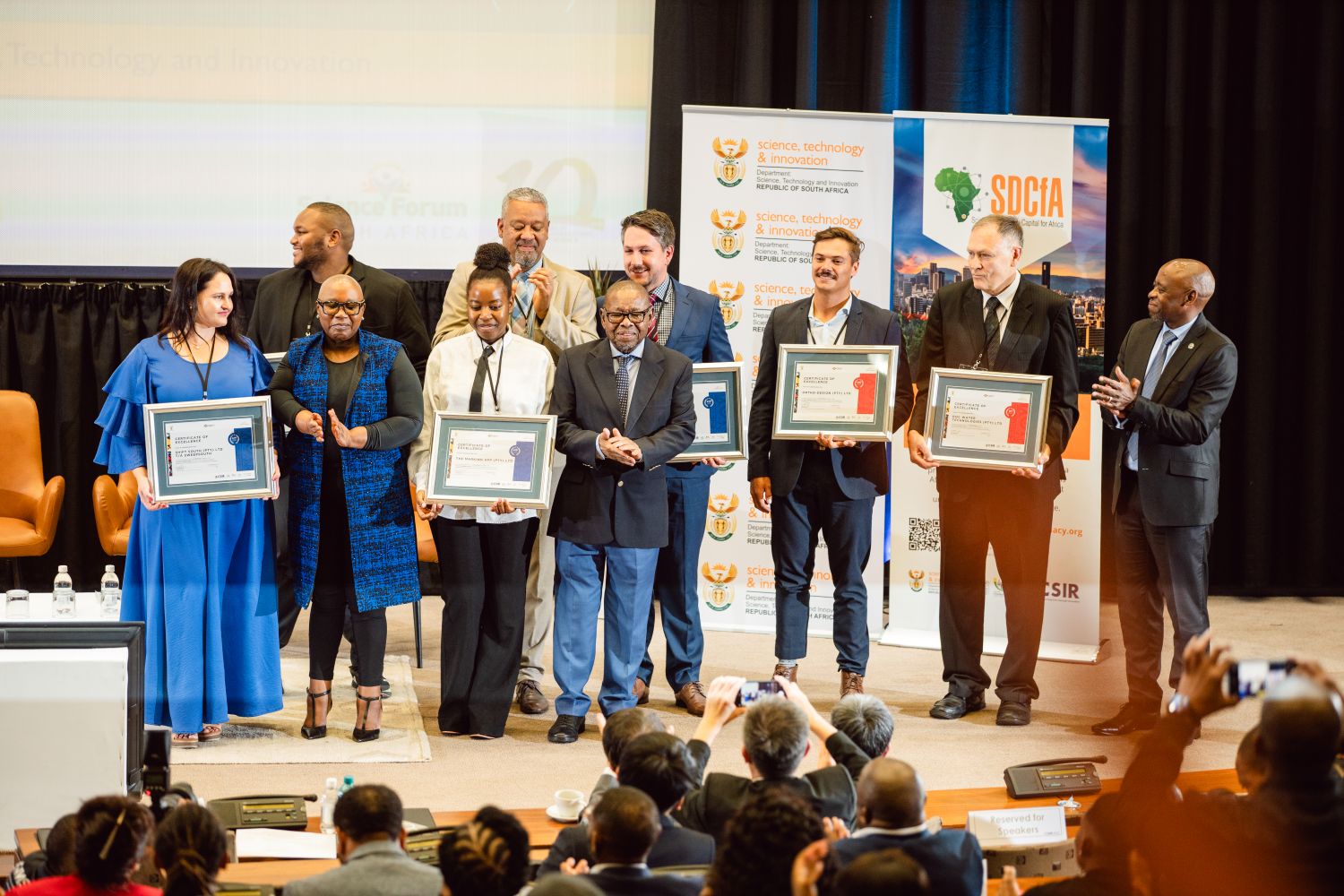
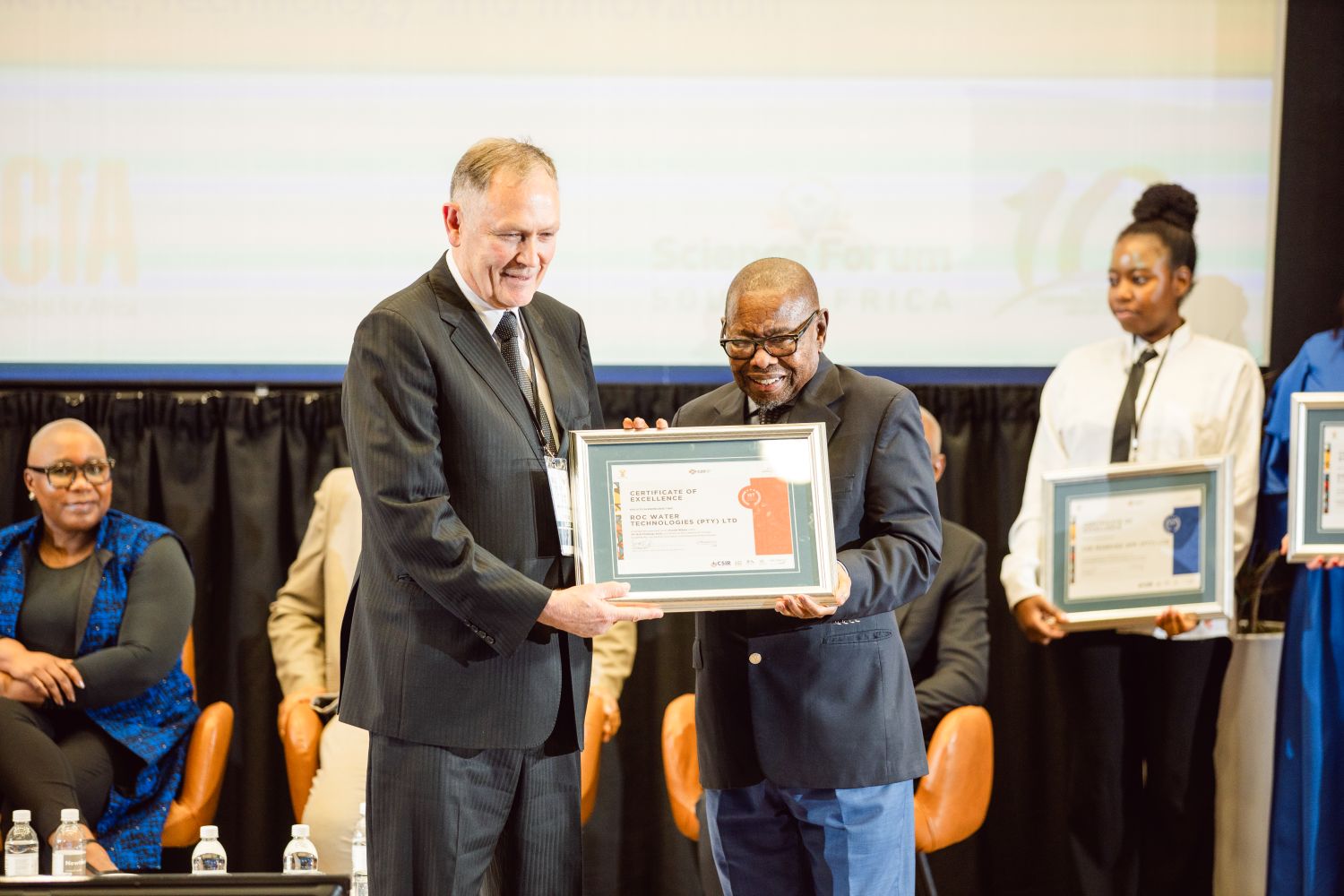
The first prize went to Prof. Jannie Maree from ROC Water Technologies for his piped freeze-crystallization technology that converts acid mine drainage and industrial waste effluent into clean drinking water and valuable byproducts, such as salts, thereby addressing water security and sustainability.
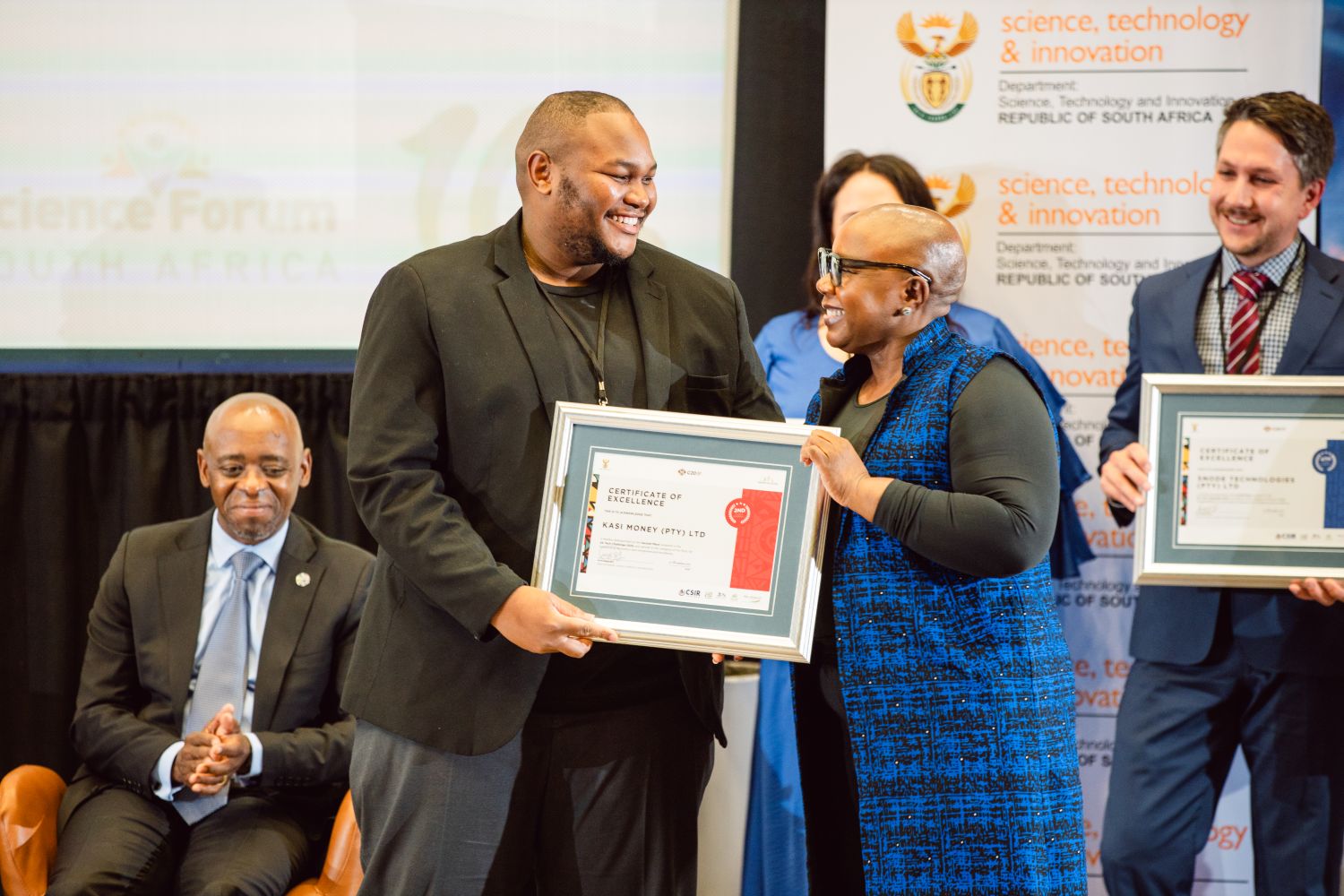
The second prize of R750 000 in grants was awarded to Mr Thami Hoza, the co-founder of Kasi Money. Kasi Money is a dynamic, mobile-first neobank revolutionising financial access for Africa's gig economy workers. It combines transparent pricing, privacy and a mission-driven approach to serve the "hustlers" of modern Africa.
The winner of the third prize was Mr Dian Peach from Ortho-Design, a company that strives to design and develop new and improved medical devices. It aims to bridge the gap between innovation, ease of use and affordability in the rapidly evolving medical field. Ortho-Design's team of specialised engineers works alongside surgeons to create modern and effective health care solutions.
In fourth place came Snode Technologies, a South African cybersecurity firm founded by Mr Nithen Naidoo. The company's next-generation continuous threat exposure management frameworks and artificial intelligence (AI)-powered cyber defences deliver real-time protection that proactively evolves with emerging threat landscapes.
Fifth-place winner was Sweepsouth, founded by Ms Aisha Pandor and her husband, Mr Alen Ribic. This pioneer in Africa's home-services industry leverages technology to connect customers with vetted and reliable workers through a scalable marketplace. Its mission addresses on-demand home services for customers while creating sustainable job opportunities for unemployed and underemployed women, driving positive socio-economic impact in the domestic work sector.
The sixth prize went to Mr Kabelo Mahlobogwane's The Marking App, which uses AI and optical character recognition to automate the grading of handwritten assessments and provide feedback that mimics teacher annotations. It allows teachers to connect the platform to any standard printer or scanner, saving more than 50% of administration time. It also includes interactive educational games, an attendance register, as well as a comprehensive portal and AI assistants for learners and teachers.
The DSTI congratulates all the winners.
Issued by the Department of Science, Technology and Innovation.