

UKZN opens Advanced Manufacturing Facility to boost aerospace innovation and industrial growth
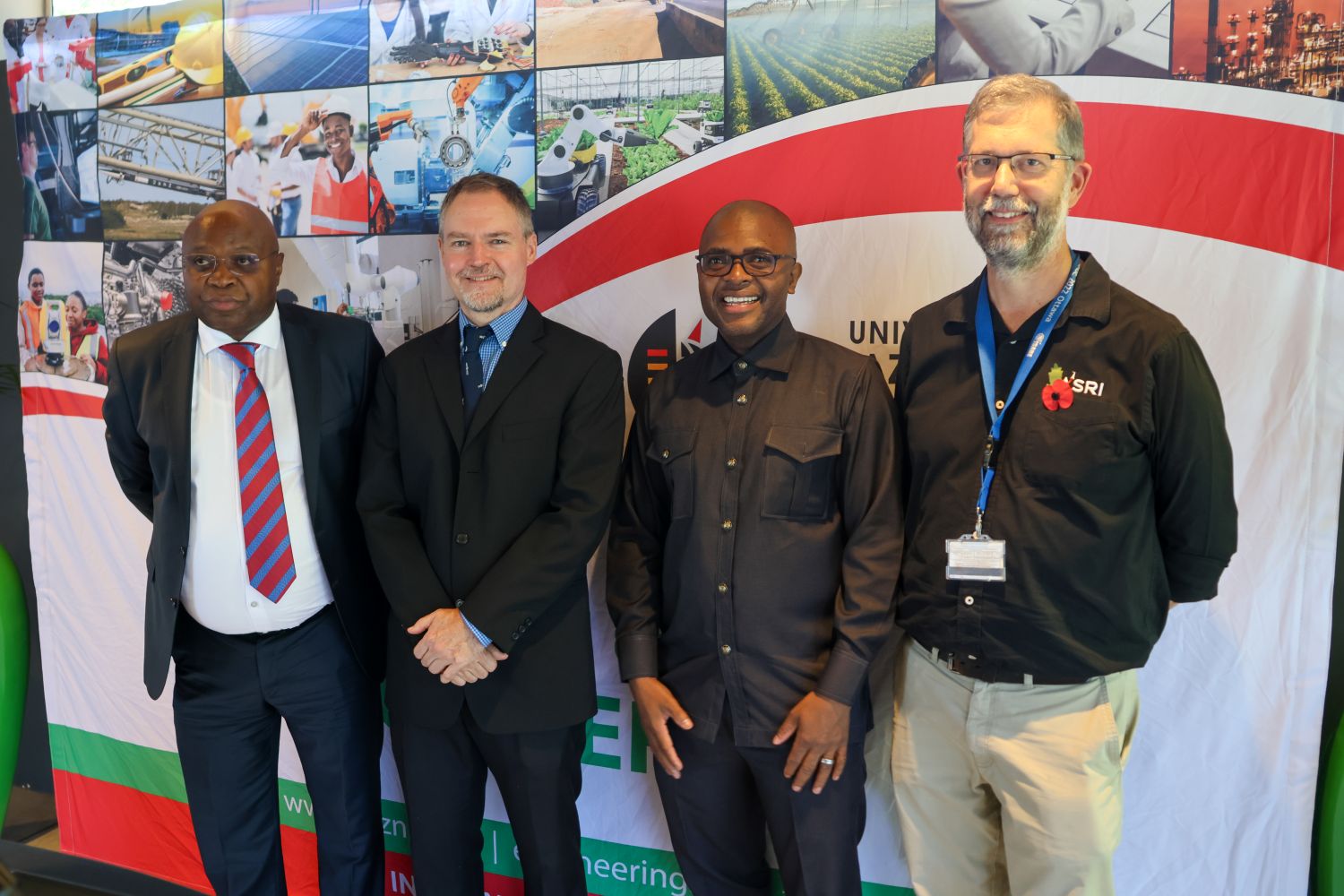
The future of aerospace engineering in South Africa took a huge leap forward this week with the official opening of the Advanced Manufacturing Facility and the new headquarters of the Aerospace Systems Research Institute (ASRI) at the University of KwaZulu-Natal (UKZN).
Unveiled by Dr Mlungisi Cele, Director-General of the Department of Science, Technology and Innovation (DSTI) on Tuesday, 11 November 2025, the state-of-the-art hub is a strategic step towards ensuring the global competitiveness of the country's innovation system.
Cele highlighted the value of strategic government, higher education and industry alliances to achieve national priorities. He emphasised that the ASRI and advanced manufacturing initiatives strengthened the link between research excellence and industrial application – a cornerstone of the Department's vision for a more innovative, inclusive and sustainable economy.
"Our economy urgently needs a new generation of skilled engineers, scientists and innovators who can drive productivity, competitiveness and inclusive growth. Facilities like this one play a crucial role in meeting that need. They provide students with hands-on experience using cutting-edge technologies while fostering the creativity and problem-solving skills that are vital for our nation's future," he said.
He identified additive manufacturing, robotics and advanced materials as important areas for capacity development.
Cele added that the DSTI's Science, Technology and Innovation Decadal Plan stressed the need to promote localisation and technology-driven manufacturing, and to equip the youth with the skills and opportunities needed for the 4th industrial revolution.
Reflecting on the event's broader importance, he said, "As we open the doors of the Facility and ASRI's new offices, we also open the door to new possibilities for innovation, partnership, and a more prosperous South Africa".
ASRI, originally established in 2009 as the Aerospace Systems Research Group and formally established as an institute within UKZN's School of Engineering in 2022, aims to become a global centre of excellence in aerospace propulsion research and development, to support South Africa's space engineering economy, and to develop skilled human capital in aerospace propulsion engineering.
Prof. Fhatuwani Mudau, UKZN's Deputy Vice-Chancellor and Head of the College of Agriculture, Engineering and Science, thanked the DSTI for its trust in the university, assuring the audience that the investment made would be used to ensure that the university was a vehicle of change, and that ASRI became a role model and torch bearer in bringing science and capacity to the country.
Mudau stated that he was excited by the national recognition that UKZN had earned through ASRI's rocket science.
He encouraged the young engineers working at ASRI and the advanced manufacturing facility to use the opportunity fully. South Africa had to become independently competitive, identifying what it could do best, and on its own, as China did.
"Everything that happens now is the product of hard-earned resources that, as a university, we must use to breed young researchers and engineers who will contribute to the national system of innovation," said Mudau.
Glen Snedden, Professor of Aerospace Engineering at UKZN, said the new office infrastructure and manufacturing capability represented a visible commitment to the programme, which was both enabling and motivating for the engineers and students.
For instance, the computer numerical control machines made it possible for up to 70% of the parts required for the rocket propulsion engines to be manufactured in-house, reducing production times and, to some extent, costs. This enabled more testing and quicker progress towards enabling ASRI's vision of launching satellites into low earth orbit (2 000 km or less above the Earth's surface) from South Africa.
Regarding human capacity development, Snedden indicated that ASRI had two main aims. The first was to build satellite launch capability for South Africa and Africa, and the second was to develop the knowledge and skills to use it.
"There is no pool of rocket scientists in South Africa for us to pick from, so we have to develop the talent," he explained. This was being done through a comprehensive approach, with active participation in outreach activities, partnering with non-government organisations, the DSTI and South African National Space Agency. "We identify talent early among students doing undergraduate degrees at UKZN and offer internships and mentorship to promising students."
ASRI also offers postgraduate study opportunities to promising students from around the country, and is currently working with graduates at Stellenbosch University and from the Universities of Pretoria and the Witwatersrand as well as UKZN.
Snedden said that the next step would be to move to a newly developed facility on what is currently a vacant piece of university land.
"This would see the development of a local test capability for the static firing of our motors and, with further development, we envisage the co-development of a production facility, offices, lecture theatres and an outreach centre all built around the idea of aerospace studies and research ... [I]f all goes well, we will be launching a suborbital rocket into space within five years and progressing to orbital launches within 10 years," he concluded.
The new ASRI offices feature, among other things, a boardroom with teleconferencing capabilities, a meeting room for smaller gatherings and an advanced computing facility for simulation work. This vastly improved workspace is expected to foster productivity, professionalism and community among staff and students, while attracting interest and funding from industry and higher education.
The DSTI received a Platinum Donor Award, which UKZN makes for financial contributions of R1 million or more.
Issued by the Department of Science, Technology and Innovation