
Southern African Large Telescope celebrates 20 years of eyeing the cosmos
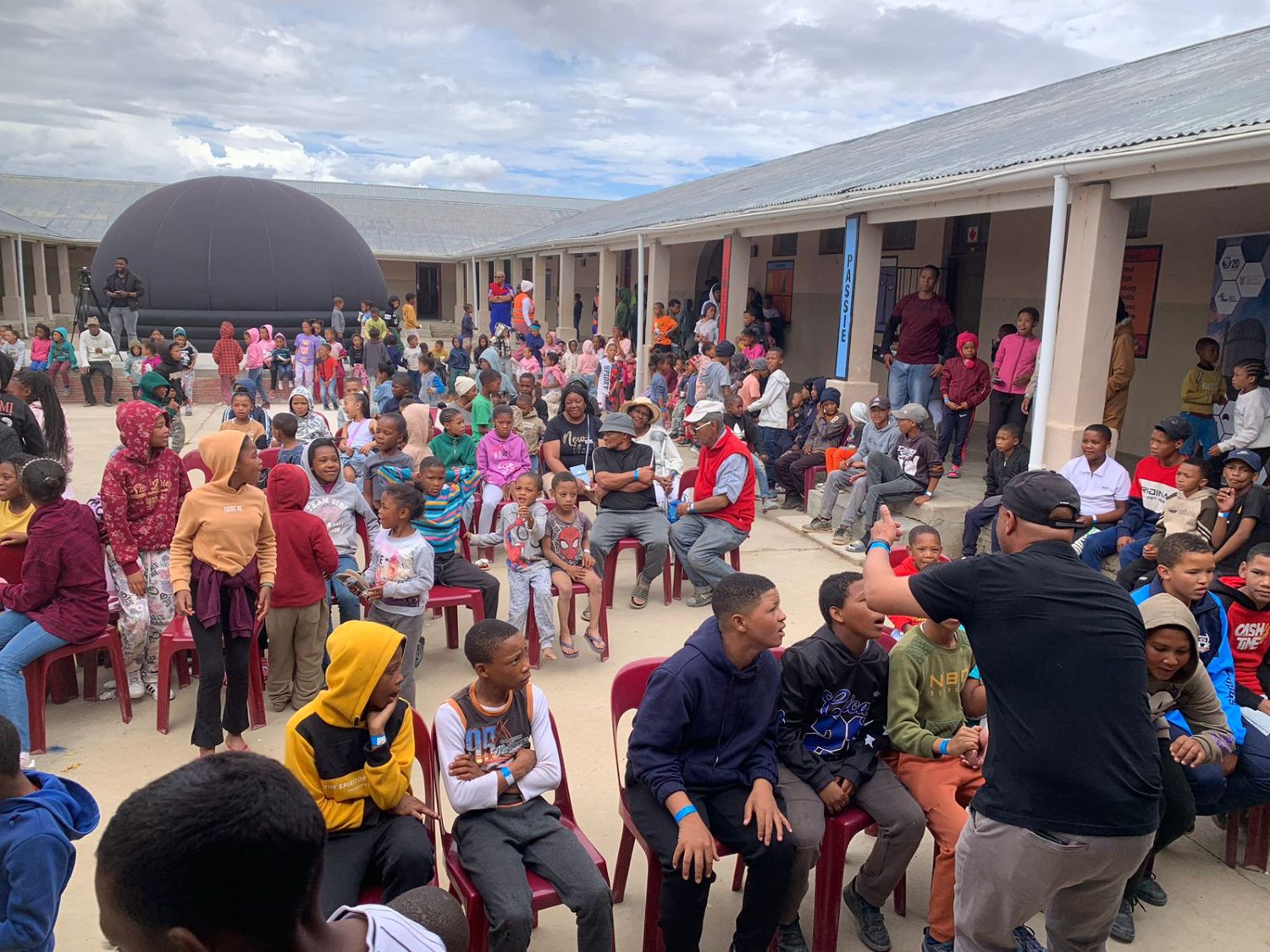
Africa's Giant Eye on the Sky began its 20th anniversary celebrations with an outreach at Roggeveld Intermediate School in Sutherland on 8 November. Learners and community members gathered with representatives of the Department of Science, Technology and Innovation (DSTI), the South African Astronomical Observatory (SAAO) and the Southern African Large Telescope (SALT) to mark two decades of scientific achievement and community partnership.
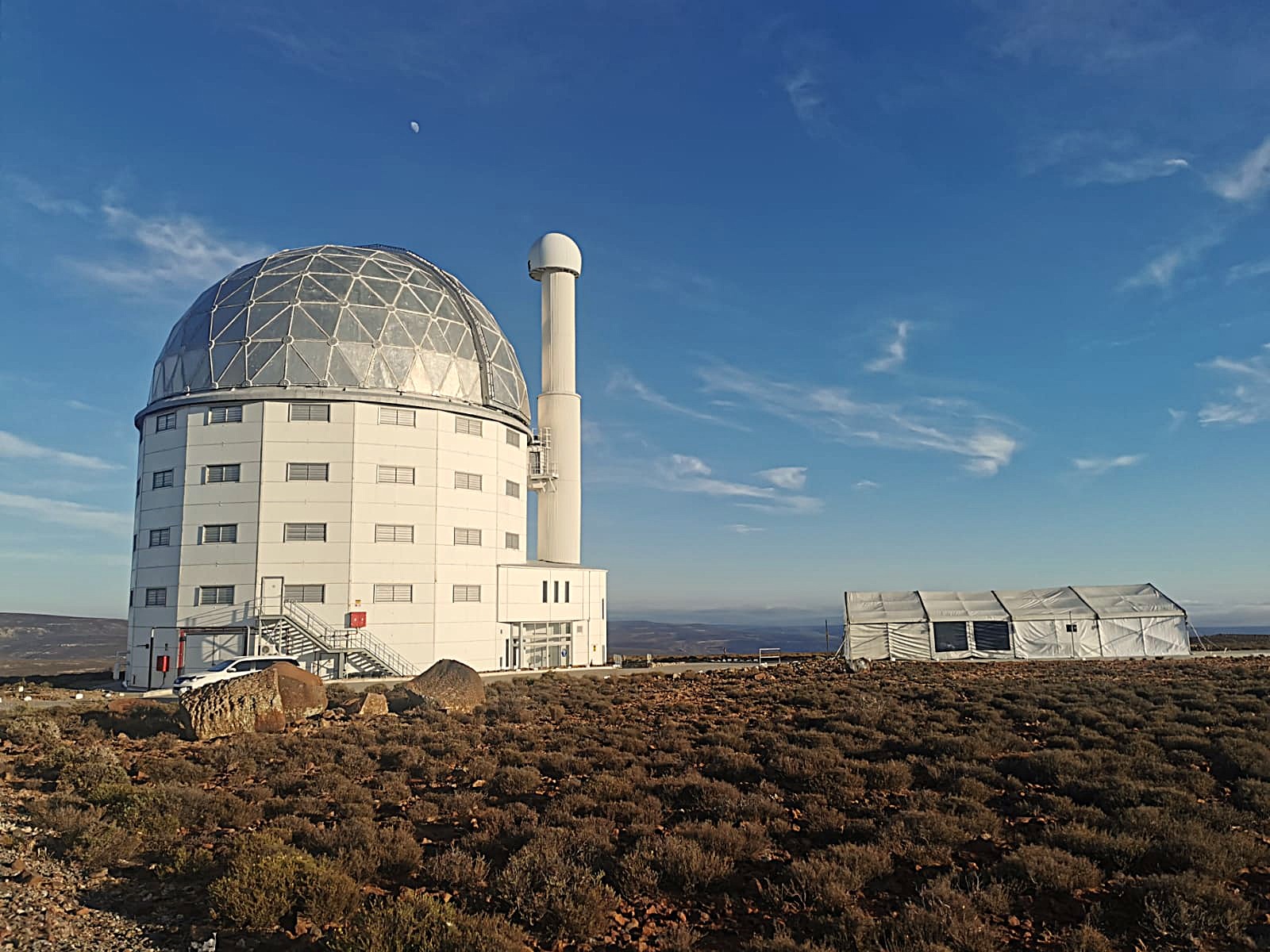
Sutherland is home to SALT, Africa's largest optical telescope, and while the event was a commemoration of a scientific milestone, it was also an affirmation of the town's enduring relationship with one of the world's most advanced observatories.
"This is really a proud moment for South African science," said Takalani Nemaungani, Chief Director: Astronomy at the DSTI. "It represents two decades of excellent scientific work, discoveries and collaboration, with both the international partners who form part of the SALT community and the people of Sutherland who host this facility."
In the spirit of DSTI's mantra of placing science at the centre of government, education, industry and society, the day's programme was designed to bring science closer to the people. Learners participated in art and model-building competitions inspired by the telescope. There were performances and interactive science exhibits, including two large inflatable planetariums for which learners had to queue.
The DSTI and its partners have worked hard to root global science in the local community. "We have donated new books to the local library and helped refurbish the trauma room at the police station," Nemaungani added. "This is about bringing science to the people and making sure this project is seen as a project of the people."
Sutherland's bond with SALT runs deep. Anthony Mietas, Executive Mayor of Karoo Hoogland Municipality, reflected on how the telescope's arrival in 2005 reshaped Sutherland's economy and social fabric.
He explained that, while there had been telescopes in the area before, "After the commissioning of SALT, the government insisted there should be tangible benefits to society, and that's when tourism started to grow. Today, Sutherland has 74 guesthouses and employs nearly 500 people. You can see the impact everywhere: the guesthouses named after stars, planets and galaxies. People have really bought into it."
The SALT Collateral Benefits Programme focuses on education and skills development, ensuring that the telescope's presence creates lasting opportunities. Bursaries, teacher training and exposure to global science events have opened new doors for young locals. "We now have local kids teaching in local schools, serving as role models for others," Mietas said. "That's the essence of what the SAAO stands for – broadening horizons and equipping our young people with skills for the future."
That future, as Brian Chaboyer, Chair of the SALT Board of Directors, explained, is one of renewal and collaboration. "SALT is an international partnership of eight stakeholders across five countries," he said. "That diversity of expertise makes SALT stronger. Everyone brings different perspectives, but we share one vision: to keep SALT a world-class observatory."
Over the past 20 years, SALT has played a role in major astronomical discoveries, including observations of the 2017 neutron star collision that revealed how heavy elements such as gold are formed in the universe. Now, with the rise of new sky surveys and the Square Kilometre Array (SKA) radio telescope project, SALT is upgrading its instruments to position itself for discoveries through multiwavelength astronomy.
"Technologically, we invest continuously to keep SALT competitive," Chaboyer said. "We are replacing key optical systems and developing new spectrographs that will allow us to observe hundreds of spectra at once. The goal is to ensure SALT remains a telescope of the future."
The community's support, its children's curiosity, and the government's continued investment are the foundation of SALT's success story. Mayor Mietas hopes that locals will continue to deepen the relationship. "We've already produced engineers, operators entrepreneurs and teachers," he said. "The next milestone I'd love to see is a local astronomer working at SALT."