
South Africa accelerates green innovation with launch of cutting-edge carbon dioxide encapsulation facility
South Africa has taken another significant step towards building a future driven by sustainable, high-tech industries with the launch of the Supercritical Carbon Dioxide (CO2) Encapsulation Facility (SCEF).
Held at the Council for Scientific and Industrial Research (CSIR) International Convention Centre in Pretoria on 17 October 2025, the launch brought together leaders from government, research and industry to celebrate a breakthrough moment for South African science, technology and innovation.
The facility, commissioned in April 2025 by the CSIR, an entity of the Department of Science, Technology and Innovation (DSTI), positions South Africa at the forefront of innovation in supercritical CO2 encapsulation, a sustainable and precision-driven alternative to conventional methods.
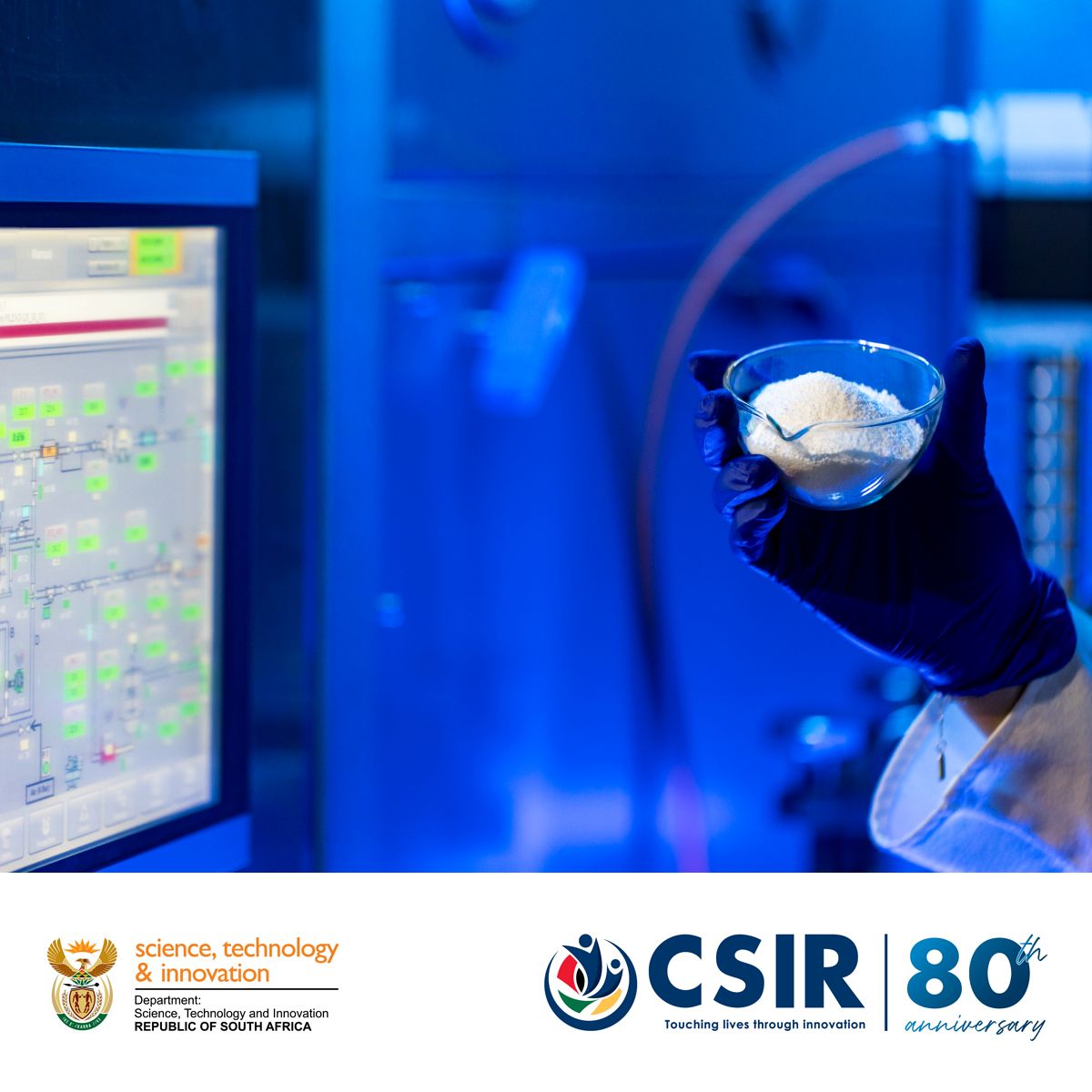
This state-of-the-art pilot-scale facility represents a major leap forward in clean, solvent-free encapsulation technologies that enable the production of high-value, bio-based ingredients for pharmaceutical, agricultural, food and cosmetic applications.
It builds on a breakthrough by the CSIR, which developed and patented a novel supercritical CO2 encapsulation process. Designed to protect sensitive bioactives like probiotics, this process ensures ingredient stability through production, storage and delivery – all without harmful solvents. Its commercial licensing to a South African small, business marked a pivotal point in translating lab-scale research into market-ready products, sparking growing interest from the nutraceutical, cosmeceutical and animal health industries.
However, scaling the technology presented a significant challenge due to the absence of a dedicated pilot-scale facility to validate commercial readiness. To address this gap, the DSTI awarded the CSIR R25,9 million to establish this first-of-a-kind pilot SCEF.
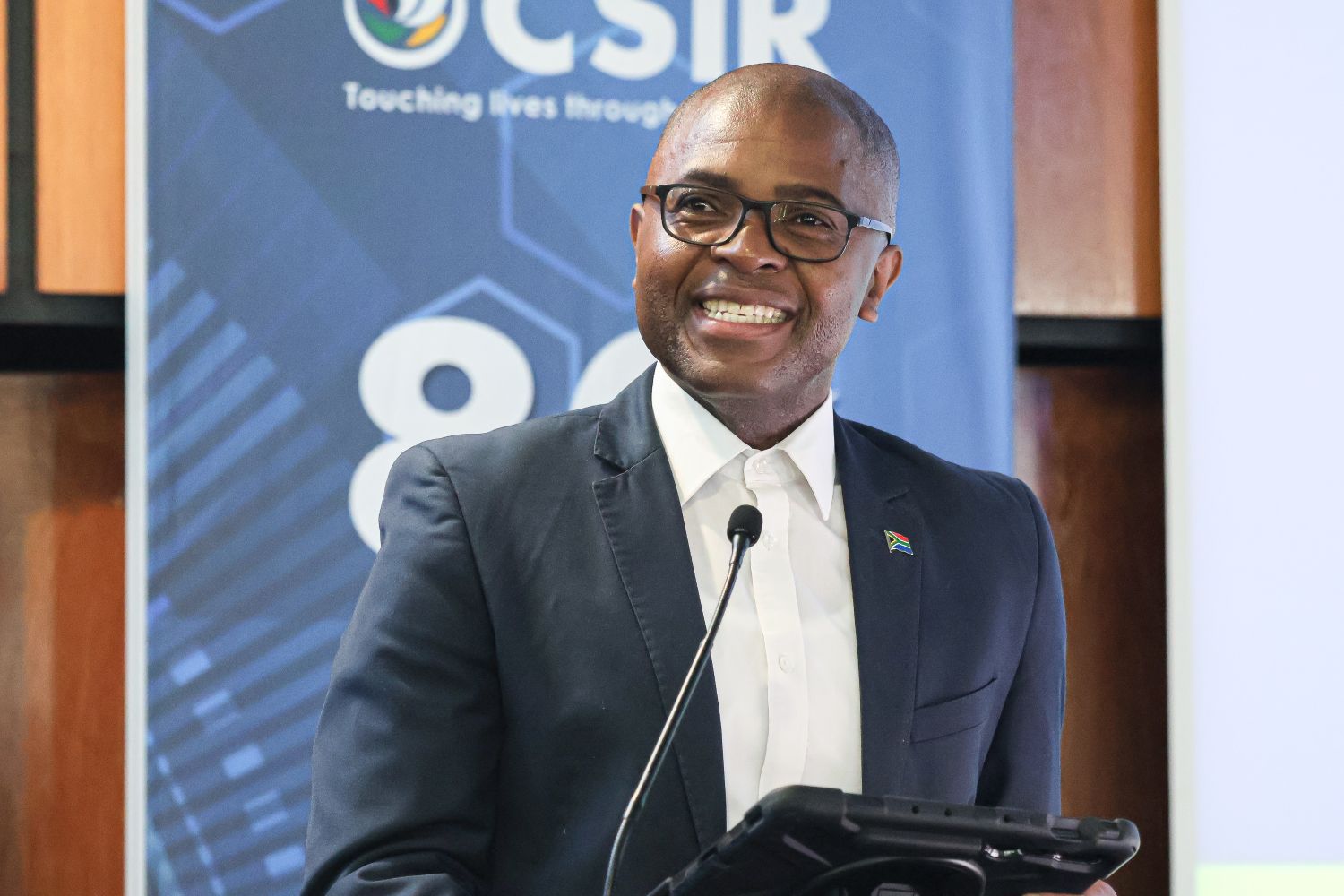
Speaking at the event, Dr Mlungisi Cele, Director-General of the DSTI, said the facility represented "an important step in South Africa's development of new high-tech industries to support manufacturing, which remains a key priority for our economy owing to its multiplier effect."
"High-tech industries have a higher multiplier effect, because of the activation of new manufacturing value chains, the expansion of supply chains, and the employment absorption of a highly skilled workforce as outlined in the Science, Technology and Innovation (STI) Decadal Plan", said Dr Cele.
The Decadal Plan serves as an implementation plan for the 2019 STI White Paper.
Dr Cele highlighted the crucial role of STI in transforming South Africa's industrial landscape through biomanufacturing. He noted that green technology innovation has been critical in the development of the global industrial revolution and technical competitiveness, adding that emerging fields such as synthetic and engineering biology represent "a transformational opportunity for design and biomanufacturing with the potential to address a broad range of global challenges in health, climate change, the environment, sustainable agriculture, bio-based chemicals, new materials and green energy".
Drawing on the 2019 White Paper, Dr Cele said that biomanufacturing stands out as a key intervention aimed at modernising the manufacturing sector and supporting emerging industries, small, medium and micro enterprises (SMMEs), and innovation-led revitalisation of traditional sectors.
He explained that South Africa's Bioeconomy Implementation Plan and the Reimagined Industrial Strategy both position biomanufacturing as a vital technology platform for industry.
The Director-General emphasised the need for strong research and development capabilities to maintain competitiveness.
"Research excellence is a non-negotiable part of support for new and emerging biotechnologies and innovations," he stated. He further highlighted the importance of investing in infrastructure and skills saying, "to de-risk the biomanufacturing value chain, it is important to establish accessible and affordable demonstration, upscaling and piloting infrastructure based on an open innovation model".
Building on 80 years of scientific excellence, Dr Thulani Dlamini, CEO of the CSIR, said the launch came just a week after the CSIR marked its 80th anniversary at its 9th Biennial Conference, which focused on a central theme, namely, the importance of using science for good to help build a sustainable future.
That same vision is embodied in the new SCER – a step forward in applying research to real-world challenges such as sustainability, industry competitiveness, and environmental responsibility.
The launch of the new facility underscores the CSIR's ongoing commitment to supporting the United Nations' Sustainable Development Goals (SDGs).
"One such example," Dr Dlamini noted, "is the adoption of supercritical CO2 technology, recognised for its environmentally friendly properties and its potential to drive innovation responsibly and sustainably." This aligns with SDG 12, which promotes sustainable consumption and production patterns, as well as SDG 9, which aims to build resilient infrastructure, promote inclusive and sustainable industrialisation and foster innovation.
Dr Dlamini highlighted that seven years ago, the CSIR embarked on a journey towards innovation-led industrial development.
"The strategy aims to ensure that the organisation makes a greater impact in industry and consequently on the economy – in addition to our role of supporting a capable state – thereby comprehensively improving the quality of life of South Africa's people in a more comprehensive and holistic manner," he noted.
The newly launched facility is deeply aligned with that vision. "It is a first of its kind in South Africa. Until now, there has been no dedicated facility capable of supporting the industrialisation of supercritical CO2-based encapsulation technologies. This launch positions South Africa as Africa's leader in this space", he said.
It also directly addresses a long-standing innovation chasm that has hindered the industrialisation of supercritical CO2-based encapsulation technologies. The initial success of technology sparked growing interest across several sectors. One of the CSIR's SMME partners, Lighthouse, licensed and successfully commercialised the technology, proving that South African science can compete on the global stage.
Dr Philip Labuschagne, Principal Researcher at the CSIR, spoke about the facility's role and capacity, stating that its value proposition is to collaborate with industry and SMMEs to develop and upscale innovative, value-adding microencapsulation and micronisation solutions using a novel, eco-friendly process.
Labuschagne mentioned that the facility's benefits to industry and SMMEs include a value addition to convert raw and unstable materials into premium ingredients, as well as a competitive advantage for improved therapeutic benefit and performance.
Dr Chomba Chuma, Managing Director of Velobiotics, is pleased that the CSIR has chosen to collaborate with his business. Velobiotics uses a patented supercritical CO2 microencapsulation technology to deliver probiotics directly to the gut, protecting them from stomach acid and heat, resulting in 1 000 times more probiotics reaching the gut compared to conventional methods.
"I envision a facility as a beacon of African excellence, connecting innovation and industry. The CSIR has not only built a pilot facility, but a launch pad for Africa's biotech," he said.
Ms Nontombi Maseko, Director of Innovation and Technology Policy and Strategy at the Department of Trade, Industry, and Competition (DTIC), said that if the country is not innovative, it will be unable to transform its economy.
"At the DTIC, we are looking at masterplans that are innovation-led and we are confident that if we are to transform sectors, innovation must be at the heart of everything," she said.
While recognising the challenges of developing a broad, effective and sustainable biomanufacturing system, the DSTI remains committed to advancing green innovation and improving South Africa's industrial competitiveness. "We encourage South Africans to harness the opportunities available, including this faclility, to build capacity and capabilities to address the inter-linked challenges of unemployment, inequality and poverty," concluded Dr Cele.