
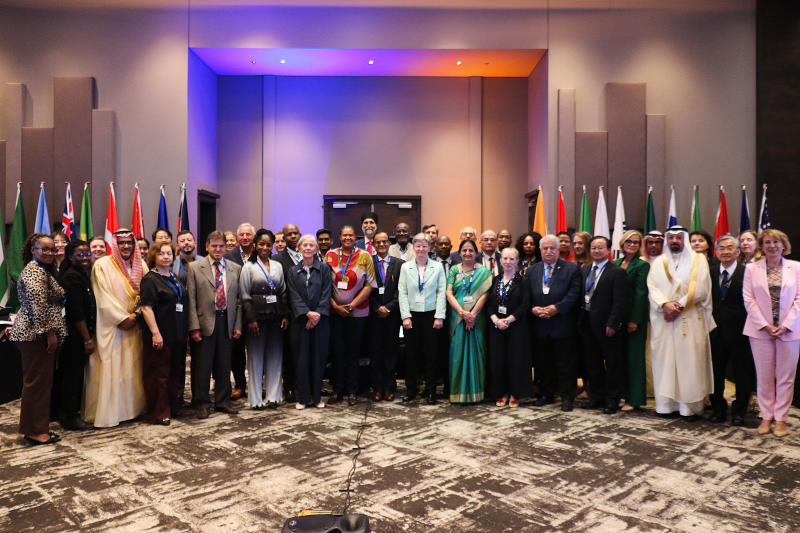
G20 Chief Science Advisers' Roundtable charts the way to inclusive global science cooperation
With widening knowledge gaps and more devastating climate change, among other challenges, the G20 Chief Science Advisers' Roundtable (CSAR) made a commitment to harness science, technology, and innovation (STI) as a force for equity, sustainability and inclusive human development.
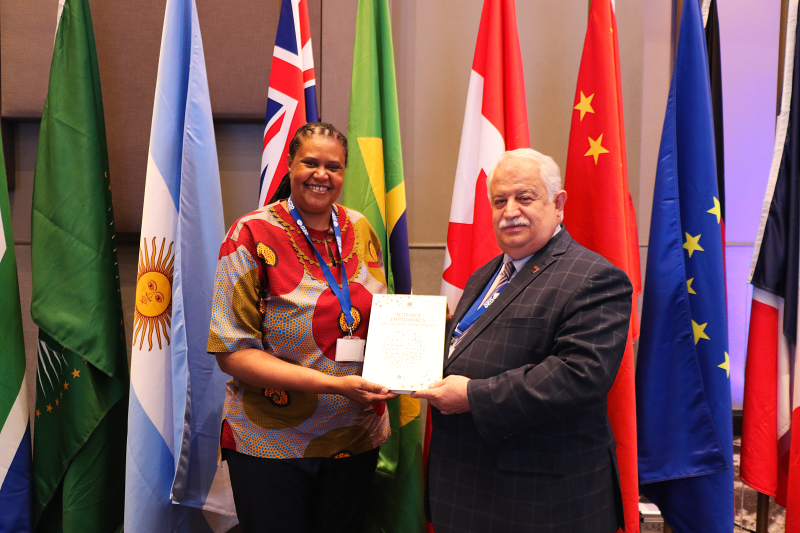
The Department of Science, Technology and Innovation (DSTI), in partnership with its entity the National Advisory Council on Innovation, welcomed senior science advisers and their equivalents from G20 members and invited countries in Pretoria on 21 September 2025.
The G20-CSAR is a platform for open and constructive dialogue to inform decision-making and shape international strategies on pressing global challenges through the lens of STI.
The roundtable took place alongside the G20 Research and Innovation Working Group (RIWG) meeting on 21 and 22 September, and the G20 Research and Innovation Ministerial Meeting on 23 September 2025.
It was held under the theme "Equity-based Science, Technology and Innovation for Inclusive Human Development and Global Sustainability".
Delegates highlighted the strong alignment between the roundtable discussions and South Africa's G20 Presidency theme of "Solidarity, Equality, Sustainability".
The 2025 G20-CSAR focused on three core priorities: first, developing and promoting a global STI agenda to support the implementation of the Sustainable Development Goals and enable just energy transitions; second, working towards a global knowledge system that is equitable and open to all; and third, leveraging G20 STI initiatives to strengthen STI capacity-building initiatives in developing countries, particularly in Africa.
As a way forward, the CSAR agreed that the pursuit of education and scientific knowledge were universal public goods that should remain free from unethical or discriminatory practices.
Advisers recommended leveraging global STI partnership opportunities to tackle planetary challenges such as climate change, biodiversity loss and pollution, as well as access to energy, energy security and the transition to renewable energy, especially in Africa and developing countries.
The CSAR was in favour of identifying opportunities through enhanced international STI collaboration to strengthen partnerships that addressed disparities in research, technology and innovation access, as well as knowledge sharing and dissemination, on mutually agreed terms. The roundtable recognised that this would require mobilising appropriate resources for STI to support capacity-building initiatives and international research collaboration among the G20 and developing countries, particularly in Africa, and fostering framework conditions for science to enable an open and collaborative international research environment.
Another recommendation was to ensure research integrity and the freedom of scientific research, which would have the added benefit of strengthening public trust in science and evidence-based policy advice.
Addressing delegates at the G20-CSAR, Dr Mlungisi Cele, the DSTI's Director-General, highlighted that "Science, technology and innovation are core drivers of human development and sustainability, which must be underpinned by equality and solidarity."
"South Africa is deeply committed to this agenda. Our 2019 White Paper on STI outlines a bold vision of 'STI enabling sustainable and inclusive development in a changing world'. This vision continues to guide our strategies and our engagements, at the G20 and elsewhere," he said.
Cele emphasised the strategic role of science advice in informing global policy, noting that "the link between knowledge and action is not automatic, and often needs to be cultivated, supported and steered to where it is most needed." He said that science should not only guide policy but also be guided by it, to ensure outcomes that served the greater good.
He noted that "it is imperative that we collaborate to bridge the STI gap within and between developed and developing countries."
Ambassador Dave Malcomson, representing the Director-General of International Relations and Cooperation, the G20 Sous-Sherpa, emphasised that the 2025 G20-CSAR, under South Africa's leadership, built on the foundation laid at the first and second roundtables held under the Presidencies of India in 2023 and Brazil in 2024.
He said the 2025 G20 Presidency was historic, not only because South Africa was the first African country to assume this responsibility, but also because it came at a time when the world urgently needed renewed accord and systematic transformation. South Africa's G20 Presidency was more than a platform for engagement; it was a catalyst for change.
"By championing solidarity, equality and sustainability, our intention is to forge a more equitable world where the priorities of the African continent and the Global South will drive progress," declared Malcomson.