
Ancient remedies meet modern science to revolutionise bovine health management
As South Africa celebrates Youth Month 2025 under the theme "Skills for the changing world: Empowering youth for meaningful economic participation", the Department of Science, Technology and Innovation (DSTI) is proud to showcase the achievements of young South African talent in the biomedical sector.
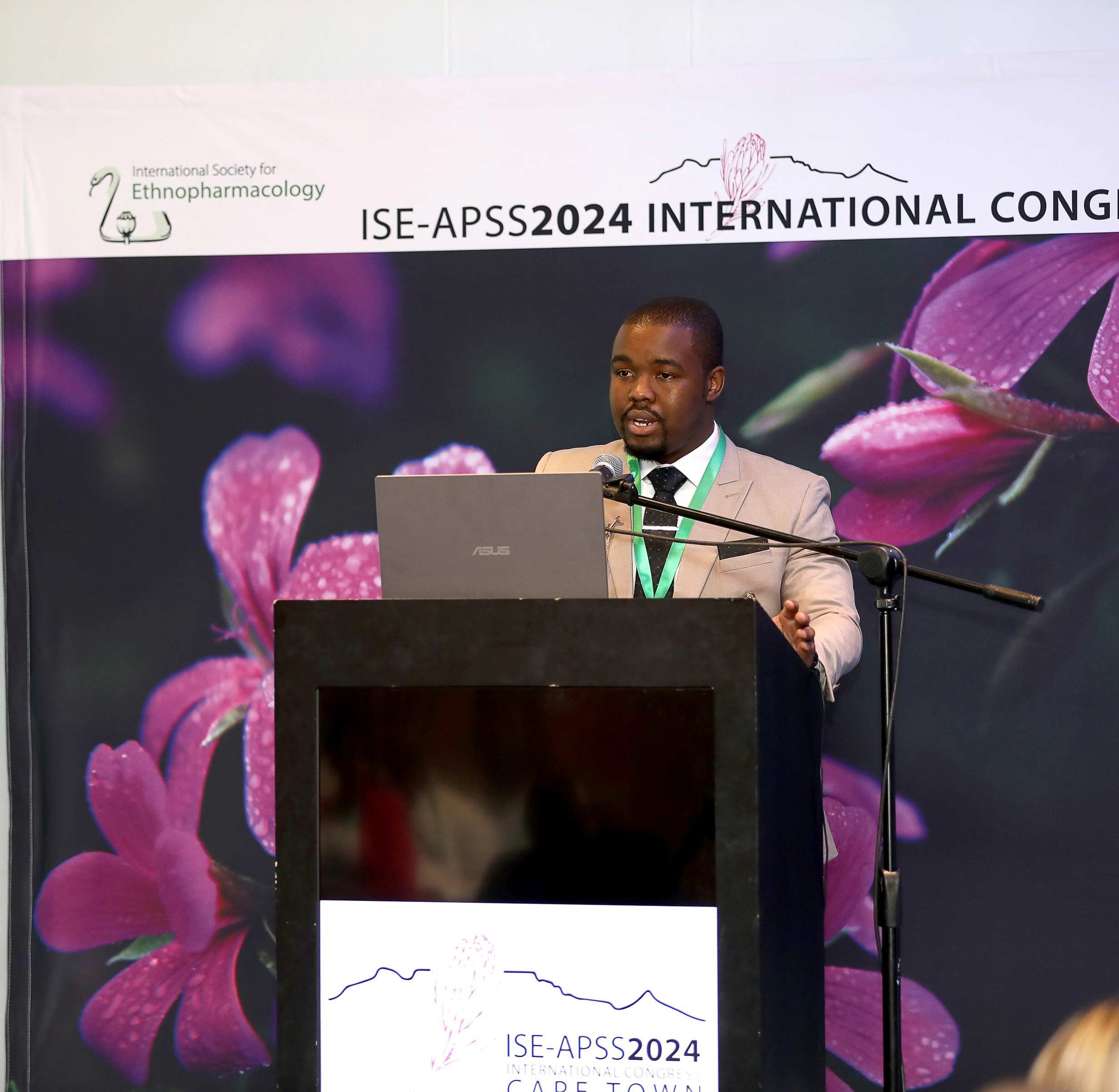
Mr Bishop Ramagoma is a PhD candidate at the University of Pretoria's Department of Paraclinical Sciences, Phytomedicine Group. He holds a master's degree in Biomedical Nanoscience (with distinction) from Nelson Mandela University, which he pursued through the DSTI's nanoscience scholarship.
Funded by the Department of Agriculture, Land Reform and Rural Development, his current research focuses on ancient medicinal plants that are used to treat ailments in humans and animals.
As concerns rise over antibiotic resistance and the long-term effects of synthetic drugs on animal health, interest in traditional remedies has surged. Researchers are studying the intersection between phytomedicine and modern science – especially nanotechnology – to find innovative, effective and sustainable treatments for disease.
Mr Ramagoma is part of a groundbreaking study currently underway at the University of Pretoria, in collaboration with the Agricultural Research Council, which is exploring the potential of compounds derived from the searsia plant species in treating bovine mastitis, an inflammation of the udder that is one of the most economically damaging diseases in the dairy industry. The study is also investigating green nanotechnology, focusing on the biosynthesis of silver and zinc oxide nanoparticles from searsia extracts.
Initial findings are promising. Among various medicinal plants tested for their antimicrobial, anti-inflammatory and antioxidant properties, searsia species have shown the most potent results against clinical isolates of bovine mastitis. The current phase of research is centred on isolating the most effective bioactive compounds and synthesising corresponding metal nanoparticles to maximise therapeutic potential.
Bovine mastitis costs the global dairy industry more than R375 billion annually, affecting both smallholder farmers and large commercial operations. It reduces milk yield and quality, impacting livelihoods and food security. The integration of phytomedicine with nanotechnology offers a promising solution. Plant-derived treatments have demonstrated strong antibacterial activity even at low concentrations, along with low cytotoxicity. When combined with nanoparticles, their efficacy increases significantly, opening new possibilities for treatment.
Biologically synthesised nanoparticles are especially valuable due to their high surface area, functional versatility and broad-spectrum antimicrobial activity. These characteristics make them ideal candidates to combat resistant strains of bacteria responsible for mastitis. Additionally, nanoparticles can be used to encapsulate plant extracts or isolated compounds, improving their stability and bioavailability. This allows for lower therapeutic doses, reducing toxicity and minimising side effects – a key advantage in organic and sustainable farming systems where antibiotic use is limited or discouraged.
The development of plant-based, nanotechnology-enhanced therapies holds substantial promise for improving animal welfare and advancing sustainability in the dairy sector. They offer the dual benefit of maintaining high milk quality and yield while addressing the urgent global challenge of antimicrobial resistance. Future innovations could include plant extracts, biosynthesised nanoparticles, probiotics, and essential oils that not only prevent and treat mastitis but also support overall udder health and immune resilience.
As regulatory frameworks adapt and consumer preferences shift towards natural, chemical-free agricultural products, such solutions are likely to gain broader acceptance.
To realise the full potential of this approach, researchers, veterinarians, industry stakeholders, and policymakers will need to collaborate with one another. Together, they can translate laboratory breakthroughs into accessible, farm-ready treatments that reflect a holistic understanding of animal health.
The future of bovine mastitis management lies at the convergence of age-old botanical knowledge and modern nanotechnology. As this research advances, Mr Ramagoma hopes it will lead to safer, more effective and environmentally conscious approaches to animal healthcare – benefiting farmers, animals and consumers alike.


