
The European Union and the Federal Republic of Germany awards R42 million to South African pioneering biotech projects
South Africa remains steadfast in its commitment to supporting health research, innovation and development to improve the nation's health outcomes, said Ms Gugulethu Zwane, the Acting Director-General of the Department of Science, Technology and Innovation (DSTI).
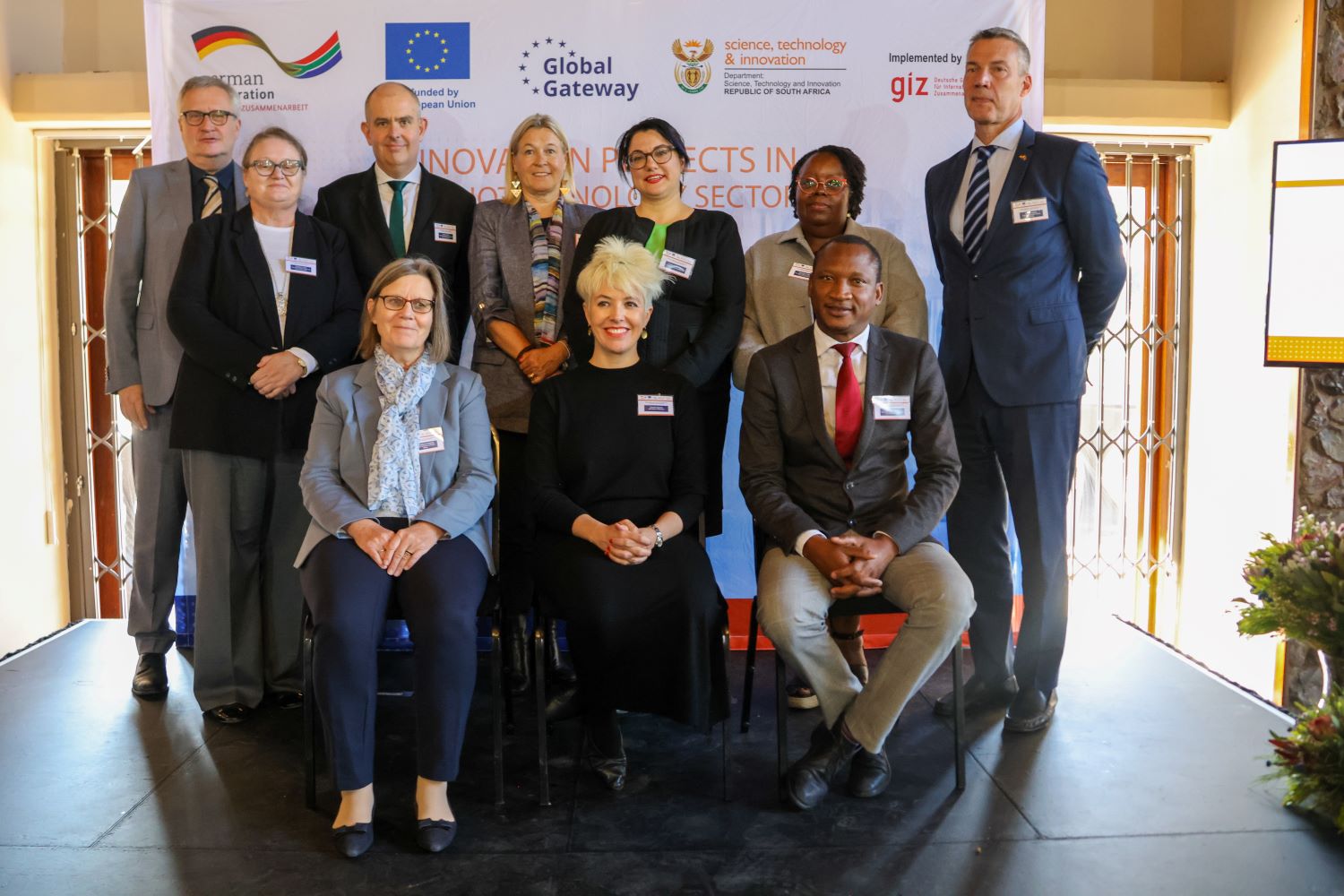
Speaking at an awards ceremony hosted in Pretoria by the Department of Science, Technology and Innovation and the Deutsche Gesellschaft für Internationale Zusammenarbeit (GIZ) on 14th of May, Zwane expressed profound gratitude for the ongoing support South Africa has received from the Government of the Federal Republic of Germany, and the European Union.
The ceremony saw the announcement of grants totaling EUR2,1 million (appr. R 42.4 million) awarded to six local pioneering biotechnology projects.
The grants were made to six consortia of private sector and research institutions under the GIZ SAVax programme, which is co-funded by the European Union (EU) and the Federal Republic of Germany as part of the Team Europe Initiative on manufacturing and access to vaccines, medicines and health technologies in Africa (MAV+). GIZ implements the SAVax programme on behalf of the German Government and the European Union. The grants will support the development of vaccines, pharmaceuticals, diagnostics and related technologies to address healthcare challenges in South Africa and the rest of the continent.
"These collaborations exemplify the power of shared vision and responsibility across our institutions – an approach that is essential if we are to address the complex challenges along the entire value chain of health innovation," Zwane said.
Mr. Enrico Brandt, Deputy Head of Mission of the German Embassy in South Africa reiterated the importance of health innovations and Germany’s strong commitment to supporting global health and equitable access to medical innovations: “Biotechnology is more than an abstract science; it is a powerful tool for resilience, equity, and economic development. Germany contributes around EUR 790 million (appr. R 16 billion) to the African Union's goal of producing 60% of the vaccines needed in Africa by 2040 through initiatives like the Global Gateway and the Team Europe Initiative MAV+. South Africa is a key partner in this effort with world-class scientists, a vibrant innovation landscape and a strong regulator.”
The MAV+ initiative was launched at the height of the Covid-19 pandemic, in direct response to a call from the African Union to ensure 60% of all medicines on the African continent were made in Africa by 2040. Launched in May 2021 with an initial EUR 1 billion (appr. R 20.2 billion) funding from the EU and development finance institutions, MAV+ addresses supply and demand barriers to create a sustainable manufacturing environment.
The European Union Ambassador to South Africa, Ms Sandra Kramer, said that the MAV+ was pivotal in its support for the African Union's vision of producing essential health products in Africa for Africa, boosting resilience and equity across the continent.
"Our comprehensive support package addresses critical barriers to manufacturing and access to health products and technologies in Africa. Our MAV+ programme is tightly aligned with African strategies and is supported by a broad and inclusive consortium of European actors," Kramer said, describing South African biotechnology research facilities as "top-notch", positioning the country well to lead local production.
The projects that received grants are in diagnostics and disease surveillance, the production of critical raw materials, product formulations for vaccines and high-end pharmaceuticals.
"What they all share is their contribution to the consolidation and expansion of capacities to produce vaccines, medicines and health technologies locally," said Thomas Schaef, the GIZ Country Director for South Africa, Lesotho and Eswatini, promising that GIZ would continue to work with all SAVax partners to build a dynamic health biotechnology ecosystem.
Details on award recipients:
Afrigen and the University of Cape Town (represented by Dr Emmanuel Margolin and Prof. Wendy Burgers) received a grant for a project aimed at producing, testing and improving affordable mRNA vaccines for respiratory syncytial virus using technology that can easily be transferred to other low and middle-income countries.
Wits Health Consortium and Chemical Process Technologies Pharma (represented by Prof. Patrick Arbuthnot and Dr Gerrit van der Klashorst) have received funding to develop environmentally friendly and affordable ionisable lipid components for mRNA vaccines.
The Council for Scientific and Industrial Research (CSIR) was part of two consortia awarded grants. The first, with the University of Cape Town and Medical Diagnostech (represented by Dr Roger Daniels, Dr Alex de Voux and Dr Lyndon Mungur) will work on a project that will clinically validate a low-cost, point-of-care rapid diagnostic solutions for human papillomavirus infections in real-world settings.
The CSIR-National Bioproducts Institute consortium (represented by Dr André Germishuizen and Dr Santosh Ramchuran) will establish local, commercially viable, manufacturing production for a biosimilar for the pembrolizumab protein. The aim is to optimise the production process to provide locally produced and affordable access to high-end lifesaving pharmaceuticals.
Stellenbosch University and Fluorobiotech (represented by Dr Kim Trollope and Dr Anton Du Preez van Staden) received a grant for a project that will contribute to securing local capacity to produce reagents and raw material supply that are critical for vaccines and diagnostics.
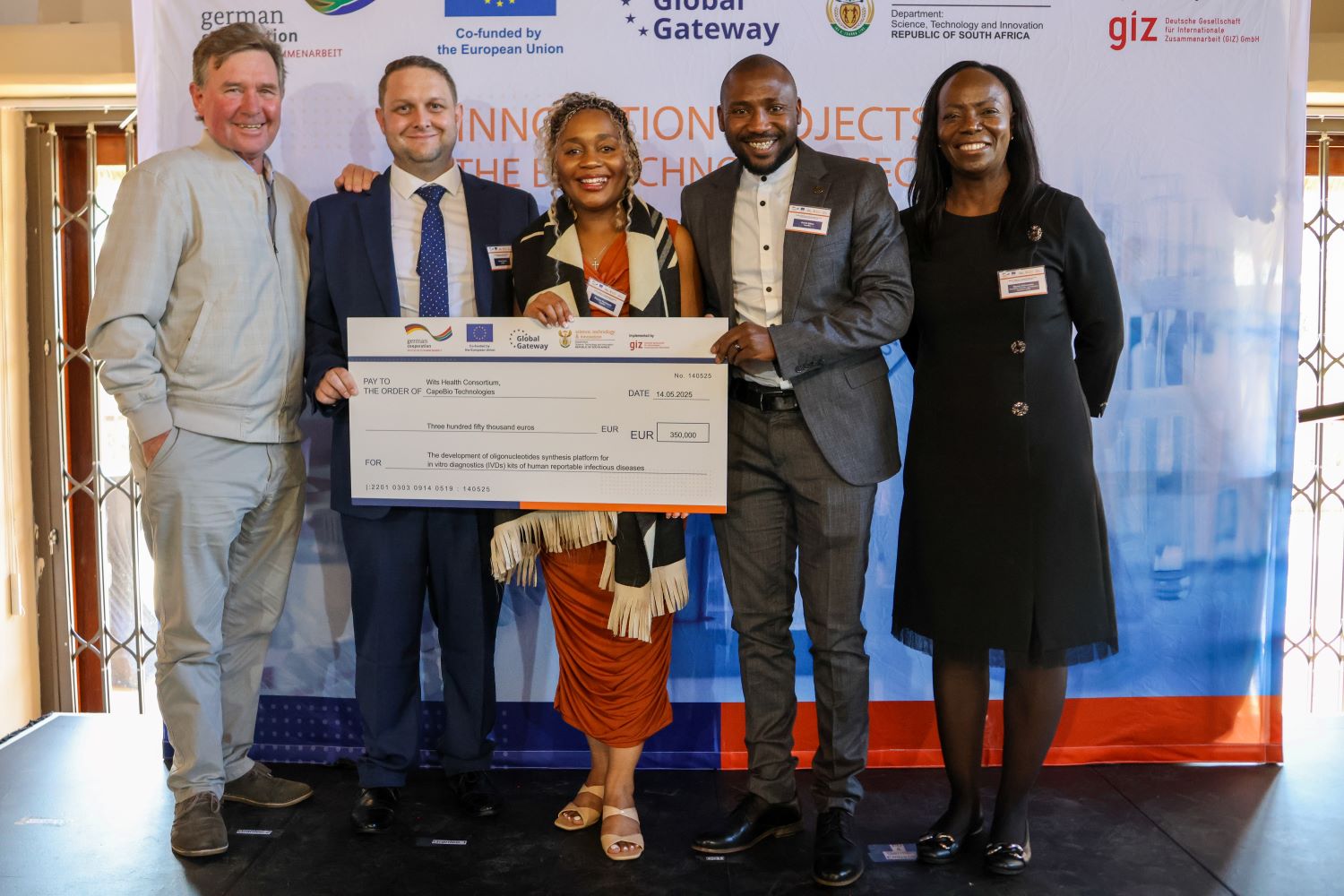
The grant received by Wits Health Consortium and CapeBio (represented by Dr Khanani Machumele and Mr Germar Beukes) will be used to build local capacity in the production and supply of critical diagnostic kits that are essential for a range of priority pathogens.
The function highlighted the strategic objectives of the SAVax programme, which is focused on reinforcing South Africa's biotechnology ecosystem and improving access to vaccines and other health technologies. These goals are strongly aligned with the national vaccine innovation and manufacturing initiative led by Minister Blade Nzimande, which prioritises local solutions for diseases that disproportionately affect Africa.
For more information, contact Pontsho Manthlagka (This email address is being protected from spambots. You need JavaScript enabled to view it.), Katja Fuehrer (This email address is being protected from spambots. You need JavaScript enabled to view it.) or Frank Oberholzer (This email address is being protected from spambots. You need JavaScript enabled to view it.) .


