
New book charts bold path for smart, sustainable human settlements in South Africa
South Africa's housing backlog and the destruction of homes due to adverse weather events caused by climate change are driving critical discussions on developing innovative and sustainable human settlements.
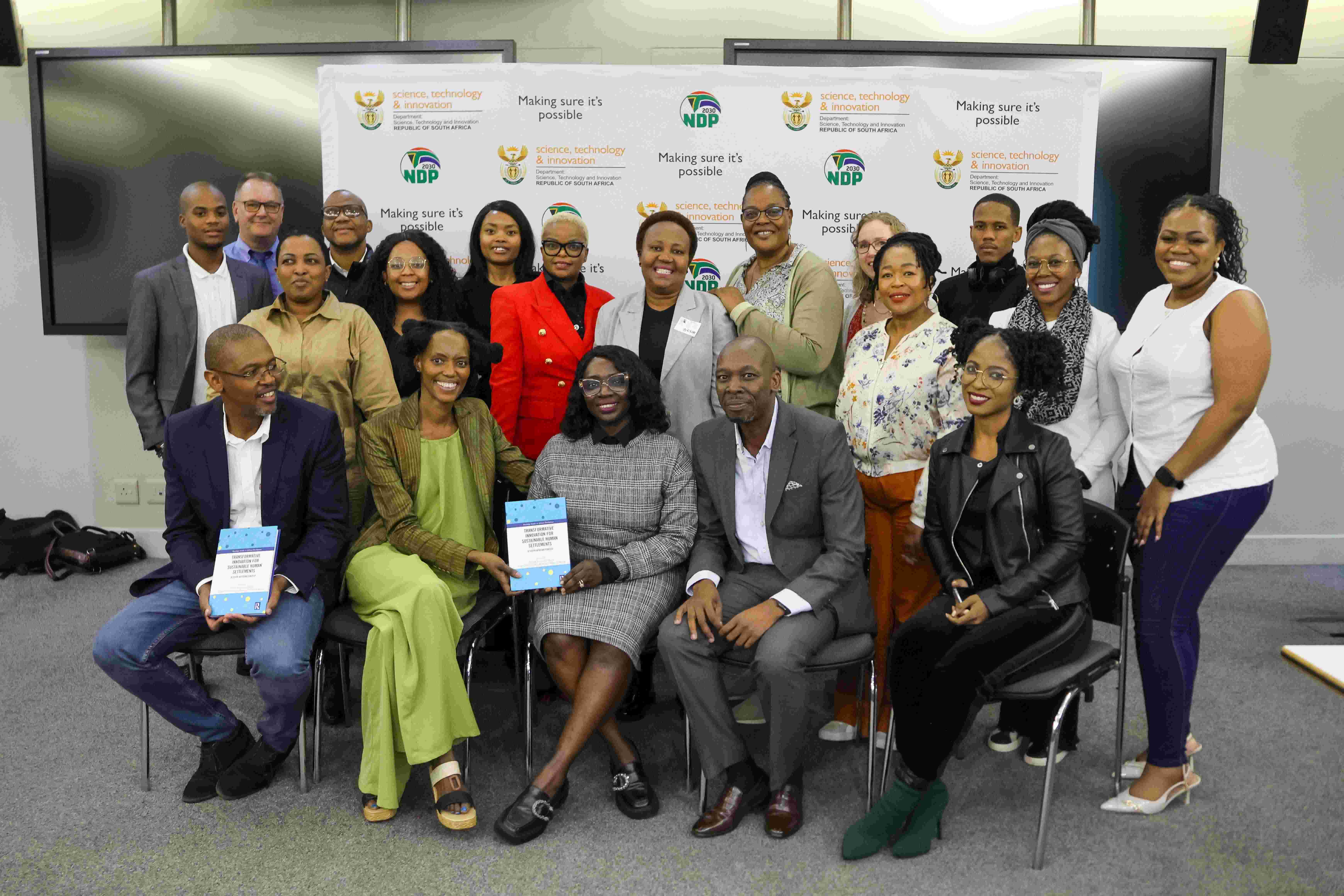
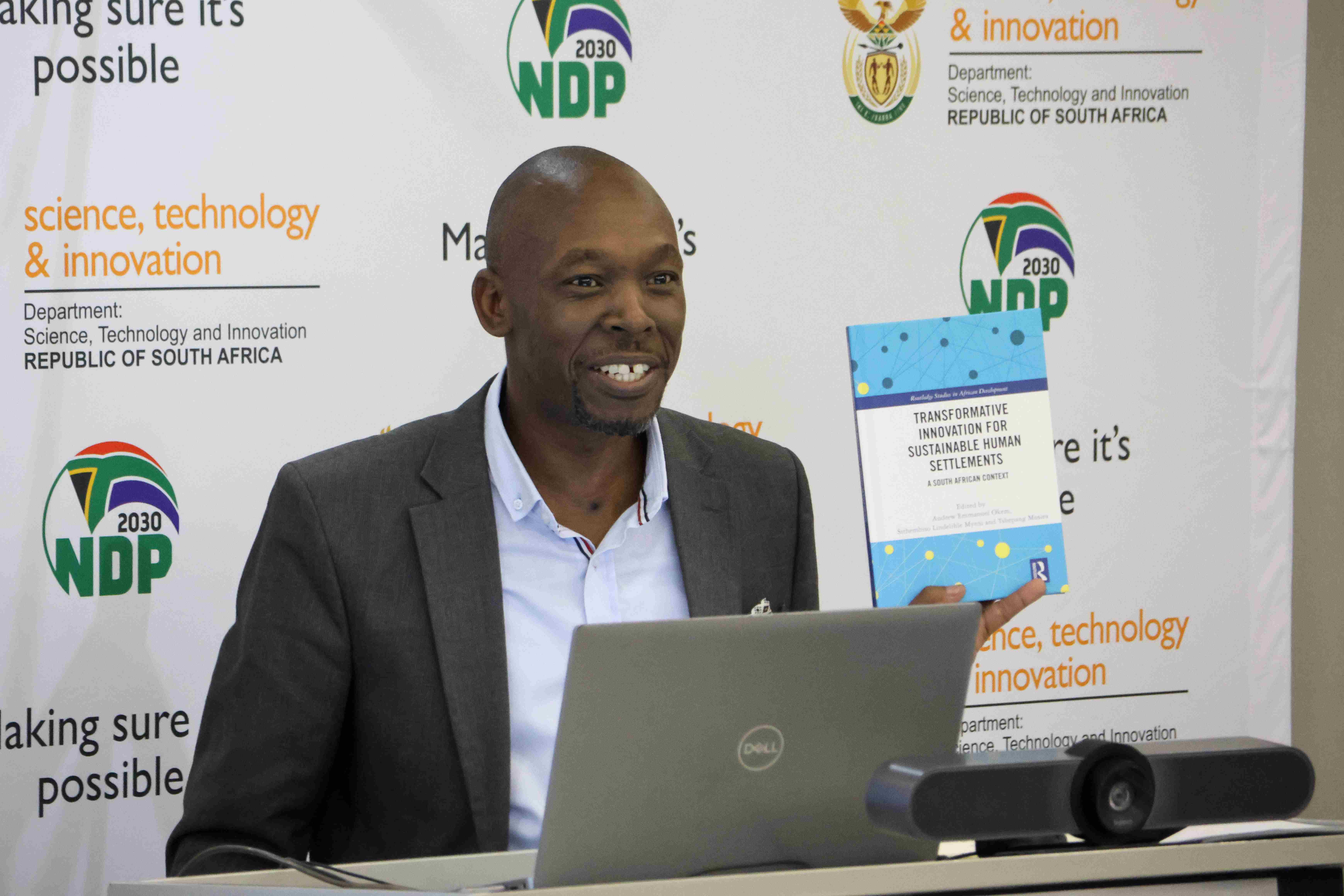
On 4 April 2025, policymakers, researchers and government officials gathered at the Council for Scientific and Industrial Research to launch Transformative Innovation for Sustainable Human Settlements – A South African Context.
The book is based on years of research, policy experimentation, stakeholder engagement and collaboration as part of South Africa's transformative innovation policy (TIP) approach to human settlements. It offers new ideas and practical pathways for transitioning from conventional housing models to smart, green, climate-resilient settlements.
Prof. Sithembiso Myeni, an Associate Professor in the School of Built Environment and Development Studies at the University of KwaZulu-Natal, and one of the book's editors and lead contributors, said, "We are launching not just a book but a call to action – to rethink how we design, fund and govern our human settlements, with innovation at the core."
He framed the book launch as both an intellectual and policy milestone and emphasised that the event was not just ceremonial, but educational, especially with regard to TIP.
He drew a direct link between the 2019 White Paper on Science, Technology and Innovation (STI) and the role of the Department of STI (DSTI) in supporting TIP, stating that the White Paper policy's intents necessitated a stronger focus on coordination, inclusivity, transformation and partnerships.
Myeni highlighted the book's contribution to building a diverse community of practice, developing transformative decision-support tools, conducting policy experiments and enhancing implementation capability.
Prof. Chux Daniels of the University of Pretoria and the University of Sussex gave an overview of the theory underpinning TIP and emphasised its importance in the Global South. He said that TIP was born out of discontent with established innovation policy approaches, and the need to use innovation for societal transformation.
According to Daniels, TIP redirects STI to address pressing societal challenges (economic, social and environmental) as a whole rather than in isolation. He elaborated on the multi-level perspective (niches, regimes and landscape) to show how small-scale innovation could disrupt entrenched systems when supported by policy.
"South Africa has become one of the strongest communities of practice globally. This book is a result of that – showing how niche-level innovation in human settlements can challenge and reshape dominant regimes," he said.
He emphasised three key TIP objectives; redirecting policy toward societal challenges, creating communities of practice and demonstrators, and generating transformative impact.
Daniels praised the book for providing practical, context-sensitive examples of TIP in action.
Mr Imraan Patel, Deputy Director-General: Research Development and Support at the DSTI, praised the way the book consolidated extensive practice, theory and innovation systems thinking into a concrete policy and action resource.
"This publication represents a significant milestone – shaping policy and actions through powerful evidence grounded in transformative innovation," he said.
He reflected on South Africa's early adoption of TIP, the country's financial and intellectual contributions to the Transformative Innovation Policy Consortium, and its commitment to capacity building.
He stated that the transformative innovation approach departed from more traditional linear models in that it focused on systemic change, co-creation and directionality led by the Sustainable Development Goals (SDGs).
Patel confirmed the DSTI's commitment to supporting a growing TIP community of practice in eight key socio-technical systems, including sustainable cities and communities, and developing knowledge-sharing platforms, master classes and hands-on experimentation.
"This book helps package lessons on how to transform entrenched socio-technical systems, offering a guide for others working on complex, systemic challenges," said Patel.
Dr Tshepang Mosiea, Chief Director: Innovation for Inclusive Development at the DSTI, gave a presentation demonstrating the strong link between STI and South Africa's development imperatives, notably in the human settlement sector. Referring to the STI for Sustainable Human Settlements (STI4SHS) Roadmap, Mosiea emphasised the need for transformative innovation to deal with persistent structural challenges in the delivery of housing, sanitation and basic services, especially under the strain of climate change.
"The uptake of innovation in human settlements is slow. The pipeline of innovation is weak. The certification lapse rate exceeds 30%, and local patent registrations remain very low," said Mosiea, highlighting systemic barriers to progress.
The STI4SHS Roadmap is an ambitious 10-year, sector-wide plan to help achieve adequate housing and a better quality of life for citizens through the use of alternative and innovative technologies in the built environment.
The roadmap, developed by the DSTI in collaboration with the national Department of Human Settlements, provincial departments, municipalities, research institutions and industry, provides a structure for coordinated investment and collaboration between these key stakeholders.
Mosiea co-authored Chapter 6 of Transformative Innovation for Sustainable Human Settlements. The chapter provides a critical reflection on the TIP-based roadmap approach, describing the roles of policy experiment coordinators and governance structures, as well as the way TIP language and frameworks were adapted for the South African housing environment.
The chapter also provides lessons learnt from actual implementation and how the socio-technical lens facilitated a better understanding of structural obstacles.
"We learned that transformative change requires more than policy. It needs a community of practice, investment in capability and the courage to let go of outdated norms," said Mosiea.
"Moreover, transformative innovation is not a luxury. It is a necessity if we are to meet the aspirations of the SDGs, climate resilience and inclusive economic participation. The roadmap is our call to action."
He explained that the book launch was not only a celebration of the research and collaboration involved, but also an invitation to scale up what worked, challenge what did not, and shape the future of human settlements through STI.
Ms Nonhlanhla Buthelezi, Chief Director: Policy Development at the Department of Human Settlements, provided an in-depth look at how the 2024 White Paper for Human Settlements aligned with South Africa's goal to develop through transformation, digitalisation and sustainable innovation.
Her address traced the policy journey, from extensive national consultations to peer reviews and engagements with the Presidency and Treasury, ultimately resulting in a policy that is not just regulatory, but transformative in intent and design.
"We are not just revising policy. We are redefining how human settlements should look, feel, and function in the 21st century," said Ms Buthelezi.
Transformative Innovation for Sustainable Human Settlements – A South African Context will help the country to do just that.