
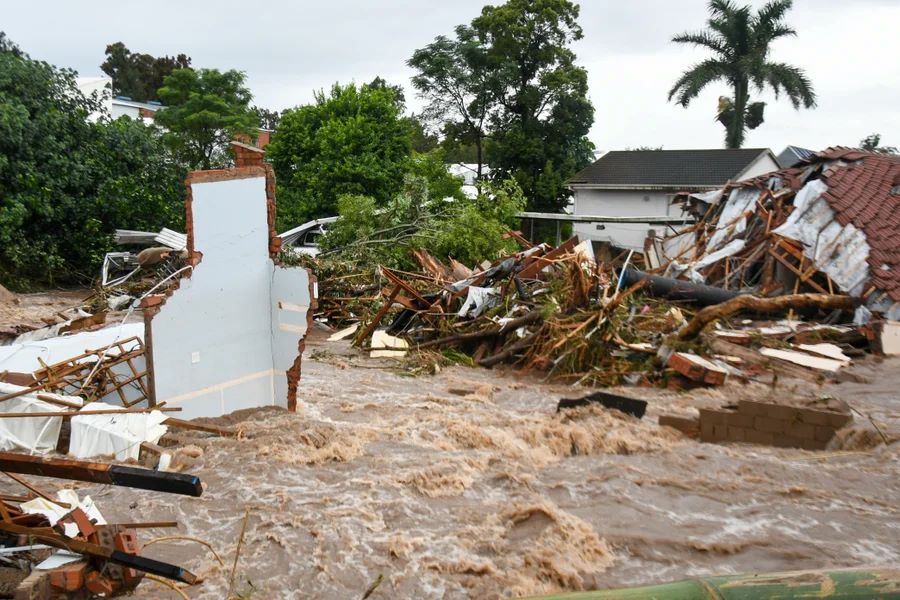
Experts meet to discuss extreme climate events
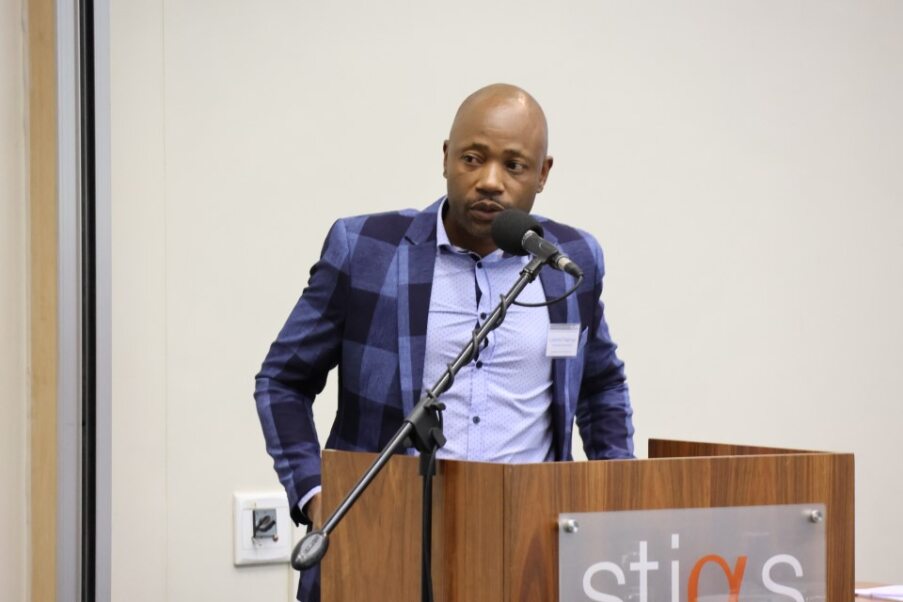
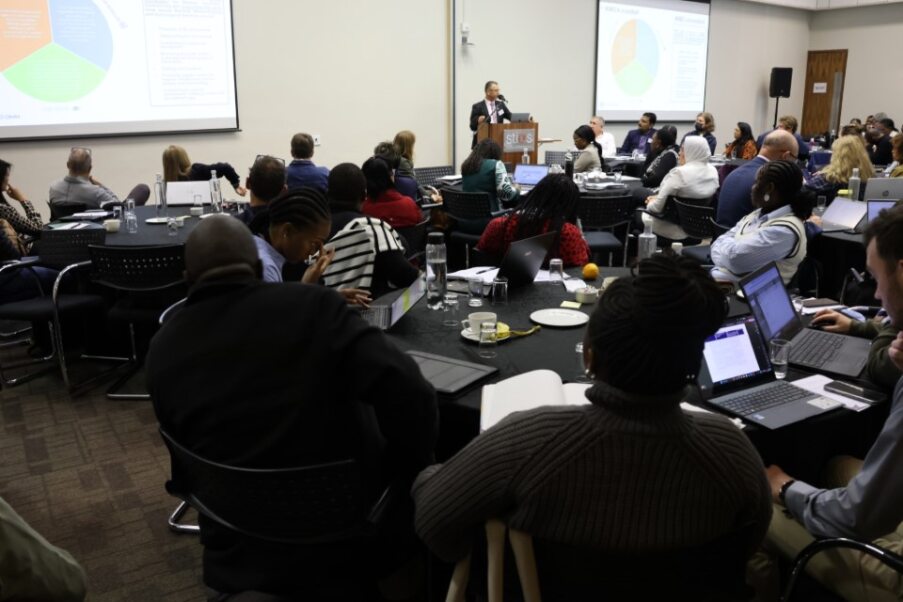
With communities in the developing world expected to bear the brunt of the impact of climate change, experts from around the world gathered in Cape Town last week to discuss extreme climate and weather events, and how to adapt in preparation for them.
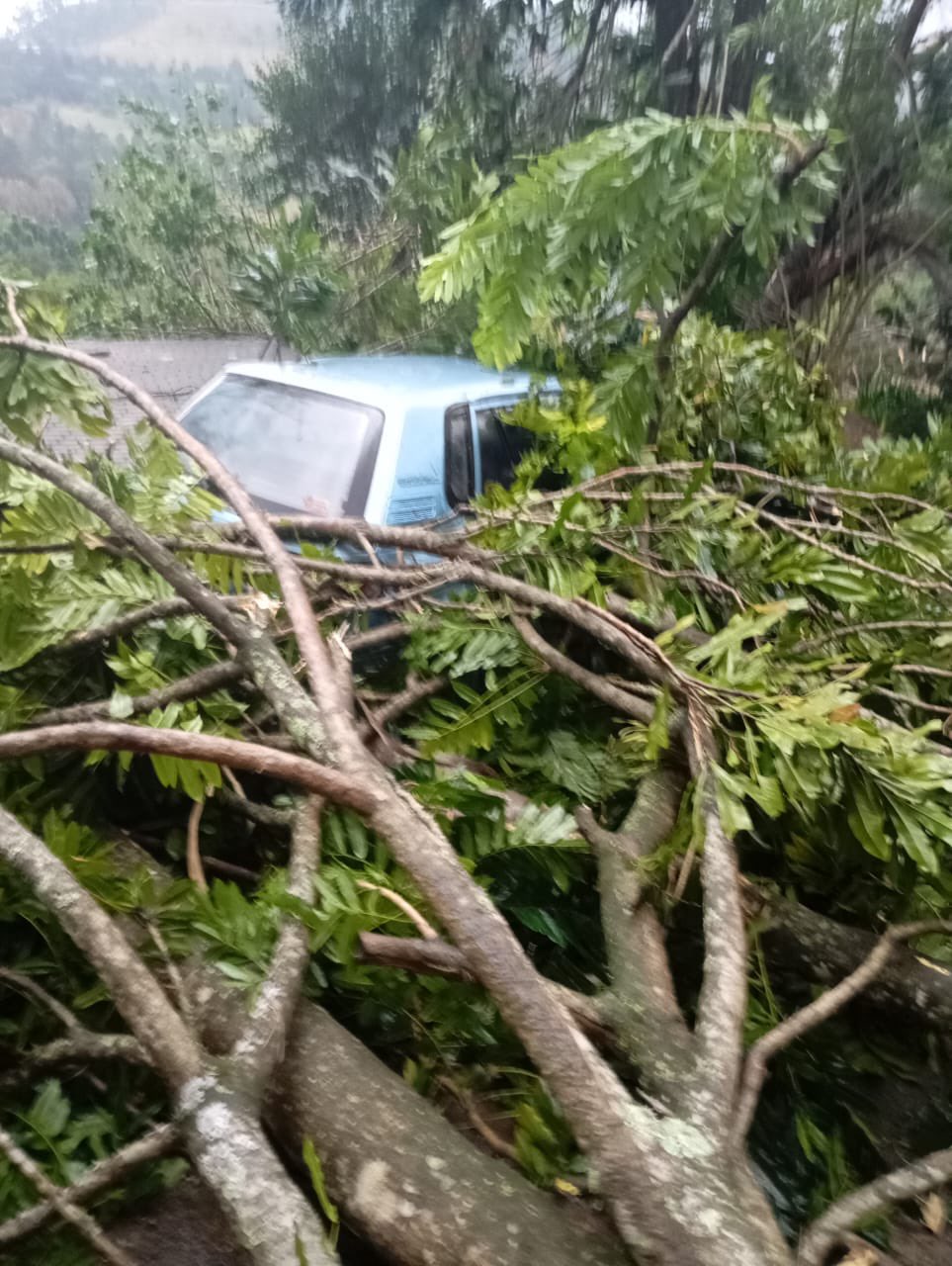
Extreme weather often results in disasters, which have wide-ranging impacts on housing, infrastructure and economic activity.
The conference was held from 22 to 24 May 2024 at the Stellenbosch Institute for Advanced Study, under the theme "Integrated Responses to the Intensification of Extreme Climate and Weather Events in Developing Economies".
Presenting results from the most recent World Economic Forum Global Risk Report, published in January this year, Dr Mary-Jane Bopape, Managing Director of the South African Environmental Observation Network at the National Research Foundation, said that the number one global risk over the next decade was extreme weather events.
South Africa has experienced its share of extreme climate events (ECEs), including the drought in Cape Town from 2015 to 2018, the storms in Durban in July 2022, and the Eastern Cape drought that started in 2015 and was followed by flooding in early January 2022. Globally, there have floods in Kenya and Pakistan, wildfires in California and Australia, droughts in Zimbabwe and Mexico.
The Global Risk Report looked at disaster occurrences between 1980 and 2022, as recorded by the Centre for Research on the Epidemiology of Disaster on EM-DAT, the International Disaster Database, aiming for a better understanding of occurrence types, locations and temporal trends. The Climate Hazards Group's InfraRed Precipitation with Station Data was also used to explore potential correlations between storm and flood events and rainfall patterns.
Dr Bopape spoke about the floods that had affected KwaZulu-Natal, particularly the eThekwini Metropolitan Municipality, which records the highest number of events.
"Despite KZN's significant rainfall, there is no conclusive evidence to suggest that eThekwini experiences more precipitation than other districts in the province, hinting at potential human influences on disaster occurrences," she said.
The South African Risk and Vulnerability Atlas, a DSI project, was cited.
Prof. Bruce Hewitson, the Director of the Climate System Analysis Group at the University of Cape Town, said that researchers need to find new ways to enhance the usability of regional climate information for decision-makers, including making the information more robust, co-producing tailored products for decision-makers, and using information in contrasting value systems.
According to Hewiston, extreme climate events have a high impact on society, but have poorly defined probabilities.
He added that substantial resources are needed to adapt to projected ECEs, but that adaptation has to compete with non-climate priorities for funding given that financial resources are finite.
The lack of congruence between different climate information sources about future ECEs presents a significant barrier to the responsible use of climate information to inform decisions.
"At present there is no consensus or general agreement on how to assess the robustness of actionable information at the decision scale," said Hewitson.
The speakers who share their expertise and experiences in anticipating and responding to the risks posed ECEs included postgraduate students such as Ms Helga Chauke, a PhD student at Eötvös Loránd University in Budapest, who presented a paper on the analysis of regional extreme climate in South Africa using Coordinated Regional Climate Downscaling Experiment (CORDEX) and Coupled Model Intercomparison Project (phase 6) projections.
The CORDEX-Africa initiative has been developed to analyse downscaled regional climate data over the CORDEX-Africa domain, train young climate scientists in climate data analysis techniques, and engage users of climate information in both sector-specific and region/space-based applications.
The findings show that the changing climate is already having serious consequences in susceptible areas, with agriculture in the Western Cape badly affected.
Ms Peliwe Jubase, a master's student at the University of Cape Town, presented a paper on extreme weather events in the Limpopo and Botswana region. The paper analysed inter-annual variability and trends in temperature extremes across the Limpopo River Basin between 1960 and 2014, particularly heatwaves and extreme hot days. Her research found that extreme weather occurrences posed a substantial threat to livelihoods, health, agriculture and the economy due.
Mr Tlou Ramaru, Chief Director: Climate Change Adaptation at the Department of Forestry, Fisheries and the Environment (DFFE), provided an update on ECE policy development in South Africa. The Climate Change Act, which has been approved by the National Council of Provinces, will enable the establishment of an effective national climate change response as well as a long-term just transition to a low-carbon and climate-resilient economy and society for South Africa in the context of sustainable development.
This is significant for the country because the legislation will enable a coordinated and integrated response to climate change and its impact from all spheres of government, in accordance with the principles of cooperative governance.
The DFFE has also developed the National Climate Change Adaptation Strategy, which is a policy directive for the implementation of the Climate Change Act and the National Climate Change Response Policy, with the goal of effectively managing inevitable climate change impacts through interventions that strengthen and sustain South Africa's social, economic and environmental resilience, as well as its emergency response capacity.
The three-day conference was hosted by the School for Climate Studies at Stellenbosch University and the Alliance for Collaboration on Climate and Earth Systems Science (ACCESS) programme hosted at the Council for Scientific and Industrial Research (an entity of the Department of Science and Innovation), in collaboration with two international partners, the Scientific Committee of Problems in the Environment and the Non-Aligned Movement Science and Technology Centre.