
Policy perspectives discussed at dynamic science collaboration forum
Acknowledging the important contribution of science, technology and innovation (STI) in addressing societal concerns, the South African government continues to make significant investments in STI.
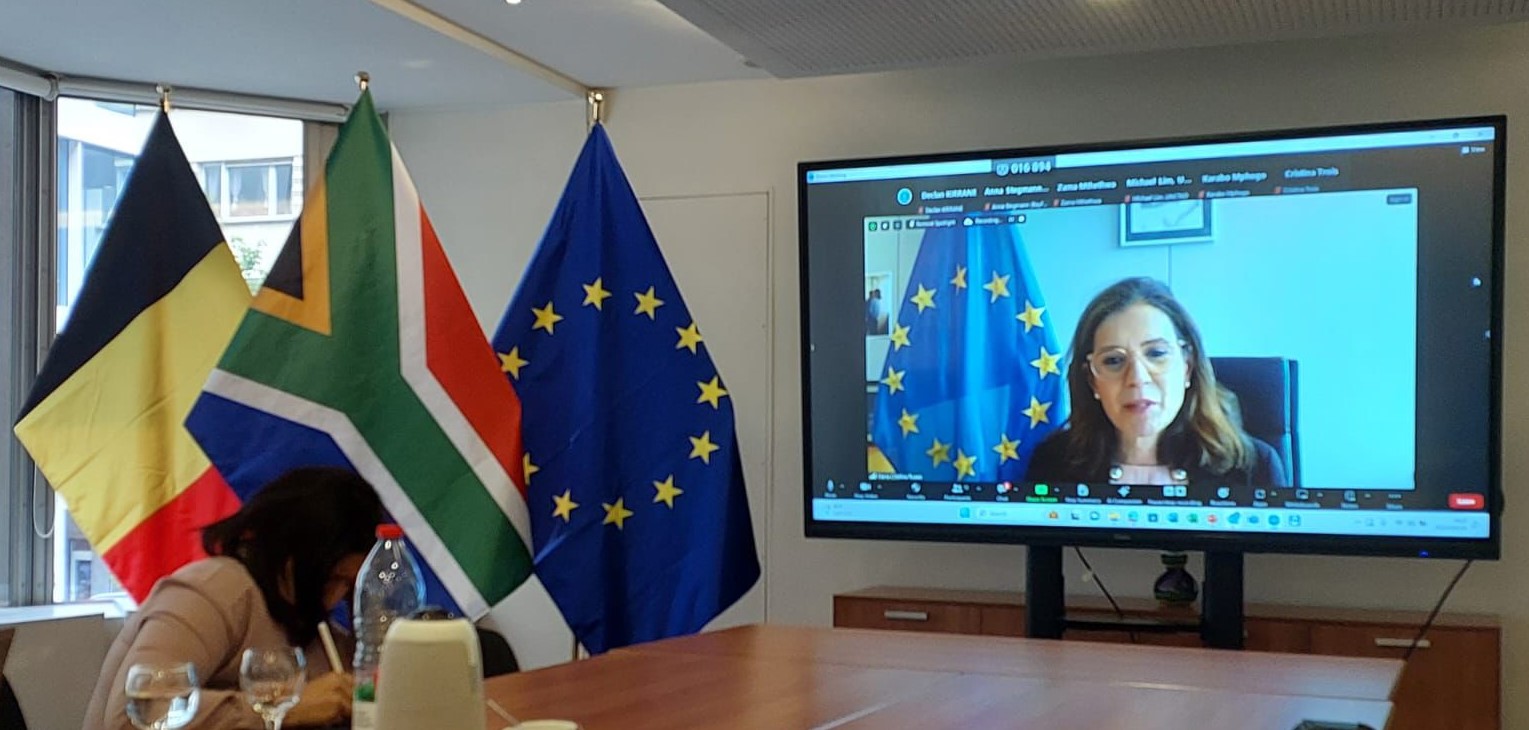
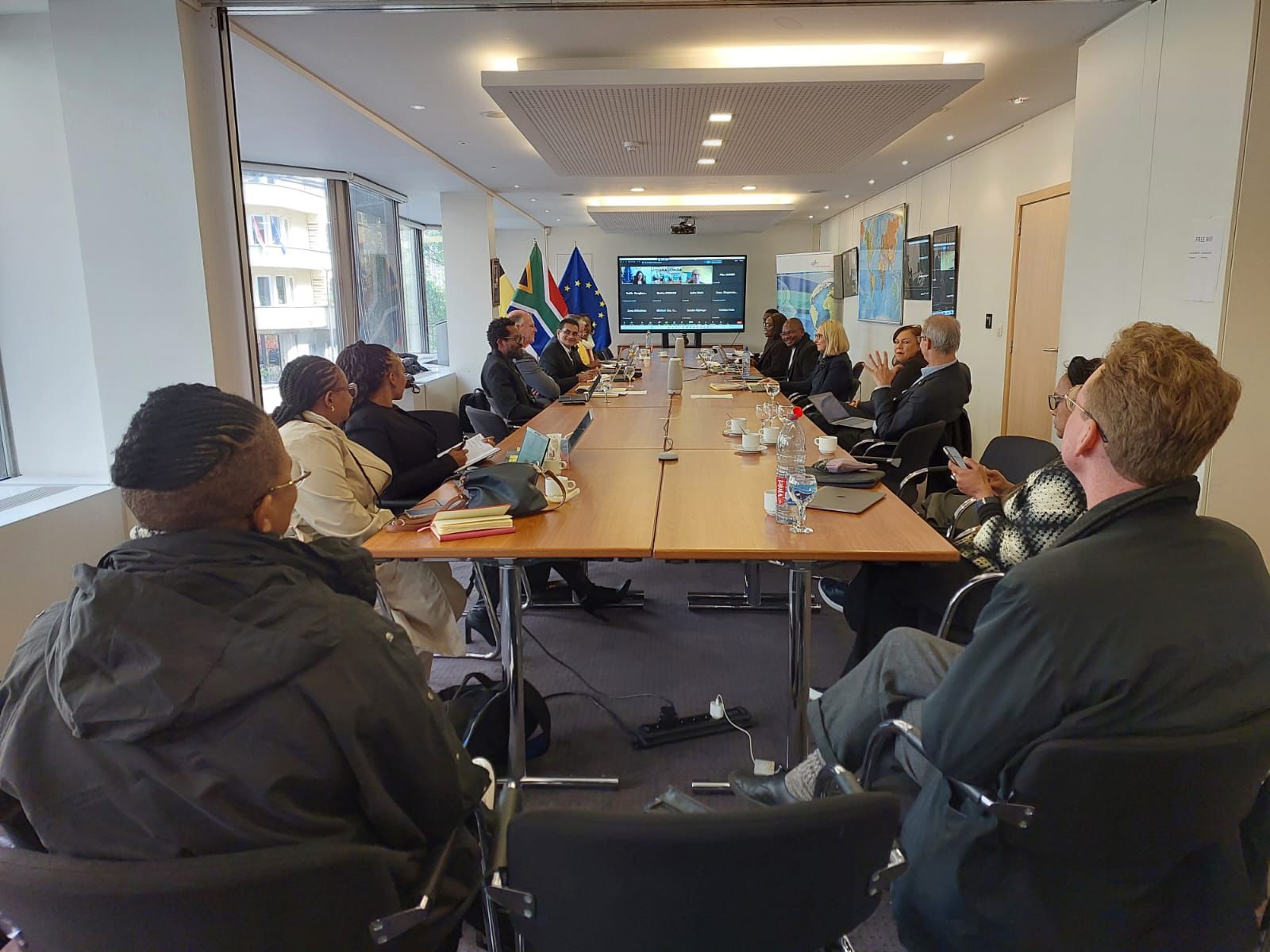
The Acting Director-General of Science and Innovation, Mr Daan du Toit, emphasised the government's stance at a roundtable on STI policy perspectives on 24 April 2024. The workshop was held at the South African Embassy in Brussels alongside the 4th AERAP Africa-Europe Science Collaboration Forum.
AERAP, the Africa-Europe Radio Astronomy Platform, has a strong relationship with the South African Department of Science and Innovation.
The Africa-Europe Science Collaboration Forum, held from 22 to 24 April, highlighted the critical role of science and digital innovation in defining European Union (EU) policies towards Africa, and of placing African scientific leadership at the centre of these policies.
The forum encouraged deeper interaction with policymakers and the strengthening of linkages between African stakeholders and their European counterparts through strategic science and innovation partnerships.
At the roundtable, Du Toit reiterated some of the key aspects of the STI Decadal Plan, which serves as an implementation plan for the 2019 STI White Paper, stating that the plan represents a significant step towards unlocking South Africa's innovation potential.
"Over the years, we have found common ground in our policy dialogue with the European Commission," said Du Toit.
For instance, both Europe and South Africa are confronted with what South Africa calls the innovation chasm and Europe calls the innovation paradox – the gap between success in the basic sciences and the translation of that success into products and services with socio-economic benefits.
"So, we are introducing a wide variety of policy interventions to unlock and address the regulatory and other restrictions that limit South Africa's potential to innovate … we have a lot of interest in how Europe is using public procurement as a tool for advancing innovation," Du Toit added.
Du Toit considers that, for South Africa to fully harness the immense potential of STI, an inclusive, whole-of-society approach is needed, rather than the scientific community, the government and business pursuing separate goals.
Looking at the larger pan-African picture, Du Toit stated that intra-African mobility was required before success could be achieved. There is very little intra-African mobility, and it is concerning that there are so few South African students pursuing postgraduate studies in other African countries.
"We know that the success of the European research area has been built on, among other things, European mobility, which is facilitated by the Erasmus+ Mobility Programme and other such programmes," stated Du Toit. "Africa needs similar programmes."
Greater intra-African trade and economic partnerships are also needed if the continent is to develop its African trade and investment agenda.
The continent's investment in research and innovation is low, so African governments need to increase their investment in national, regional (particularly in regional economic communities) and continental programmes.
South Africa believes that the fundamental socio-economic issues it faces, such as climate change, food insecurity, disease and inequality, demand a global response. Du Toit believes that Africa and the EU, with their long record of successful collaboration, can overcome these challenges together.
For example, in the public health area, the European and Developing Countries Clinical Trials Partnership (EDCTP), which is a public-private partnership between countries in Europe and sub-Saharan Africa, supported by the EU, in which South Africa is fully invested. South Africa will remain committed to such partnerships, the importance of which is emphasised in the STI Decadal Plan.
Another example of collaboration in which Europe is strategically invested is the international Square Kilometre Array (SKA) radio telescope project. South Africa would not have achieved the success it has today in this regard without support from Europe.
The collaboration is so successful because the EU and South Africa both believe that values such as integrity, ethical conduct and open science should underpin the scientific enterprise.
Ms Maria Cristina Russo, the outgoing EU Director for Global Approach and International Cooperation in Research and Innovation, talked about the EU's priorities in terms of research and innovation, and applauded South Africa for its role in the collaboration.
"Your cooperation is important as it dates to the signing of the science and technology agreement in 1996. This is the agreement that created the way for having this really special relationship with South Africa, and it enables us to have a very special relationship with the African continent as a whole," said Russo.
South Africa is the EU's first partner in research and innovation in Africa, and the biggest beneficiary of Horizon Europe's funding in Africa, especially in the areas of health, the green energy transition, and the Marie Skłodowska Curie Actions.
The Horizon Europe initiative, which has a total of 800 African participants (150 from South Africa) receiving over €50 million from the EU, is a significant driver of bilateral and multilateral cooperation between the EU and Africa.
"We are now preparing a third Africa initiative with the 2025 Horizon Europe work programme, including more topics targeting Africa," said Russo.
She said that the increased participation of African researchers showed that their efforts had been successful, noting that "The partnership with South Africa is particularly important when we observe what we have been able to achieve in terms of EU-African continent collaboration."
In the health sector, the Global Health Joint Undertaking (or EDCTP3) is a long-standing research and innovation partnership of equals. South Africa is one of 28 African countries working with 15 EU member states and the European Commission to accelerate the clinical development of new or improved health technologies for the identification, treatment and prevention of poverty-related and neglected infectious diseases, including emerging and re-emerging diseases. The third phase of this partnership has a total budget of €1,6 billion.
In the green transition sector, the European Union and the African Union have been research and innovation partners for almost 10 years in the areas of food and nutrition security, sustainable agriculture, climate change and sustainable energy.
The partnership has resulted in over €1 billion of co-funded collaborative research, for example through LEAP4FNSSA (for food and nutrition security and sustainable agriculture), and the establishment of the International Research Consortium, which brings together over 80 funders from both continents.
"The EU-South-Africa partnership in research and innovation is key for both sides. We believe that only long-lasting and equal partnerships will benefit society on both sides, and we will continue to push this forward in the years to come," concluded Russo.