
Science Forum South Africa hails partnerships for social justice and inclusivity
This year's Science Forum South Africa (SFSA) lived up to its expectations by igniting conversations about science and the role that science diplomacy can play in bringing peace across the world.
The eighth edition of SFSA was co-hosted by the Department of Science and Innovation (DSI) and Science Diplomacy Capital for Africa initiative under the theme "Igniting Conversations About Science – People, Partnerships, Priorities for the Decadal Plan". One of its main aims was to encourage people to work better together within science across the artificial boundaries imposed by the narrow definition of disciplines.
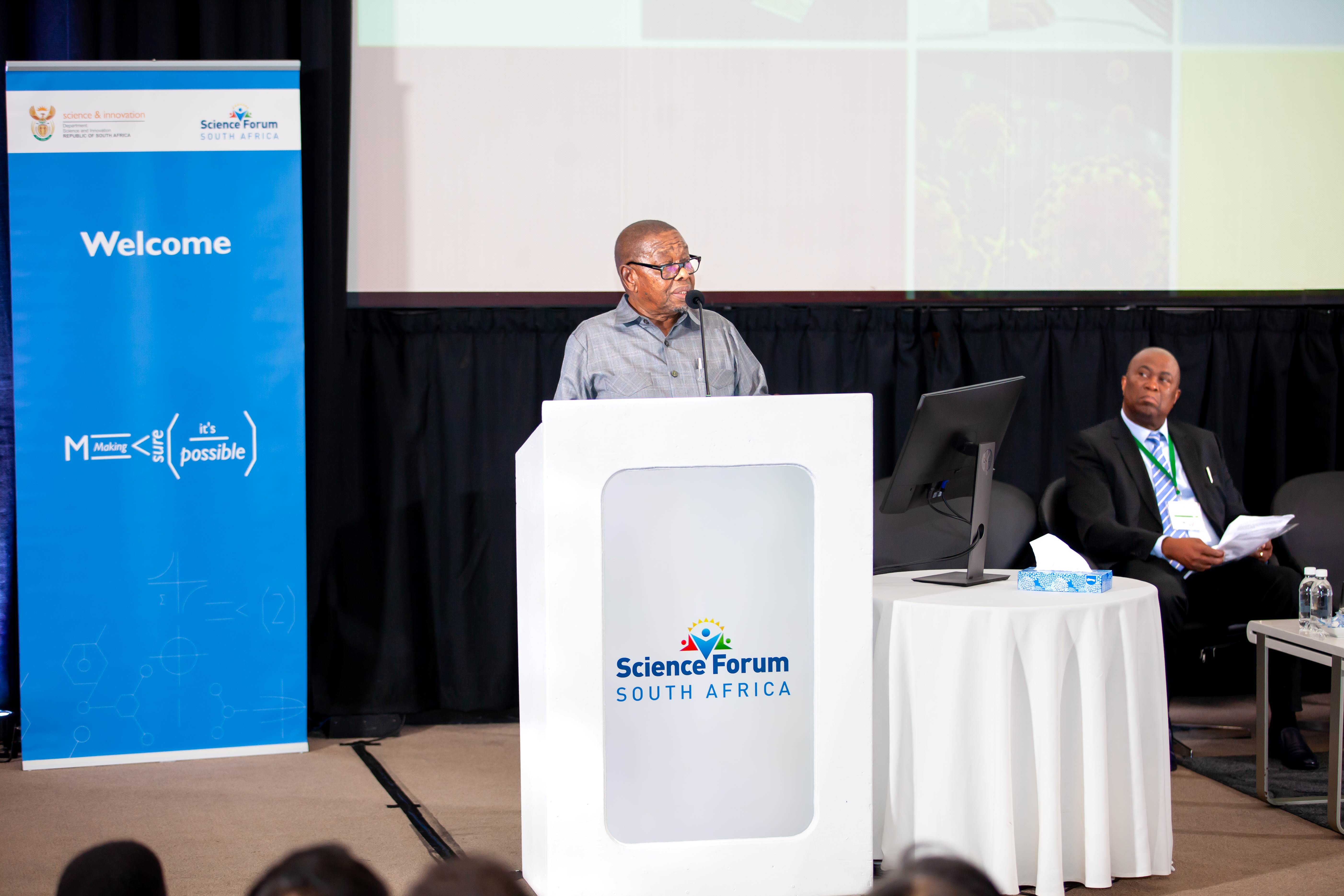
Addressing the forum, the Minister of Higher Education, Science and Innovation, Dr Blade Nzimande said our aims are to promote the excellence and capabilities of South African science and innovation, and to develop partnerships by rekindling old, cementing current, and exploring new relationships.
The Minister announced that President Cyril Ramaphosa will convene the first Presidential Plenary Meeting on Science, Technology and Innovation on Tuesday, 12 December 2023, for a strategic discussion focused on the implementation of the Decadal Plan.
"The Presidential Plenary Meeting is a governance mechanism introduced by the Decadal Plan to gather senior leaders of all sectors for a focused discussion on the role of science in society, including the need for increased investment," said Minister Nzimande.
"SFSA is considered a preparatory conference for the Presidential Plenary and the salient messages from the forum will be reported to President Ramaphosa next week," he added.
The success of South Africa's Decadal Plan is not based on specific scientific disciplines or technology platforms. Rather, the focus is on how we harness science holistically, including the social sciences and humanities, to respond to the country's key societal challenges.
Speaking during a panel discussion titled "Africa Union: Decade for African Roots and Diaspora: Role of diaspora in supporting African science and innovation", Zimbabwean academic and author Prof. Ibbo Mandaza said we need to define and describe the conditions that caused the diaspora.
He cited the movement of skilled professionals to the UK as a contributing factor. "What has happened now is that 75% of skilled and all professionals are outside Zimbabwe and, last year, over 20 000 nurses and care workers left for the UK. A whole section of the National Railway of Zimbabwe engineers left and are now running the British railway," said Prof Mandaza.
On the positive side, the remittance of Zimbabweans in the diaspora amounts to about $3 billion a year, which is almost equivalent to the national budget, Prof Mandaza added. He urged the region to bridge the gap in terms of building regional integration and pan-African unity, sharing skills to break down barriers.
Charity Wayua, Director at IBM Research Africa, passionately spoke about the role of the African diaspora in contributing to and benefiting from the transformative work in computing, artificial intelligence (AI) and other technological advancements that she is leading at IBM.
"Two Africans were working at one of the IBM offices in New York and, based on their passion for the continent they put together a plan for a research lab working on cutting-edge AI and quantum blockchain," said Dr Wayua.
"Now we can celebrate that, 10 years later, we have labs in South Africa and Kenya, doing the most cutting-edge research that impacts the continent and multinationals like IBM by developing new technologies to transform lives and spark new business opportunities," she added.
At the forum, the SFSA Science Diplomacy Awards were also given to the following recipients:
Commemoration
- Dr Lee-Anne McKinnell, former Managing Director, South African Space Weather Programme.
- Carolina Ödman-Govender, former Associate Professor in Astrophysics, University of the Western Cape.
- Dr Daniel Adams, former Chief Director: Basic Sciences and Infrastructure, DSI.
Scientific Advice with Global Impact
- Professor Rémi Quirion, Inaugural Chief Scientist of Quebec and President of the International Network for Governmental Science Advice.
Transformation International STI Partnerships with South Africa
- Science and technology section, Embassy of the People's Republic of China in South Africa.
International STI Partnerships Advancing the African Agenda
- Square Kilometre Array.
Lifetime Contribution to International STI Cooperation to Serve Society
- Dr Heide Hackmann, Director, Future Africa Institute and Strategic Advisor on Transdisciplinary and Global Knowledge Networks, University of Pretoria.
Global STI Partnership Achieving Excellence in Global Science
- The European and Developing Countries Clinical Trials Partnership.
Issued by the Department of Science and Innovation


