
Deputy Minister reiterates government's commitment to fighting GBV
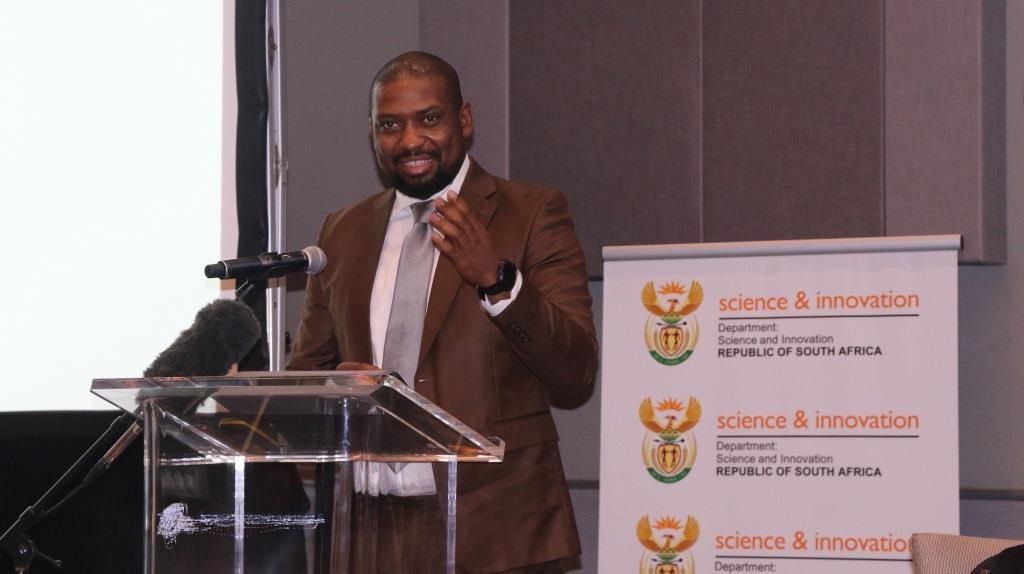
The Deputy Minister of Higher Education, Science and Innovation, Mr Buti Manamela, says the government is committed to implementing policies to address gender-based violence (GBV) in the country.
Speaking on Wednesday, 25 November during a South African Women in Science (SAWiSA) webinar themed "Women in Innovation", the Deputy Minister said the government "remains committed to creating a safe environment where all women in our society can lead a life of dignity and freedom".
He said the government had collaborated with civil society and research organisations, such as the Human Sciences Research Council, to study the factors influencing GBV in order to inform the country's response to this "other pandemic", as President Cyril Ramaphosa has described it.
According to a recent Statistics South Africa survey, approximately 21%, or one in five, partnered women in South Africa has experienced physical violence from a partner. The survey also found that the prevalence of physical violence is greater among less-educated women than those with a secondary education or higher.
During the webinar, the Deputy Minister launched the Women in Science, Engineering and Technology Organisation South Africa (WISETO-SA). This is in line with the Southern African Development Community (SADC) Charter on Women in Science, Engineering and Technology, which requires all SADC member states to establish national women in science, engineering and technology (WISET) chapters.
WISETO-SA will be hosted within the Department of Science and Innovation (DSI), and will aim to develop a gender mainstreaming strategy for science, technology, engineering and mathematics (STEM) in South Africa.
The launch took place as South Africa entered a period of mourning for those who have lost their lives to COVID-19 and gender-based violence, and coincided with the start of the 16 Days of Activism for No Violence against Women and Children campaign.
"Women have been hard at work producing innovations to respond to COVID-19 as well as enhancing livelihoods, in spite of the current challenges they face," Mr Manamela said.
He said innovation was key to lifting economies out of recession, and could be a source of new and sustainable growth and competitiveness, as well as a powerful engine for addressing social challenges.
He added that the government was concerned about the under-representation of women in science in Africa. Hence, through the 2019 White Paper on Science, Technology and Innovation, the government aimed to increase the participation of women in strategic positions in science and in South Africa's economy in general, in line with the African Union's declaration of 2020 to 2030 as the Decade of Women's Financial and Economic Inclusion.
"As the current Chair of the African Union, we will work with the African Union member states in realising this declaration," he said.
The webinar was the final one in a series of webinars organised by the DSI in partnership with the Organization for Women in Science for the Developing World, Black Women in Science, and Nka'Thuto EduPropeller.
The "Women in Innovation" discussion featured leading innovators such as Prof. Keolebogile Shirley Motaung, a biomedical scientist, Director of Technology Transfer and Innovation at Durban University of Technology, and founder of Global Health Biotech (GHB).
Prof. Motaung stressed the importance of turning scientific research ideas into assets. She said lack of resources in Gauteng's major academic hospitals had resulted in nearly 6 000 patients waiting for up to three years for knee replacement surgery. This, she said, had inspired the formation of GHB.
Currently, Prof. Motaung is working to find innovative ways to help patients by using medicinal plants in tissue engineering of bones and cartilage. "Medicinal plants can be used to heal musculoskeletal inflammation and injuries, for example through natural anti-inflammatory ointments," she said.
The webinar also celebrated the ground-breaking work being done by women to build South Africa's national system of innovation for inclusive economic development. Ms Nneile Nkholise, a budding mechanical and social entrepreneur, said start‑ups should talk about the tools that enabled their businesses to drive social impact.
Ms Nkholise is a mechanical engineering technologist with eight years' experience in the biomedical sector, having developed products ranging from prostheses to bio‑implants. In 2018, she co-founded 3DIMO, a venture-backed company that automates livestock data analytics to monitor livestock health.
"Technology is a tool to teach learners to solve problems and build an ecosystem of social entrepreneurs," said Ms Nkholise, emphasising that entrepreneurs should focus on empowering people to participate in the mainstream economy.
Participants also received a mock-up demonstration of a portal for women in innovation, science, technology, engineering and mathematics (WISTEM). The portal, a repository for research information and profiles of women in STEM, is currently under construction. It is expected that the DSI will introduce this resource in phases, with the aim of stimulating conversations, collaborations and mentorship.


