
Celebrating Youth Month 2020: Young people driving big data analytics and machine learning for the private sector
Government investment in training young people to effectively participate in industries of the future is producing results, with beneficiaries displaying considerable success in a number of sectors using data science.
The Department of Science and Innovation (DSI) funds an initiative called the Data Science for Impact and Decision Enablement (DSIDE) programme, which targets students at higher education institutions.
Hosted at the Council for Scientific and Industrial Research (CSIR), the DSIDE programme supports capacity building in the fast-growing field of data science. Recruits participate in mentor-guided, learn-by-doing problem solving to come up with solutions for real-world needs identified by various stakeholders.
Over the past few years, students participating in the DSIDE programme have developed wide-ranging, data-intensive programmes to help address service delivery challenges at local and provincial government level.
More recently, a team of DSIDE students has developed an algorithm to assist companies in the highly competitive financial services sector.
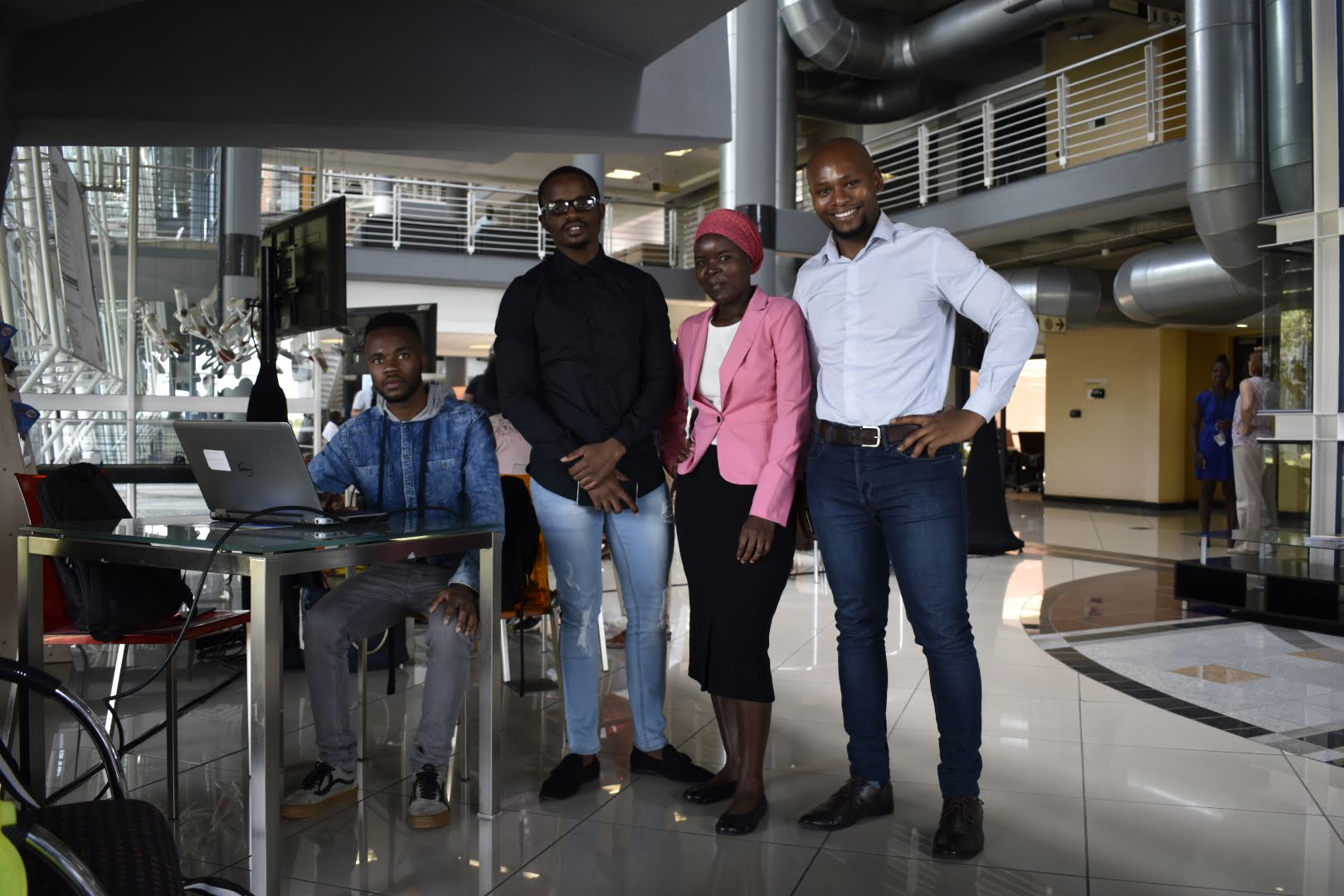
The team comprises Lizalise Mngcele, Shoky Maakgetlwa, Phumudzo Nematswerani and Winnie Shiburi, master's students in geospatial statistics, data science, statistics and applied mathematics respectively at Nelson Mandela University, University of the Witwatersrand, University of Venda and University of Pretoria; and Thabelo Muedi Mbambala, who is completing his honours degree in applied mathematics at the University of Limpopo.
The team has developed an algorithm for a leading insurance company that will enable better prediction of consumer behaviour, ultimately resulting in more effective, targeted communication. The insurer had embarked on a data science initiative within its various business units, and accumulated vast amounts of data – but was unsure of how to use the data to improve its business strategies.
Here is where the young DSIDE team came in. Pooling their energies and expertise in data science and related fields, the team began by cleaning up the data, then performed exploratory data analysis, manipulating the data to understand its distribution through the application of tools such as histograms, scatter plots and correlation matrices.
One of their findings revealed that it was possible to build a recommender algorithm to recommend relevant products to specific clients based on their actions and the products they currently owned. For example, a client with a savings product could be recommended an appropriate risk product, and vice versa, thereby enabling cross-selling.
Another finding was that age, race and gender had significant impacts on whether clients were insured for risk or savings, making it possible to predict policy alterations.
According to Mngcele, their work will help to reduce marketing costs and identify sales leads. Additionally, it will allow the insurer to anticipate which clients are most likely to cancel their policies or increase their premiums, enabling the company to act on these insights.
"We were able to generate five findings from the project, and the company was impressed with our work," Mngcele concluded.