
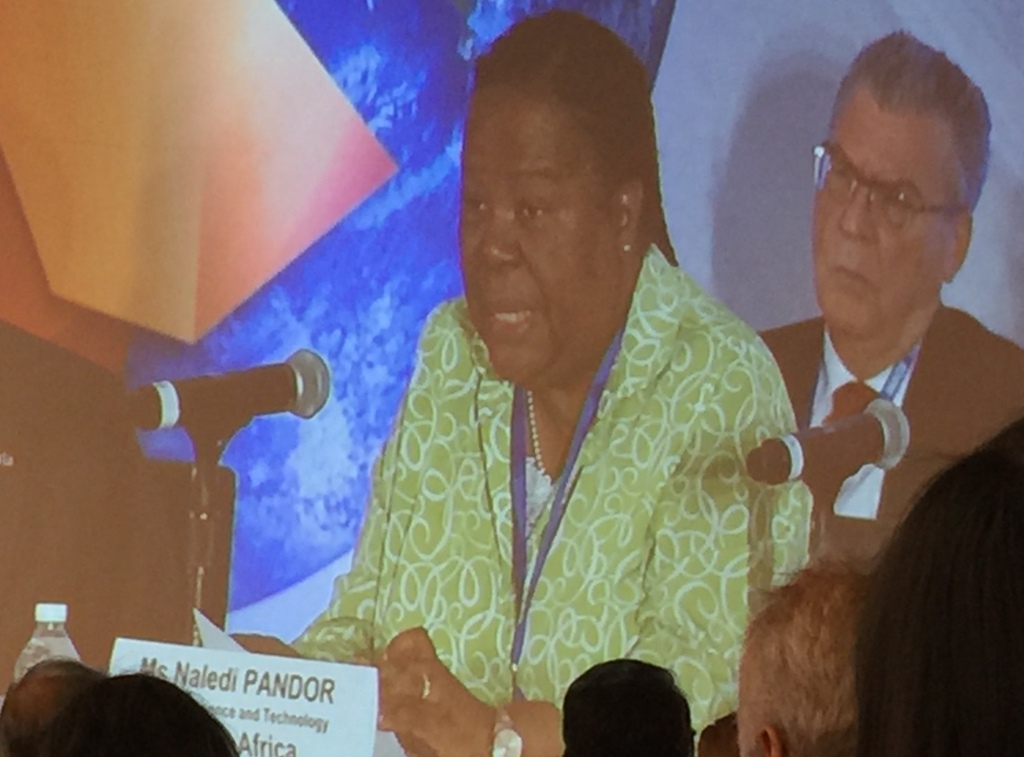
Minister Pandor at 4th Group on Earth Observations Ministerial Summit in Mexico
Science and Technology Minister Naledi Pandor hailed the establishment of the Group on Earth Observation (GEO) in 2003 as visionary.
She was speaking at the 4th GEO Ministerial Summit held in Mexico City on Friday, 13 November.
GEO was formed by governments and international organisations as a direct response to the call made at the Johannesburg World Summit on Sustainable Development in 2002 for cooperation on Earth observation and the coordination of global observing systems.
The Minister said that over the past 10 years, GEO had made significant progress in building the Global Earth Observation System of Systems (GEOSS). South Africa, as one of the Co-Chairs, had helped to lead this extraordinary global undertaking.
"This year, GEO comes to the end of its 10 year mandate and we are here to endorse a programme for another decade," she added, thanking all the leaders and support and working groups that had contributed to the enterprise.
She explained that the GEO Strategic Plan 2016-2025: Implementing GEOSS would improve our understanding of the Earth system, markedly enhancing global policy and decision-making abilities to promote human health, safety and welfare.
Minister Pandor said that, to achieve its goals, GEO required an unequivocal commitment to international cooperation and collaboration in improving systems coordination, addressing gaps in observations, supporting interoperability, sharing data and critically facilitating the delivery of information to users.
She pledged South Africa's ongoing, wholehearted commitment to the work of GEO and to AfriGEOSS. If all countries respected their commitments, concluded the Minister, it would be possible to achieve "the GEOSS vision of future where decisions and actions for the benefit of humankind are informed by coordinated, comprehensive and sustained Earth observations."


