
Africa's drive for Innovation will site2016 the world beyond the continent
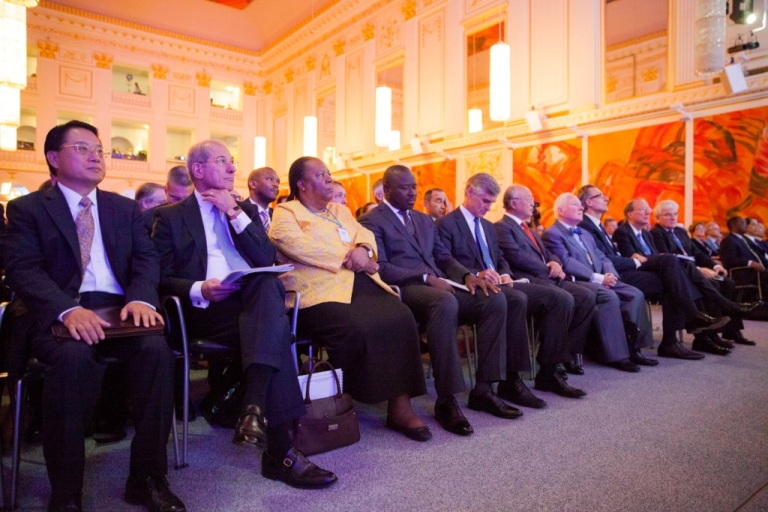
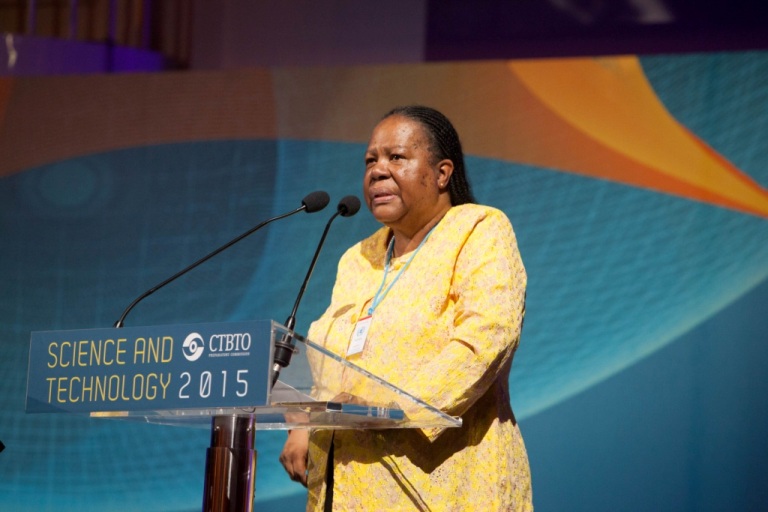
"Africa's capacity for innovation will shape the future of not only Africans, but for everyone on this planet," said the Minister of Science and Technology, Naledi Pandor, during her address to the Comprehensive Nuclear-Test-Ban Treaty Organization(CTBT) Science and Technology Conference in Vienna this week.
Minister Pandor told the gathering, which included over 1 000 participants from 70 countries, that South Africa had been at the forefront of nuclear non-proliferation in Africa for over twenty years. "We gave up our nuclear arsenal and signed the Pelindaba Treaty in 1996, which established Africa as a nuclear-weapon-free zone, a zone that only came into force in July 2009," the Minister said.
Minister Pandor added that the continent's policy makers and institutions were increasingly focusing their attention on developing science, technology and innovation capacity in Africa: "South Africa is one of the champions of the new Science, Technology and Innovation Strategy for Africa, or STISA, adopted by African leaders at the July 2014 African Union Assembly. STISA will focus Africa's science, technology and innovation investment in six socio-economic benefit areas. One is eradicating hunger and ensuring food security in Africa; two is preventing and controlling disease and ensuring human welfare in Africa; three is improving intra-African communication through investing in physical and digital infrastructure; four is protecting Africa's natural resources; five is building African communities by addressing aspects such as democratisation, urbanisation and conflict resolution; and six is creating wealth for Africa. Science is indeed at the heart of the AU's Agenda 2063."
Minister Pandor said Africa's drive for innovation would site2016 the world beyond Africa, because out of it would come a new way of thinking about the world, about health and about technology. According to the Minister, this would also impact on the work of the Nuclear-Test-Ban Treaty Organization. She added that Africa's soci-economic evolution would site2016 conventional assumptions about every compartment of human activity.
The Minister pointed out that there was competition in the global market for scientists and entrepreneurs, as highly skilled human capital had become the most important new technology driver. "It is remarkable that – of the five South African Nobel laureates who have received prizes for chemistry or medicine – all now live in other countries. South Africa is the only major Nobel country (with more laureates than any other developing country, and indeed more than many developed ones) that has seen a net emigration of prize winners. And the same is true of entrepreneurs, including the 2013 Nobel laureate, Michael Levitt, and the USA-based space entrepreneur, Elon Musk."
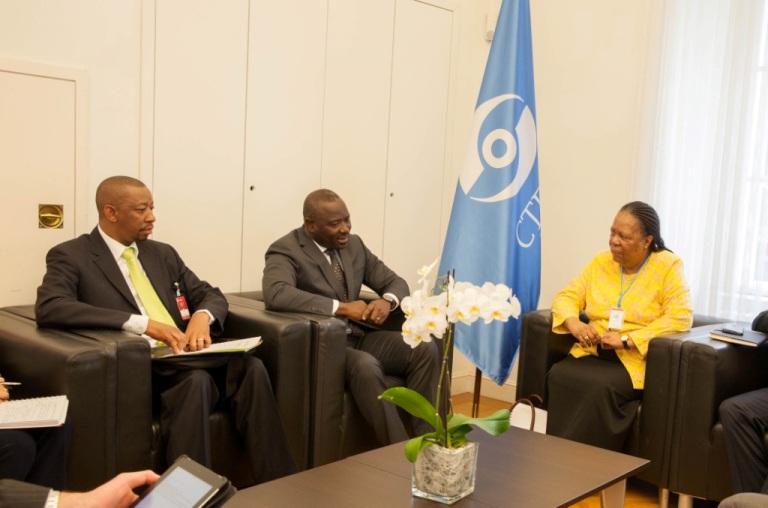
She added, "We are determined to reverse this trend. The SKA has resulted in important gains, but we will step up our efforts. Reversing the brain drain and achieving "brain circulation" will also be crucial if we are to achieve our objective of making science and technology work for the Nuclear-Test-Ban Treaty Organization. We are committed to this objective and would like to work with all delegates and members in developing a new science and technology compact to underpin the work of this critical multilateral agreement."