
Human capital development a priority for the DST
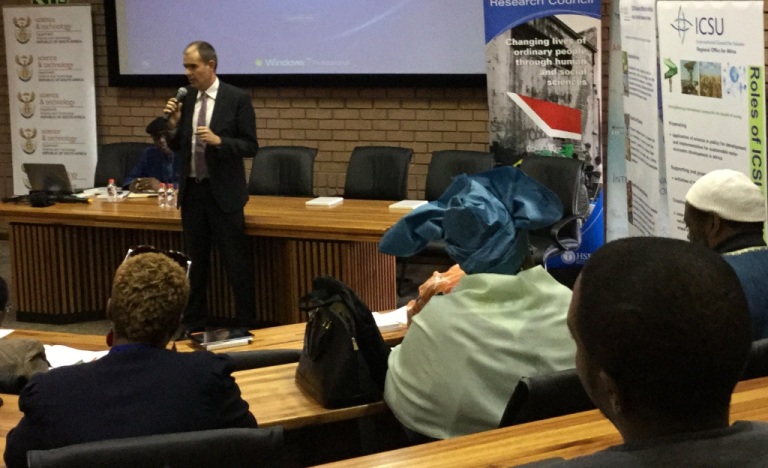
Investing extensively in initiatives to create human capital in science, technology and innovation (STI) in Africa will continue to be a priority for the Department of Science and Technology (DST). This according to the Department’s Deputy Director-General: International Cooperation and Resources, Daan du Toit, who addressed the 5th African Unity for Renaissance Conference at the University of Johannesburg in Soweto at the weekend.
The conference, with representatives from as far away as Kenya, Canada, the United States and Nigeria, is part of the Africa Month celebrations currently under way in South Africa. Organised by the DST, the Human Sciences Research Council and other partners, the conference has become an important annual gathering of African and other scholars, who use the opportunity to explore and propose ideas for a peaceful and prosperous Africa.
During his address, Mr Du Toit said South Africa's partnership with eight other African countries on the hosting of the international Square Kilometre Array (SKA) radio telescope project on the continent was significant. The joint venture would help the continent to participate meaningfully in global research.
He added that plans were also in place to host the fifth node of the Pan African University (PAU) in South Africa. The South African node will focus on space science and technology.
The PAU is an initiative to generate new knowledge workers for the continent. It aims to provide opportunities for advanced graduate training and postgraduate research to high-performing African students. Objectives include promoting the mobility of students and teachers, and harmonising programmes and degrees.
Mr Du Toit said that the DST was determined to walk the talk in developing knowledge generation capacity in Africa and had opened a number of its fellowship programmes to students from other African countries. He told delegates that science, technology and innovation had a very important role to play in shaping Africa and so investing in STI should be part of the development agenda for Africa.
With South Africa being the biggest supporter of the SADC National Science Week initiative, Mr Du Toit said that the country will soon be supporting Namibia's national science week as part ensuring that science was made part of the broader political discourse on the continent.
"Investing in people, including the development of entrepreneurial skills, is absolutely critical for us to leverage the contributions of STI. Africa should also invest in basic research," he said.
However, he added that South Africa was "actively engaging with multinationals to set up innovation partnerships that will benefit the continent."
Over the past year South Africa has been successful in expanding its portfolio of African partnerships by concluding new cooperation agreements with Sudan and Ethiopia, and by implementing ambitious cooperation programmes with Zambia, Angola, Tanzania, Ghana and many more. The country has also played a leadership role in finalising the African Union’s space policy and strategy, due to be adopted later this year by AU Heads of State.
In 2015, efforts will be guided by a new African engagement strategy, which will more effectively coordinate the activities of all South African STI actors engaged in partnerships with the rest of the continent.


