
TRANSLATING EVIDENCE INTO PRIORITIES:
BRIDGES EVIDENCE TO ACTION, FOCUSING ON PRIORITIES AND IMPLEMENTATION
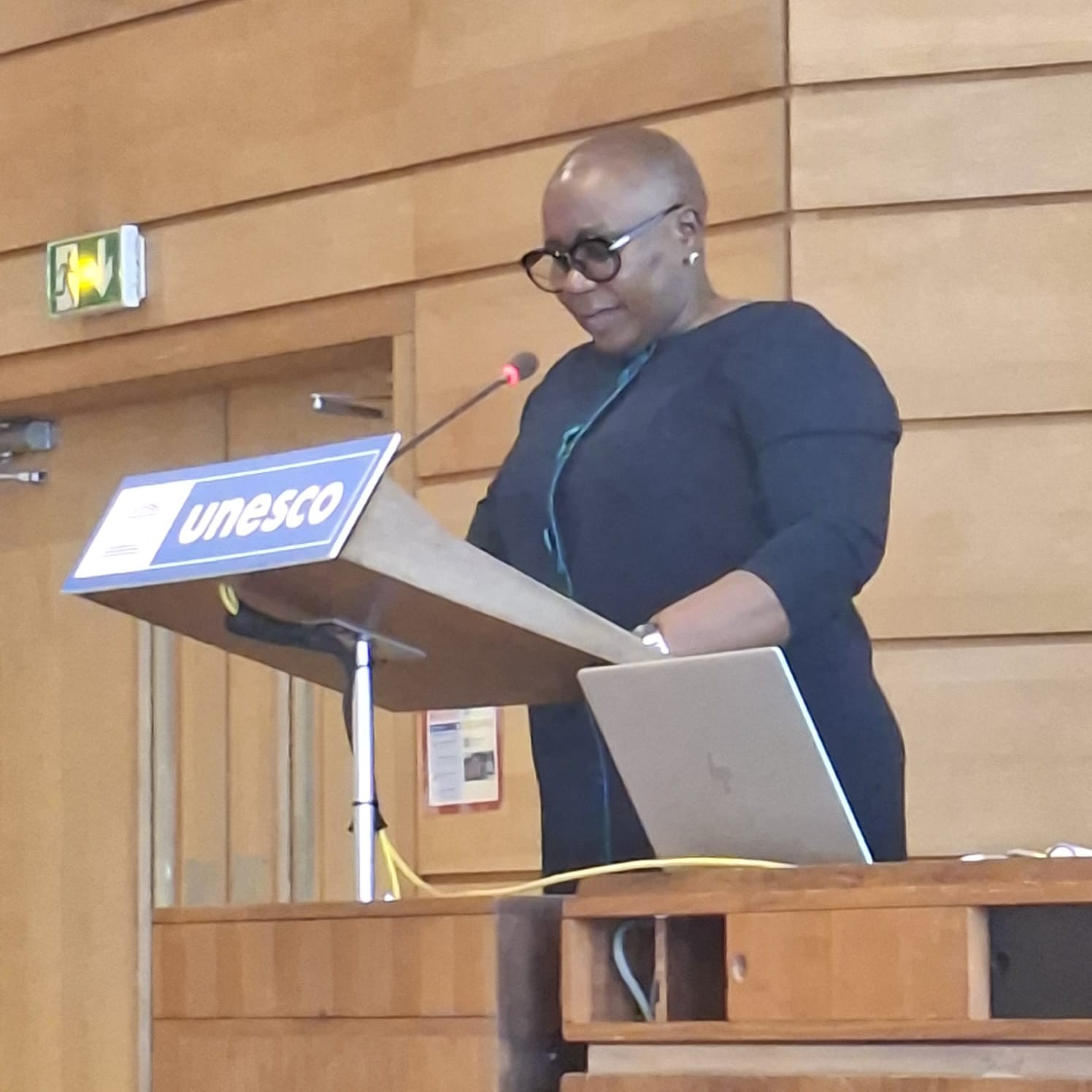
Date 16 July 2026 Time 11h00 – 12h30 Venue: Room 1, UNESCO Headquarters Organiser: UNESCO
South Africa’s central message is clear: the International Decade of Sciences for Sustainable Development must help countries move beyond recognising the value of science to purposefully embedding scientific evidence in planning, budgeting, implementation and public accountability. For South Africa, this is urgent. Unemployment remains above 30%, food insecurity persists, and inequality remains high. These pressures affect households, communities, municipalities and the ability of the state to deliver.
South Africa does not approach this discussion from a blank slate. Since democracy, the country has built a substantial science, technology and innovation base through universities, science councils, public research institutions and entities such as the National Research Foundation (NRF), the Council for Scientific and Industrial Research (CSIR), the Human Sciences Research Council (HSRC) and the South African National Space Agency (SANSA). The 2019 White Paper on Science, Technology and Innovation and the 2022–2032 STI Decadal Plan provide a policy foundation for directing the National System of Innovation towards national priorities such as agriculture, health, energy, climate resilience, industrial development, digital transformation and a capable state.
At the same time, South Africa’s Gross Expenditure on R&D remains at 0.62% of GDP, showing that the country has important scientific capabilities but must increase investment in R&D, as well as better coordinate and more directly link investment to national priorities. The Decade is therefore an opportunity to strengthen the bridge between evidence and implementation, especially for developing countries that require support for research infrastructure, skills development, data systems, technology transfer, innovation financing and institutional coordination. Round 1: Drawing on your regional context and area of expertise, what do you see as the main barriers to translating scientific evidence into policy priorities and concrete action for sustainable development? In the South African context, the main barrier is not the absence of scientific capability. In addition, we have put in place scientific institutional arrangements to help translate scientific evidence into policy, in particular the Academy of Science of South Africa (ASSAf), the National Advisory Council on Innovation (NACI) and observatories that develop the science-based policy evidence. But two barriers are to be overcome.
The first barrier lies at the political science/community interface. We need to improve how we deliver scientific findings that address community needs more directly.
The second barrier involves fragmentation. Development challenges, in South Africa as elsewhere, cut across departments and sectors. The Just Energy Transition in South Africa, for example, is not only an energy issue; it is also an industrial, skills, labour market, environmental, and social justice issue.
As an example to illustrate this point, in energy, scientific evidence is central to the just transition, where decisions on renewables, green hydrogen, storage, grid performance, localisation and affected communities must be evidence-informed. To illustrate, in support of the Cabinet-approved Renewable Energy Master Plan, South Africa, has recently approved funding to help with the accreditation of Africa’s first subsonic wind-tunnel testing facilities and South Africa has funded research on energy-related impacts in addressing the societal grand challenge of environmental sustainability. In this manner, scientific evidence can support integrated decision-making with broad societal impact, rather than just focus on isolated sectoral responses.
Another example of how South Africa overcomes the fragmentation barrier in translating evidence into policy, can be found in how the National Advisory Council on Innovation (which advises the Minister of Science, Technology and Innovation, and Cabinet on innovation-related policy) is structured and how it operates - pulling together scientists, academics, government officials and representatives from industry in working groups to develop contextualised, policy-focused advice, based on scientific evidence. Round 2: Drawing on your experience and regional context, could you share one example where scientific evidence successfully influenced policy or practice? What made it work, and what one action should governments and institutions prioritize to replicate such success at a larger scale? A relevant South African example is the use of scientific evidence during the COVID-19 pandemic, particularly genomic surveillance. The Network for Genomics Surveillance in South Africa brought together public health institutions, universities and laboratories to monitor variants, share evidence rapidly, and contribute to national and global public health decision-making. This showed that evidence can influence policy when capability is built before a crisis, institutions are connected, and data moves quickly into decision-making systems.
Why did it work? The lesson from this Covid example is simple: Evidence does not translate itself. It works when there is sustained investment in research capability, credible institutions, partnerships between scientists and decision-makers, timely communication, and a clear link between knowledge and implementation. Investment and communication were key: South Africa pivoted existing funding from elsewhere in the system to the policy needs around Covid, funded community surveys to isolate the Covid variants and then used mass media to communicate the scientific results. A sense of confidence in the credibility of the science, and of a shared responsibility and urgency was created – facilitating the linking of the scientific evidence to policy interventions.
If one action must be prioritised by the governments, it is to institutionalise permanent science-policy-society mechanisms that connect evidence to planning, budgets, procurement, implementation and accountability. Suggested Closing Message In closing, South Africa sees the International Decade of Sciences for Sustainable Development as an opportunity to make science more visible, inclusive and consequential in public decision-making. The test of the Decade will be whether it helps countries use evidence to solve real problems: reducing unemployment and inequality, advancing a just energy transition, securing water and food systems, preparing for climate shocks, improving health outcomes, strengthening industrial competitiveness, building capable institutions and improving people’s lives.
South Africa has the policy foundations, institutions and scientific capabilities to contribute to this agenda. The task now is to strengthen coordination, sustain investment, deepen inclusion and ensure that evidence informs practical decisions across government and society. If the Decade helps countries move from evidence to priorities, from priorities to programmes, and from programmes to measurable development impact, it will make a real contribution to sustainable development.
Date 16 July 2026 Time 11h00 – 12h30 Venue: Room 1, UNESCO Headquarters Organiser: UNESCO
South Africa’s central message is clear: the International Decade of Sciences for Sustainable Development must help countries move beyond recognising the value of science to purposefully embedding scientific evidence in planning, budgeting, implementation and public accountability. For South Africa, this is urgent. Unemployment remains above 30%, food insecurity persists, and inequality remains high. These pressures affect households, communities, municipalities and the ability of the state to deliver.
South Africa does not approach this discussion from a blank slate. Since democracy, the country has built a substantial science, technology and innovation base through universities, science councils, public research institutions and entities such as the National Research Foundation (NRF), the Council for Scientific and Industrial Research (CSIR), the Human Sciences Research Council (HSRC) and the South African National Space Agency (SANSA). The 2019 White Paper on Science, Technology and Innovation and the 2022–2032 STI Decadal Plan provide a policy foundation for directing the National System of Innovation towards national priorities such as agriculture, health, energy, climate resilience, industrial development, digital transformation and a capable state.
At the same time, South Africa’s Gross Expenditure on R&D remains at 0.62% of GDP, showing that the country has important scientific capabilities but must increase investment in R&D, as well as better coordinate and more directly link investment to national priorities. The Decade is therefore an opportunity to strengthen the bridge between evidence and implementation, especially for developing countries that require support for research infrastructure, skills development, data systems, technology transfer, innovation financing and institutional coordination. Round 1: Drawing on your regional context and area of expertise, what do you see as the main barriers to translating scientific evidence into policy priorities and concrete action for sustainable development? In the South African context, the main barrier is not the absence of scientific capability. In addition, we have put in place scientific institutional arrangements to help translate scientific evidence into policy, in particular the Academy of Science of South Africa (ASSAf), the National Advisory Council on Innovation (NACI) and observatories that develop the science-based policy evidence. But two barriers are to be overcome.
The first barrier lies at the political science/community interface. We need to improve how we deliver scientific findings that address community needs more directly.
The second barrier involves fragmentation. Development challenges, in South Africa as elsewhere, cut across departments and sectors. The Just Energy Transition in South Africa, for example, is not only an energy issue; it is also an industrial, skills, labour market, environmental, and social justice issue.
As an example to illustrate this point, in energy, scientific evidence is central to the just transition, where decisions on renewables, green hydrogen, storage, grid performance, localisation and affected communities must be evidence-informed. To illustrate, in support of the Cabinet-approved Renewable Energy Master Plan, South Africa, has recently approved funding to help with the accreditation of Africa’s first subsonic wind-tunnel testing facilities and South Africa has funded research on energy-related impacts in addressing the societal grand challenge of environmental sustainability. In this manner, scientific evidence can support integrated decision-making with broad societal impact, rather than just focus on isolated sectoral responses.
Another example of how South Africa overcomes the fragmentation barrier in translating evidence into policy, can be found in how the National Advisory Council on Innovation (which advises the Minister of Science, Technology and Innovation, and Cabinet on innovation-related policy) is structured and how it operates - pulling together scientists, academics, government officials and representatives from industry in working groups to develop contextualised, policy-focused advice, based on scientific evidence. Round 2: Drawing on your experience and regional context, could you share one example where scientific evidence successfully influenced policy or practice? What made it work, and what one action should governments and institutions prioritize to replicate such success at a larger scale? A relevant South African example is the use of scientific evidence during the COVID-19 pandemic, particularly genomic surveillance. The Network for Genomics Surveillance in South Africa brought together public health institutions, universities and laboratories to monitor variants, share evidence rapidly, and contribute to national and global public health decision-making. This showed that evidence can influence policy when capability is built before a crisis, institutions are connected, and data moves quickly into decision-making systems.
Why did it work? The lesson from this Covid example is simple: Evidence does not translate itself. It works when there is sustained investment in research capability, credible institutions, partnerships between scientists and decision-makers, timely communication, and a clear link between knowledge and implementation. Investment and communication were key: South Africa pivoted existing funding from elsewhere in the system to the policy needs around Covid, funded community surveys to isolate the Covid variants and then used mass media to communicate the scientific results. A sense of confidence in the credibility of the science, and of a shared responsibility and urgency was created – facilitating the linking of the scientific evidence to policy interventions.
If one action must be prioritised by the governments, it is to institutionalise permanent science-policy-society mechanisms that connect evidence to planning, budgets, procurement, implementation and accountability. Suggested Closing Message In closing, South Africa sees the International Decade of Sciences for Sustainable Development as an opportunity to make science more visible, inclusive and consequential in public decision-making. The test of the Decade will be whether it helps countries use evidence to solve real problems: reducing unemployment and inequality, advancing a just energy transition, securing water and food systems, preparing for climate shocks, improving health outcomes, strengthening industrial competitiveness, building capable institutions and improving people’s lives.
South Africa has the policy foundations, institutions and scientific capabilities to contribute to this agenda. The task now is to strengthen coordination, sustain investment, deepen inclusion and ensure that evidence informs practical decisions across government and society. If the Decade helps countries move from evidence to priorities, from priorities to programmes, and from programmes to measurable development impact, it will make a real contribution to sustainable development.
.jpg)