
Programme Director;
My Special Advisor, Mr. Nqaba Nqandela;
DDGs and other Senior Officials of our Department;
The CEO of the CSIR, Thulani Dlamini;
The Board of the World Federation of Science Journalists, under its President, Mr. Ben Deighton;
Vice President of the World Federation of Science Journalists and President of the African Federation of Science Journalists, Mr. Joseph Mbeng;
Ms. Engela Duvenhage and other members of the Local Organising Committee;
The leadership of the South African Science Journalism Association (SASJA);
Representatives of Science and Academic Institutions;
Science Journalists;
My special guest journalists from South Africa;
Exhibitors;
Students;
Distinguished guests;
Members of the local and international media:
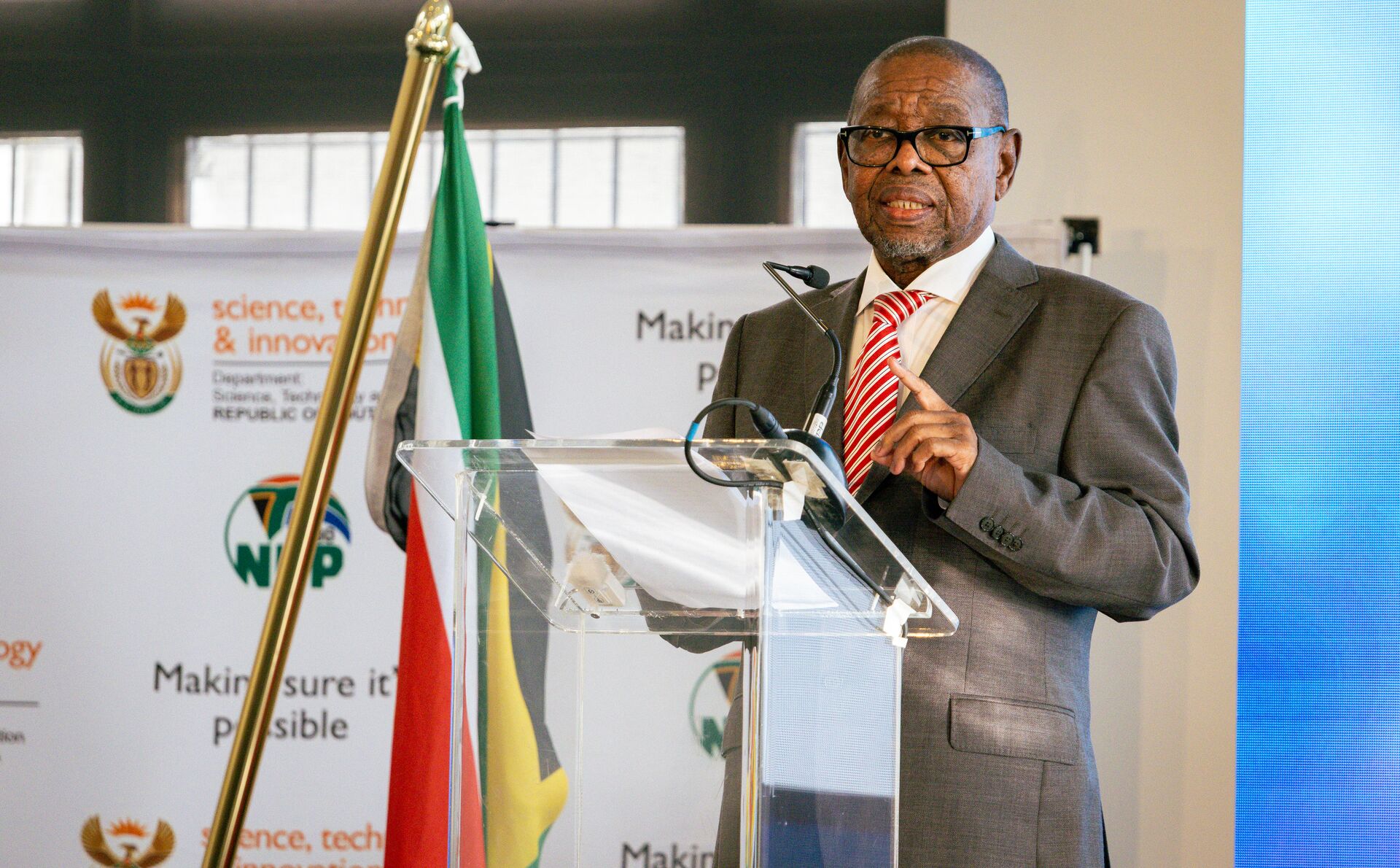
I am honored to be delivering this opening address to the World Conference on Science Journalists 2025. I wish to take this opportunity to extend a special South African welcome to our guests from various parts of the continent and the world.
As a country, we regard it as a profound honor to host this prestigious event. For us, the 2025 World Conference of Science Journalists is special in a number of respects. First, as you may be aware, it is the first time that it is being held on the African continent.
Second, it comes just a week after our country has concluded a highly successful G20 Presidency, which like this Conference, was hosted on African continent for the first time.
Third, it takes place on the occasion of the fourth anniversary of SADC Science Journalist Training Course. The first course took place during the World Science Forum in 2022 in Cape Town in partnership with UNESCO, the South African Science Journalism Association, the SADC Secretariat, and Stellenbosch University.
All these partners have continued to support this training course over the last four years, and I am pleased to indicate that this year’s training course includes journalists from over 12 SADC countries.
It is worth noting that, all these three important international fora: the 2022 World Science Forum, South Africa’s G20 Presidency and now the 2025 World Conference on Science Journalism, were all firsts for the African continent.
Key features of the Conference
The first issue I wish to reflect on is some of the key features of the 2025 World Conference of Science Journalists. This year, the conference offers delegates a comprehensive programme that includes three plenary sessions with three keynote speakers, 58 parallel sessions in the form of seminars, workshops, and lectures with 196 speakers.
All this provides delegates with an opportunity to interact but also to benefit from peer exchanges and the insights of various guest speakers. The hosting of this Conference does not just affirm our status as a preferred destination for global conferences; it also provides us with a unique opportunity to showcase South Africa and Africa’s science and cultural landscape.
This is why this Conference includes 21 field trips to date. I am informed that some of these trips took place yesterday and some will be happening over the next few days, including a visit to the site of the Square Kilometre Array, one of our country’s premier science projects.
The importance of the theme for WCSJ 2025
The second issue I wish to reflect is the importance of the theme that you have chosen for this year’s World Conference of Science Journalists, which is “Science journalism and social justice: journalism that builds understanding and resilience,”
Your chosen theme is particularly apt and has a number of implications for science journalism, scientific knowledge, science policy, and the well-being of society.
First, your theme calls for us to consistently examine the value of science by constantly asking how science helps us to address global challenges such as inequality, armed conflict, pandemics and other health challenges, climate change, and related environmental calamities.
Second, your theme enjoins us to constantly assess how science is communicated and how such communication influences social attitudes towards science.
Third, and perhaps more fundamentally, the call for social justice in your theme also requires us to remain vigilant and ensure that scientific knowledge or its products are always used for the advancement of humanity.
The call to be vigilant is particularly urgent today when we are witnessing the use of emerging technologies such as AI not only for the targeted killing of civilians in places such as Gaza, but also, how the same technology is being used in the targeted killing of journalists.
The International Federation of Journalists (IFJ) reports that since the 7 October 2023, over 248 journalists and media workers, were killed and that they have evidence that “the Israeli army has deliberately targeted journalists, and some of these cases are currently the subject of a complaint file before the International Criminal Court (ICC)”.
Flowing from this, what is the role of science journalism in a context where countries continue to sell weapons to other countries that are committing genocide and other human rights violations?
South Africa’s efforts to promote science journalism.
The third issue I wish to reflect on is our efforts to promote science journalism as a country. From the perspective of our Department of Science, Technology and Innovation, science journalism is an integral part of our Science Engagement programme.
Through this Programme, we intend to build a society that is knowledgeable about science, is science literate and is able to form independent opinions on science issues.
In this connection, we view science journalism as a knowledge intermediary that includes translative science communication in which complex scientific knowledge is adapted into simple language to be understood by all.
This is necessary in bridging the gap between scientific research and its application, as well as building the pathway to the potential societal impact of research.
We can confidently say that South Africa has a well-developed science journalism based on the findings of the inaugural 2022 South African Public Relationship with Science survey.
This is a five-yearly evaluation of how close as a nation we are getting to achieving the society that, as mentioned earlier, should be knowledgeable about science, be science literate and be able to form independent opinions on science issues.
The survey revealed that television (60%), followed by the internet (52%) and then radio (51%), were the most widely used sources of knowledge on science and technology.
There is also something that science journalists in our country are doing right in their coverage of science. Additionally, our aim is to establish science communication that enhances our Science Engagement programme.
It is for this reason that we have linked up with both mainstream and alternative media to provide young unemployed journalism graduates with science journalism employment experience.
We have managed to place slightly more than forty journalism graduates per annum for the past two years, and our Department provides their monthly stipends. Participating mainstream media channels include SABC, News 24 and Power FM – while roughly 25 community media stations are participating.
Our work in advancing Science Engagement found greater expression through the Declaration of the recently held G20 Leaders’ Summit, which endorsed the work of the G20 Research and Innovation Working Group (which was chaired by our Department).
Part of the Declaration stated that “we undertake to implement the G20 Recommendations on Science Engagement, which aim to broaden participation in and make science accessible to all in society, bolstering our commitments to Open Science.”
All this is given greater impetus by our Department’s recently adopted mantra, which is: Placing, Science, Technology and Innovation at the Centre of Government, Education, Industry and Society.’
What we expect from the WCSJ
The fourth and final issue I wish to reflect on is our expectation of this 2025 World Conference of Science Journalists. We hold the view that part of our responsibility as policy makers, scientists and science communicators is to encourage governments to embrace science- driven decision-making.
Therefore, science journalism has a much bigger role to play in society. For this reason, it is our expectation that the 2025 World Conference of Science of Journalists will critically reflect on and provide clear recommendations on the role of science journalism in:
- Actively combating discrimination, stereotypes, or biases and promoting human rights and the dignity of persons, (especially marginalised groups) in how science is communicated;
- Responding to the challenge of fake news and misinformation and how this impacts public attitudes towards science;
- Integrating new technologies such as AI into science journalism and doing so without compromising the integrity of the profession;
- Addressing the capacity disparities in science journalism on the African continent and between the Global South and the Global North; and
- Using science journalism as a bridge to facilitate science diplomacy and the building of global solidarity.
In conclusion
Putting a conference like this together is a huge and complex logistical project and I wish to thank all our national and international partners who contributed in a variety of ways to ensure the hosting of this historic conference, including our host venue, the CSIR.
Esteemed Colleagues, science journalism has a vital role to play not only in ensuring that we build an appreciation for the value of science in society, but also in ensuring that we use science to build a just and humane world as the theme of this conference enjoins us to do.
I wish you a productive conference and look forward to the outcome of your deliberations. It is now my honor and privilege to declare the World Conference of Science Journalists 2025, officially open.
Thank you for your attention.