
Programme Director, Ms Lerato Ditshego;
Chairperson of the Portfolio Committee on Science, Technology, and Innovation, Ms Tsakani Shiviti;
Acting Director-General of the Department of Science, Technology, and Innovation, Mr Daan Du Toit;
Chairperson of the CSIR Board, Mr Vuyani Jarana;
Members of the CSIR Board;
Director-General of the Department of Science, Technology and Innovation (DSTI), Dr Mlungisi Cele;
Members of the Diplomatic Corps;
Chief Executive Officer (CEO) of the CSIR, Dr Thulani Dlamini;
Mr Leen Govaerts, Director Water & Energy Transition at G-STIC, the cohosts;
Senior Executives and Officials of the DSTI and the CSIR;
Senior Government officials;
Heads of Research and Academic Institutions;
Leaders of Business and Industry;
Distinguished guests;
Members of the media;
Ladies and gentlemen:
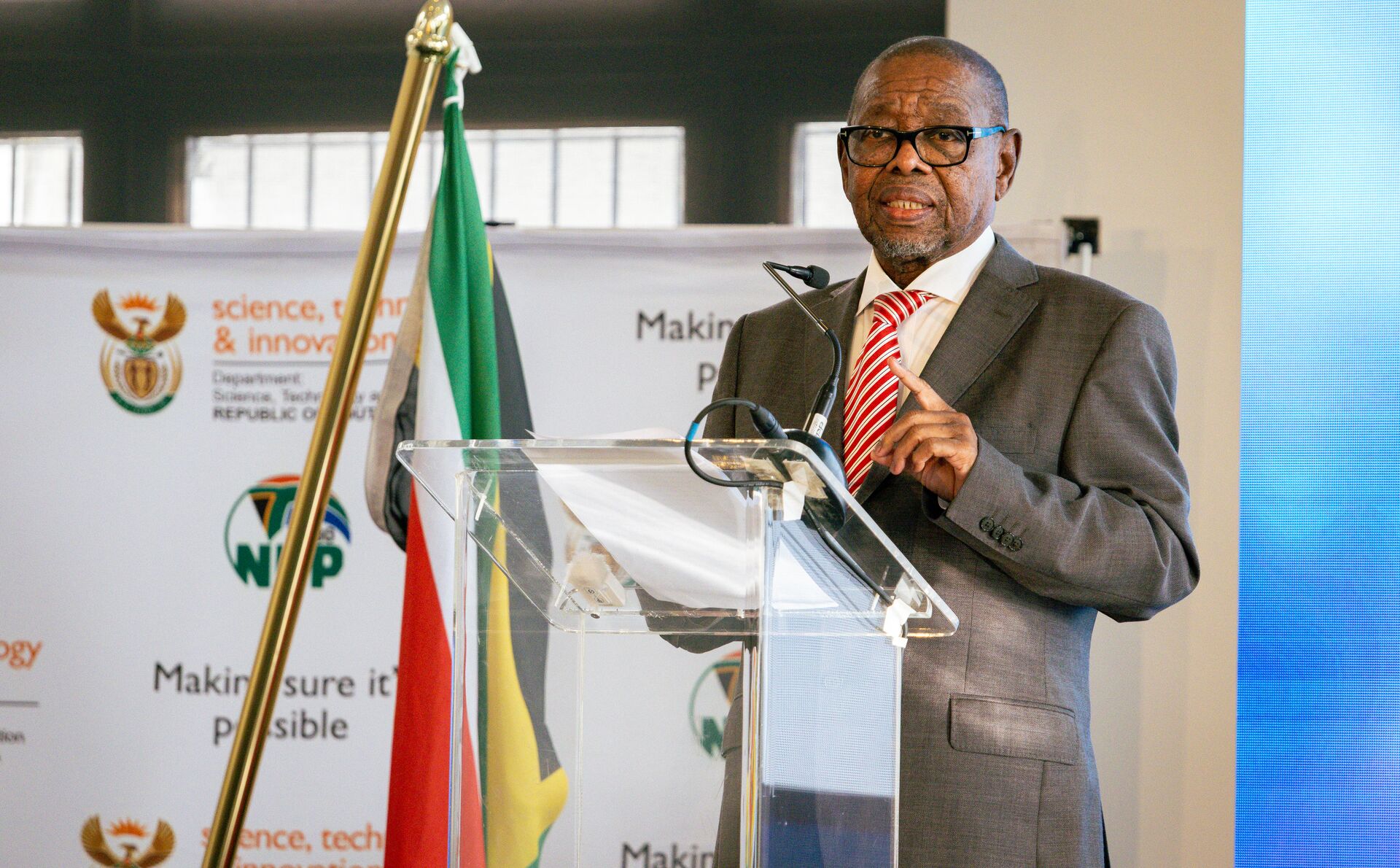
I am honoured to deliver this keynote address on this important occasion - the 9th Biennial Conference of CSIR, which is held in collaboration with the Global Sustainable Technology and Innovation Community (G-STIC).
I would have liked to be there with you, but unfortunately, due to official commitments in support of our President, His Excellency, Mr. Cyril Ramaphosa, at the EU Global Gateway Forum, it was not possible.
I must also say that your chosen theme for this conference, which is “Science, Technology and Innovation for a Sustainable Future”, is particularly apt, as it affirms the role of science, technology and innovation in securing the well - being of humanity and building a more just and humane world.
This theme also aligns with the mantra of our Department, which is “Placing Science at the centre of Government, Education, Industry and Society.’ Guided by your theme, I wish to reflect on a few things which I believe a conference of this stature should consider.
The first is the fact that this conference pleasantly coincides with the 80th anniversary of one of South Africa’s premier public research institutions - the Council for Scientific and Industrial Research (CSIR).
The CSIR is one of the success stories of the transformation project that has been underway in our country since we attained our democracy in 1994. Formed in 1945, the apartheid government used the CSIR as part of its oppressive machinery to among others, produce weapons to commit all manner of atrocities against our people in South Africa and parts of the African continent.
With the advent of democracy, the democratic government repositioned CSIR to play a more progressive role in society and for it to use its research and scientific capabilities for the development of our country and continent.
In support of government’s strategic priorities, over the past three decades of our democracy, the CSIR has been pivotal in advancing key sectors such as health, defence, energy, mining, manufacturing, and digital innovation, among others.
In the process, the CSIR has also supported many Small, Medium and Micro Enterprises and we would like to see these enterprises do much more, with more resources.
Therefore, as Minister of Science, Technology, and Innovation, I am proud to state that the CSIR plays a profoundly progressive role in our country’s development agenda and continues to be one of the most well-run public institutions in our country.
The second issue I wish to reflect on is the strategic importance of this conference for Africa’s development agenda. This conference showcases the remarkable calibre of research emerging from Africa. This aspect of your conference is extremely important to give us an objective assessment of our continent’s research capabilities in a number of critical areas.
It is also critical for enabling the African continent to strengthen its research capacity and define what I refer to as a sovereign research agenda.
The development of a sovereign research agenda is essential for Africa’s capacity to develop sustainable solutions for some of its most urgent challenges such as food sovereignty, energy security, the need for climate resilient technologies and ensuring that Africa possesses credible pandemic preparedness capacity.
In addition, the African continent cannot afford to be left behind in the Artificial Intelligence revolution that is underway the world over. A sovereign research agenda will ensure that Africa does not fall into the trap, as was the case with previous technological revolutions, of being reduced to mere importers and consumers of other people’s AI solutions.
The development of a sovereign research agenda for Africa is absolutely critical. As the African continent we do not want a repeat of the tragedy we experienced during the global outbreak of the Covid-19 pandemic, when the lives of millions on our continent were dependent on the vaccines from other parts of the world.
The third and final issue I wish to reflect on is the importance of advancing science, technology, and innovation under the current geopolitical environment.
This conference takes place at a time when the world is confronted with a complex set of interconnected global challenges, which present all of us with a variety of existential threats.
We are seeing unprecedented levels of global inequality, the persistence of armed conflict, which are compounded by the emergence of new challenges such as the cyber-attacks and data heists, disruptive technologies, and the growing threat of pandemics.
There is of course also the immeasurable ecological crisis that confronts us and manifests in runaway global warming, destruction of whole ecosystems, loss of biodiversity and the acidification of the world’s oceans.
Add to all this, the growing threat to multilateralism as a result of the bullying tactics of some countries and the unfolding genocide in Gaza, which is being livestreamed through our televisions and other devices.
What we learn from the impact of these challenges is that no country will be able to solve these problems alone and also, more than ever before, we have to be intentional about mobilising all the available scientific knowledge in the world, in order to develop sustainable responses to the challenges of our time.
This is why we believe that all countries should support the United Nations’s declaration of the period 2024 to 2033 as the International Decade of Sciences for Sustainable Development. Through this initiative, the UN essentially seeks to mobilise the global scientific community towards addressing the Sustainable Development Goals (SDGs). Again, our Department’s mantra is in line with this.
As South Africa, we have taken a similar approach through our Decadal Plan for Science, Technology, and Innovation (2022-2033). Through this Plan, we seek to:
• Enhance South Africa’s innovation capacity;
• Build and transform science, technology, and innovation human resources;
• Strengthen and transform the research enterprise, and
• Expand partnerships and linkages through science diplomacy.
I believe that a conference such as this provides us with the unique opportunity to reflect on and strengthen our collective response to the challenges to which I have alluded.
In conclusion, as we confront the urgent challenges of our time, we must recognise that science, technology, and innovation carry the power to shape societies and economies, but also to shape the kind of future we can and must build.
Therefore, as policy makers, scientists, researchers, and innovators we carry a huge responsibility to ensure that science, technology and innovation serve the public good, advance social justice and contribute to a more equitable and sustainable future.
It is therefore my sincere hope that you will see this conference as an opportunity to strengthen our resolve to harness science, technology and innovation not only to build knowledge systems that are inclusive, ethical, but also responsive to the needs of our planet and its people.
Let me once again take this opportunity to congratulate the leadership and staff of the CSIR on your milestone of 80 years. To the delegates, I wish you a productive conference and look forward to the insights and conclusions that will emerge from your deliberations.
Thank you.