
The Programme Director, Ms Faith Mangope;
Deputy Minister of Science, Technology and Innovation, Ms Nomalungelo Gina;
Deputy Minister of Higher Education and Training, Dr Mimmy Martha Gondwe;
National Assembly Whip, Ms Altia Sthembile Hlongo;
Chairperson of the Portfolio Committee on Science, Technology and Innovation, Ms Tsakane Shiviti;
Acting Director-General of the Department of Science and Innovation, Mr Daan du Toit
The MEC of Social Development Ms Brenda Moeketsi on behalf of the Premier of Mpumalanga Province;
Dr Esther Mahlangu and her family members;
Our esteemed guest speaker, Prof. Sonya Smith;
Representatives of L’Oreal South Africa, Ms Michelle Gololo and Ms Thandi Kunene;
Distinguished guests;
Ladies and gentlemen:
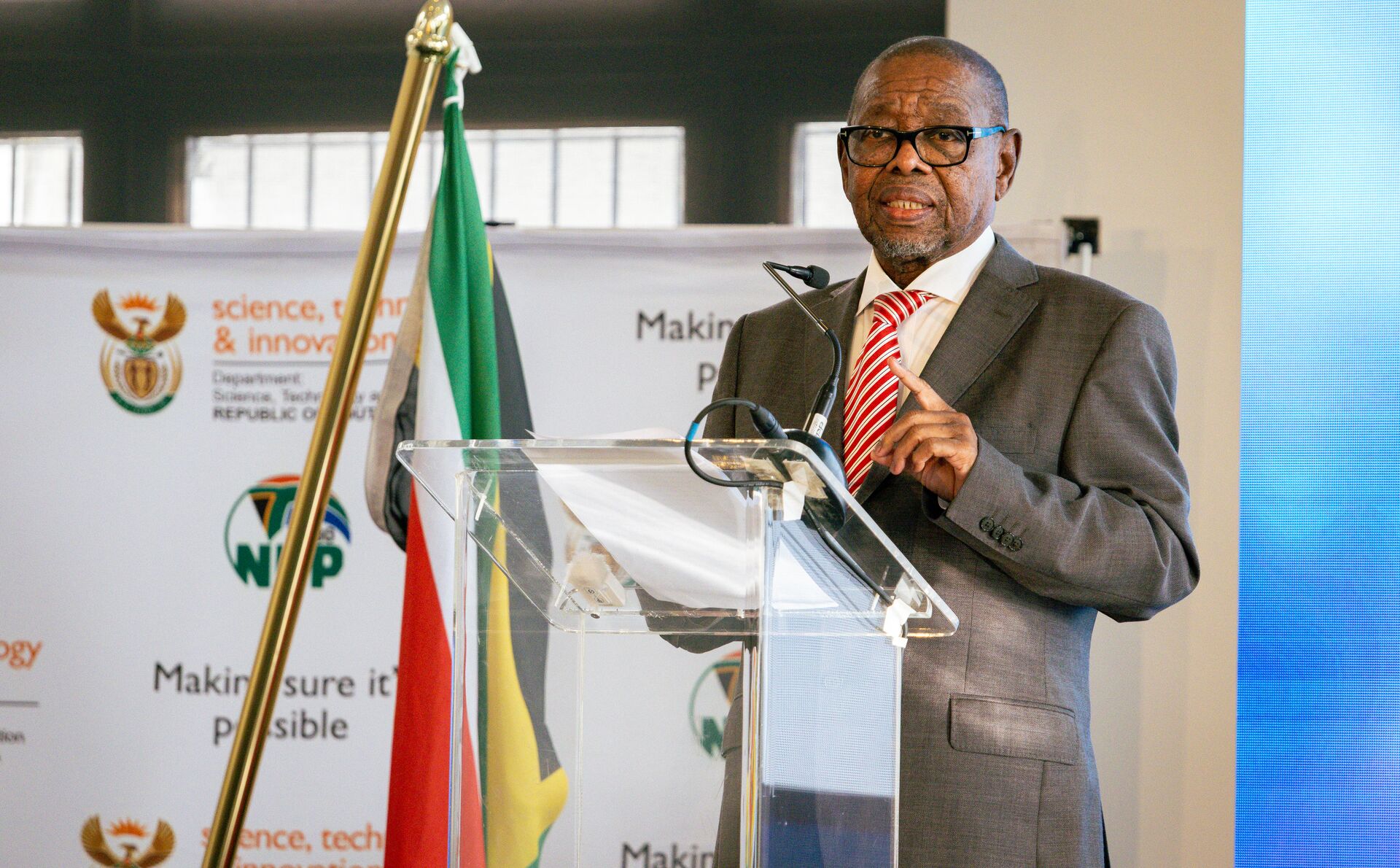
It is my honour and privilege to deliver this opening address on the occasion of one of our flagship projects as the Department of Science, Technology and Innovation-the 2024 South African Women in Science Awards.
Tonight, we are enjoined by the singular mission of acknowledging and celebrating the achievements and contributions of some of our country’s best women researchers and scientists.
One of the distinguishing features of SAWISA is the fact that we rotate the hosting between different provinces and build into it, a national appreciation, recognition, and celebration of a prominent woman from the host province.
In this regard, one of the categories in the 2024 SAWISA has been re-branded as the DSI-Esther Mahlangu Fellowships. We are privileged to have Dr Esther Mahlangu among us and I wish to request that we all rise and acknowledge her presence.
Dr Esther Mahlangu is a renowned artist from this Province who has brought the vibrant art of the Ndebele people to the global stage. Her artistic contributions have played a role in promoting innovation, cultural preservation, and economic development in South Africa and beyond.
Dr Mahlangu exemplifies how the innovation economy extends beyond the Natural and Engineering Sciences. There is therefore a sense in which her accomplishments epitomise the theme for this year’s SAWISA, which is ‘Transition Towards An Innovation Economy: The Role of Women Leaders in STEM.’
Let me also take this opportunity to welcome and acknowledge our guest speaker for this year’s SAWISA, Prof. Sonya Smith from Howard University in the United States.
In 2015, through Prof. Sonya Smith’s leadership, vision, and support, our Department steered the hosting of biennial conferences between historically black colleges and universities (HBCUs) in the USA and historically disadvantaged universities (HDUs) in South Africa.
Thanks to Prof. Smith’s commitment, Howard University increased HBCUs participation in this partnership to Morgan State, Xavier (Louisiana), Auburn, and Western State universities, as well as to Spellman College.
This partnership fosters joint mobility and exchange programmes for black women postgraduate students and faculty between the two countries.
For instance, black women faculty and postgraduate students from HDIs such as the universities of Zululand, Fort Hare, Water Sisulu, Venda and Limpopo have participated in the biennial conferences.
Participation has also been extended to black women faculty and postgraduate students in our universities of technology Tshwane University of Technology, Durban University of Technology, Mangosuthu University of Technology, and Vaal University of Technology.
It is also worth mentioning that, in December 2023, our President, Mr Cyril Matamela Ramaphosa, announced another particularly important and exciting human development initiative- the Presidential PhD Programme (PPhP).
Through this Programme, we intend to accelerate the production of PhD graduates through joint programming with international, continental, and private partners institutions by exposing South Africa’s best PhD students and postdoc fellows to the best knowledge and innovation frontiers, laboratories, industries, and skills-development platforms abroad and in Africa.
Through the Presidential PhD Programme, we also intend to build on alliances, networks, and partnerships such as the one between HBCUs and HDIs to facilitate the placement of PhDs students and postdocs fellows for full time or split time studies or for short-term research and innovation skills development interventions in the continent and abroad.
This Programme has a built-in bias towards women and will be funded through an initial investment of R1bn from our National Skills Fund. It is planned that this initial investment will help leverage an additional R4bn from third party sources such as international partners, industry, other government departments and other philanthropic organisations by 2030.
As part of making our National System of Innovation more responsive, during the last five 5 years, we adopted two epoch-making policy documents, our 2019 White Paper on Science, Technology, and Innovation (2019) and our Science, Technology, and Innovation Decadal Plan (2022-2023).
One of the areas we seek to promote thorough our White Paper and Decadal Plan is innovation through entrepreneurship. In this regard, I am pleased to announce that our Department has provided R53 million as an initial investment to support women led SMMEs in the hydrogen economy.
As some of you may be aware, the Hygroden Economy is one of the key areas articulated in our Decadal Plan for advancement as one of the new sources of inclusive economic growth.
In another priority area- the digital economy- we have partnered with the United Nations Women and Siemens in rolling out the African Girls' Can Code initiative (AGCCI) in South Africa.
This initiative will help in increasing the numbers of young women in coding and related technology driven careers, thus enhancing women SMME development in the Coding and cognate areas.
I am also excited to announce that, we also intend to publish a SAWISA Commemorative Booklet in the near future. This Commemorative booklet will feature the profiles and achievements of past winners, highlighting the booklet as a testament to the outstanding contributions of women in science over the years, and its role in inspiring future generations.
Ladies and gentlemen, these interventions that I have listed, are some of the ways in which we as the Department of Science and Innovation are providing practical support to, and for the entry and development of, women in science, technology and innovation.
As we reflect with great pride on the interventions, we have made to support women scientists and researchers, we remain mindful of the fact that there is still a lot of work that still needs to be done to ensure that our country’s science, technology and innovation landscape is truly representative of our country, in terms of race, class origins and gender.
Data from UNESCO shows that women still constitute 33.3% of the global research workforces. While we are ahead of the global curve as women constitute 46% of South Africa’s research workforce, this is however far from ideal (gender parity), given that women constitute 51% of our total population as a country.
For this reason, the issue of transforming our country’s science, technology and innovation landscape will be one of my and Deputy Minister Nomalungelo Gina’s top priorities.
We hope we can rely on the support of all our entities and other key stakeholders to ensure that we transform our National System of Innovation, in a meaningful way.
In conclusion, to the women scientists and researchers who are being honoured this evening, it pleases me to see that your research projects cover a diverse array of key areas that are critical for our country’s health, economic development and general well being.
It is therefore my hope that the recognition that you are receiving tonight will be used to help the general public to develop a deeper appreciation for the role and contribution of science, technology, and innovation in their daily lives.
The fundamental aim of science is to solve the problems facing humanity at all levels. That is why our slogan as the DSTI says “Making sure it is possible’”!
But also, we should use your being recognised here tonight to inspire hope in the many young girls and young women in the various parts of our country, who may have been told that they are not capable of becoming scientists, researchers, academics or innovators. Let your work serve as inspiration for such young girls.
Congratulations once more on your outstanding achievements. Malibongwe igama lamakhosikazi!