
Programme Director, Mr Frans Ramonyatse, DHET Regional Manager
Limpopo MEC for Education, Ms Mavhungu Lerule-Ramakhanya
Fetakgomo Tubatse Mayor, Cllr Eddie Edwin Maila
Fetakgomo Tubatse Speaker, Ms Pulwane Reneilwe
Acting DSI Deputy Director General, Ms Rebecca Maserumule
Director-General in the Office of the Limpopo Premier, Mr Nape Nchabeleng
Mankotsane Tribal Council
All Chairpersons and CEO of our SETAs, DSI and DHET entities
Principals of TVET and CET Colleges
Head of the South African National Energy Development Institute Energy (SANEDI) Secretariat, Prof. Sampson Mamphweli
SACP Provincial Secretary, Dr Chuene Malebana
COSATU Provincial Secretary, Mr Hangwani Mashau
Basic Education Circuit Manager, Mr Elmon Seroka
Moloke Primary School Principal, Ms Patricia Raphiri
Principals of other schools in the circuit
All learners here today
Members of the media
Distinguished guests
Thobela! Good morning!
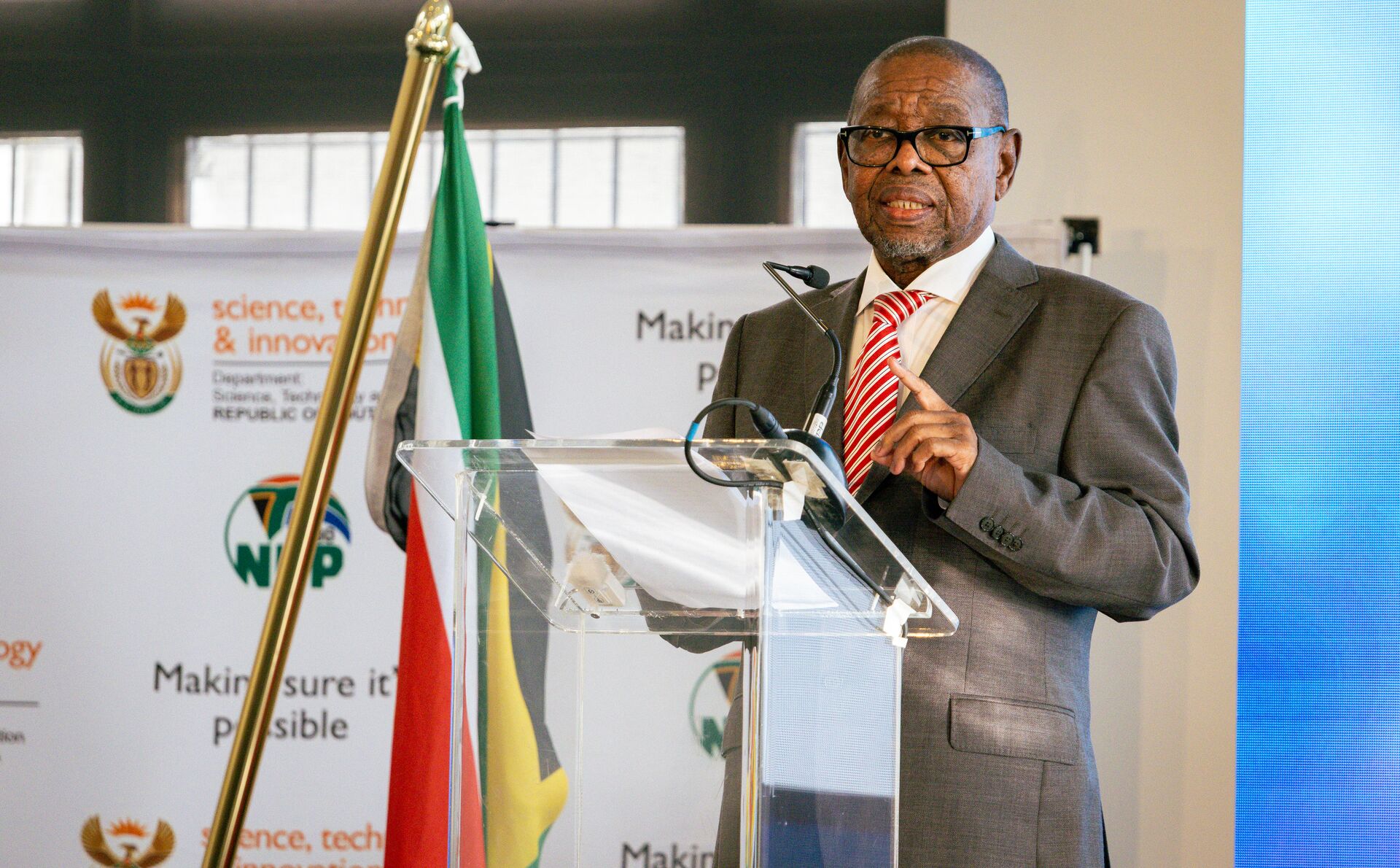
It is indeed my honour to be here this morning, at the official handover of the Moloke computer/media lab and the science and education imbizo.
Our gathering today is a ministerial imbizo, at which we will engage with you and listen to your concerns and ideas on matters relating to education and skills development.
Through this imbizo we want to promote the active involvement and participation of the public in the implementation of government programmes and build a partnership between government and the people.
I am therefore happy to see all of you today, and most especially our learners who are our main and special guests today.
Our event today is also taking place during Human Rights Month, which is commemorated to remind South Africans about the sacrifices that accompanied the struggle for the attainment of democracy in South Africa.
We are here today to launch a computer media lab, to help our learners to master the basics of science, technology and innovation, so as to produce an educated population, including future scientists.
The theme for Human Rights Day on 21 March 2023 is "Consolidating and Sustaining Human Rights Culture into the Future".
My remarks today will cover the purpose and importance of today's event, as well as other related work and skills development initiatives we are doing with the technical and vocational education and training (TVET) college sector and the sector education and training authorities (SETAs) in this province; partnerships with the community colleges through our science initiatives; and other science and technology initiatives, including the Technology Stations Programme. We will talk about these other initiatives so that the work we are doing in this province in higher education, science and innovation is understood holistically.
Ladies and gentlemen
As you can see today, I am not alone, I am with your MEC for Education here in Limpopo, Ms Mavhungu Lerule-Ramakhanya and the Fetakgomo Tubatse Mayor, Cllr Eddie Edwin Maila.
I am also joined by senior government officials including Chairpersons of our SETAs, principals of our colleges, our CEOs, our deputy directors-general, led by Acting DSI Deputy Director-General: Technology Innovation, Dr Rebecca Maserumule, and the Director-General of the Limpopo Premier's Office, Mr Nape Nchabeleng.
Today we also have an exhibition with displays from more than 36 of our institutions, such as SETAs, science councils, TVET and CET colleges.
I hope all learners and parents had an opportunity to visit our stalls this morning. For those who have not visited them yet, you still have an opportunity after this programme to visit all the stands to get invaluable information from both the Departments of Higher Education and Training, and Science and Innovation.
Kgoshi Mankotsane, I must indicate that all the three spheres of government and our partners are here today. We have worked together to ensure that this state-of-the-art computer lab project is built and becomes an asset for this and surrounding schools.
My gratitude also goes to the principal of the school, Ms Patricia Raphiri, who has opened the gates of the school and allowed my team to work with the school to ensure that this project and this imbizo is a success. Our thanks to her and the entire school governing body.
Ladies and gentlemen
Our relationship with the Department of Basic Education is a strategic and complementary one. Basic Education hosts our community colleges in the majority of its schools. Nearby, we have two of our community education and training satellite centres, the Nkotsane and Jacob Marwale Satellite Learning Centres, which I will talk about later.
Taking further from a special ministerial project in KwaZulu-Natal involving four schools that were equipped for their learners to learn coding in 2021, today I will be handing over this off-grid computer centre here at Moloke Primary School in the Sekhukhune District of Limpopo.
I am leading this project from the Ministry of Higher Education, Science and Innovation, in collaboration with the Department of Science and Innovation and Stellenbosch University's Centre for Renewable and Sustainable Energy Studies.
History and positioning of the project against national priorities and goals
This off-grid media lab project is a project initiated and funded through the Department of Science and Innovation's Renewable and Sustainable Energy Research Hub and Spokes Programme.
The first media lab was piloted at Mugoidwa Secondary School, and it became a success and a great asset to the community.
Apart from assisting in teaching and learning, the lab was also used by the National Youth Development Agency to train 30 young people in business development. This demonstrates that government departments and entities can work closely to deliver services to the nation.
The computer lab project is the culmination of a long-standing investment by the Department of Science and Innovation in the development and application of scientific knowledge domains.
Of paramount importance is the exposure of rural school learners to technologies that place them in a good position to access and use modern technologies and new forms of knowledge.
The National Development Plan (NDP) has identified science, technology and innovation (STI) as primary drivers of economic growth, job creation and socio-economic reform.
The labs also fit well into the STI Decadal Plan, an implementation plan for the White Paper on STI.
Such labs are also meant to advance publicly funded Intellectual property to enable technology localisation, job creation and service delivery to our people. The idea is to use as much locally developed intellectual property.
Prof. Mamphweli has already taken us through the key features of this building, which is designed to be user friendly as well as to be environmentally friendly and off-grid.
Another important issue I must mention is that, through this project, Stellenbosch University will be able to train interns from technical and vocational education and training colleges.
The university has already recruited and trained one TVET college graduate in solar photovoltaic energy technology and monitoring the media labs.
This project will enable our interns to secure their diplomas as part of their internship training. They need 18 months of on-the-job training before they can get their qualification from a TVET college.
What is also important is that our interns will get their qualification equipped with the scarce skills in the renewable energy sector, in which most people in rural areas do not normally participate.
With the media laboratory at Moloke school, our Sekhukhune TVET College is also involved, and this partnership will unlock the training of TVET college graduates in the scarce skills area of renewable energy.
The media lab is off-grid and this was done to relieve the school from the pressure of buying electricity to power the computers.
I want to take this opportunity to congratulate the Department of Science and Innovation, Director-General Dr Mjwara and his team, as well as Prof Sampson Mamphweli and Stellenbosch University's Centre for Renewable and Sustainable Energy Studies, and my ministerial project team for this job well done. Thank you! Re a leboga!
I also would like to congratulate the two Directors-General for ensuring that both DHET and the DSI have set another good example of working together to advance critical projects in the higher education, science and innovation landscape.
Increasing partnerships between TVET colleges and SETAs in Limpopo
Ladies and gentlemen
Our TVET colleges are required to scale up occupational programmes, which means that they need to seek additional sources of funding through concrete and sustainable partnerships with various stakeholders, including with our SETAs.
We also want our TVET colleges to be drawn into our STI system and also become centres for innovation themselves.
We are strategically repositioning our SETAs to strongly support our TVET colleges, because it is important for colleges to become more embedded in industry and ensure that their curriculum is aligned to the pillars of what drives the economy of any area in which they are located.
It is for this reason that Limpopo TVET colleges, like all our colleges, are expected to have very strong partnerships with our SETAs and industry.
In Limpopo, these partnerships cover a variety of areas such as work-integrated learning and work-based exposure for students, the capacity development of lecturers through training and work placement, the donation of or funding for new infrastructure or to refurbish existing infrastructure and training equipment, among others.
Here in Limpopo, some of the projects funded by SETAs and industry at our TVET colleges include the following:
- The Stellenbosch University, Maastricht University and Vhembe TVET College work on water-smart agriculture.
- The Capricorn TVET College and Talent Emporium Academy work on water and wastewater management.
- The 4IR Lab at Vhembe TVET sponsored by the Education, Training and Development Practices
- The Manufacturing, Engineering and Related ServicesSETA funding of the upgrading of the 4IR Lab at Vhembe TVET College.
- The Finance, Accounting, Management Consulting and Other Financial ServicesSETA donation of 530 laptops to Vhembe TVET College.
- The partnership between the Waterberg TVET College with the University of Limpopo for the articulation of primary agriculture students into the university, and the participation of our Limpopo TVET College students in the WorldSkills Competitions funded by our SETAs.
- Our consolidated SETAs current projects in Sekhukhune District amounts to R179,219 million. This amount includes money for learnerships, apprenticeships, internships, TVET placements, university graduate placements, bursaries and short skills projects.
We are planning projects to the value of R35,944 million in the next financial year, which will start in April.
Increasing the number of students in TVET colleges in Limpopo
MEC Lerule-Ramakhanya, in my media briefing on 24 January this year, on the state of our readiness for the beginning of the 2023 academic year, I indicated that our planned national TVET colleges enrolment for 2023 was expected to be 497 032 for ministerially approved programmes, and an additional 59 383 (national) headcount enrolment for programmes that funded through other funding sources, bringing the total planned TVET enrolment for the academic year to 556 415 nationally.
Of the total planned enrolment of 556 415, a total of 52 436 enrolments were planned for TVET colleges in Limpopo.
Over the past years, since Covid-19, the fiscus baseline has received numerous budget cuts leading to a downward trend in the above figures, especially in ministerial programmes.
As part of our strategy to close the gap towards the realisation of the National Development Plan target for 2030, DHET's TVET branch has engaged regional managers and principals of colleges about various options for supporting accelerated access to and growth of the sector.
I can indicate that a task team is currently looking at potential expansion strategies for our TVET sector.
The task team is looking at some of the following options:
- Assessing the available excess infrastructure (classrooms, workshops, etc.) to cater for additional enrolments. In the context of Limpopo, this requires a relook into some of the closed former colleges of education and schools which are no longer in use. The collaboration between the provincial departments and various TVET colleges is important, as MEC Lerule-Ramakhanya is aware.
- Assessing the capacity of our colleges to offer multimodal/hybrid teaching and learning, i.e. distance learning. I must indicate in this regard that the Limpopo TVET colleges are already leading in online applications and registration of students nationally. I congratulate the province in this regard. This capacity of the province should be tested on how it can support the hybrid (blended) teaching and learning which, in the long run, will bring a new trajectory in distance learning in certain programmes which do not require practical learning.
- The Task Team is also looking at the assessment of the human resources (i.e. lecturers) capacity to cater for the growth of the sector. Colleges in Limpopo already have partnerships with universities and universities of technology to deal with the professional development of lecturers. This is an important aspect, which is aimed at ensuring that there is sufficient capacity for the growth of the TVET colleges and the provision of the skills required by the economy. Furthermore, our colleges continue to train lecturers on subject matter content, new curricula and programmes that relate to the 4th industrial revolution (4IR).
- The Limpopo TVET colleges principals are working very well with various levels of governments in Limpopo (i.e. provincial, district and local government). This creates opportunities to realise some of the above strategies to increase the number of students in the sector.
Sekhukhune Skills Centre
One of my major skills development project in the Sekhukhune District is the construction of the Sekhukhune Skills Centre.
On 21 October 2021, I held a sod-turning ceremony for the Sekhukhune Skills Development Centre. The project was allocated R146,9 million, which was used as follows: R131 million for the building of the Skills Development Centre; R9 million for capacitation of informal traders and construction of trading stalls for 45 informal traders operating in the surrounding areas; and R6,9 million to construct an access road into the centre.
The centre has now enrolled its first cohort of learners on 16 January 2023, 20 in plant production, 35 in IT systems development and support, 45 in small business, 35 driving licences and 20 in new venture creation, while other programs in water and wastewater operations, bricklaying, carpentry and electricity are planned for the period up to May 2023.
We will be officially opening this centre very soon.
Strengthening the communication on the good work done by SETAs and TVET colleges
Ladies and gentlemen
The Limpopo Human Resource Development Council (HRDC) is one of those important platforms that allows various SETAs, universities and TVET colleges to present and showcase their support for the skills required by Limpopo.
These engagements are attended by MECs and District Executive Mayors. The good work needs to be up scaled and reinforced.
The most recent Limpopo HRDC meeting was two days ago on 22 March 2023 at Vhembe TVET College. Members of the Limpopo HRDC also went on a tour of the Vhembe TVET College Makwarela Campus. I must indicate that this is one of the colleges that is leading in innovation and partnerships with industry and SETAs.
On partnership between the community college and the Moloke Computer Lab
Ladies and gentlemen
Our Limpopo Community College has identified two learning sites to benefit from this computer lab we are handing over today, namely, the Nkotsane and Jacob Marwale Satellite Learning Centres.
The two learning sites stand to benefit in the form of upskilling and capacitation of lecturers in digital literacy, the introduction of the Information Technology and Communication Learning Area in the General Education and Training Certificate qualification, and the opportunity to access the internet.
For the Jacob Marwale Centre, which operates from Mokhulwane School, there is an opportunity for the college to have a fully fledged centre which can expand on skills provision. The hosting infrastructure is solid, it is at the centre of the community and it is no longer used by the Provincial Education Department. I have held discussions with the MEC on the possibility of transferring these facilities to our CET college.
Science and innovation interventions
Ladies and gentlemen
On some other important interventions from my Department of Science and innovation, we have a science engagement programme that seeks to develop a science-aware and science-literate society.
Our engagement programme has evolved greatly and to the extent that we have now regularised its impact evaluation through a national survey.
The South African Public Relationship with Science Survey, which is the first of its kind in this country, was conducted last year between September and December.
When the survey report is released towards the end of the current financial year (2023/24), we will know how connected the nation is to science in terms of issues such as attitudes to and perceptions of science, as well as trust in science, scientists and science institutions.
I must indicate that we are one of only a few nations that conduct such surveys and it is our intention that, within two years of releasing the survey report, we will conduct a country comparison study to establish how we compare to those nations that like us, are investing in public engagement with science.
Our science and innovation interventions in this province include the work we are doing with the Vhembe District Municipality by deploying innovation champions to its local economic development (LED) offices to foster innovation-driven LED.
Through this project we have invested R3,5 million over two years.
The project focuses on:
- Mapping local innovation systems using the Local Innovation Advancement Toolkit (LIAT).
- Utilising LIAT in integrated development planning (IDP) processes.
- Incorporating innovation in LED strategies.
- Creating linkages among actors and agents within local innovation systems and ensure linkages between local systems and the national system of innovation (NSI).
- Sourcing funding and expertise from the NSI to implement LED interventions locally.
Since its inception in 2021, the project has so far achieved the following:
- Six innovation champions were deployed at the Vhembe site.
- The LED strategy was revised to mainstream innovation as a driver of inclusive development.
- A mapping of production value-chains was completed to identify catalytic interventions to drive job creation and to broaden economic participation.
- Community structures were set up to engage communities on the new plans for communities around economic interventions that will be implemented in the municipalities of the Vhembe District.
Mobile Applications Laboratory (mLab)
Another project we have launched is the Mobile Applications Laboratory Southern Africa (mLab) in Polokwane.
We established this initiative in 2012 through our partnership with the Finnish Ministry of Foreign Affairs, World Bank InfoDev, the Innovation Hub, and the Council for Scientific and Industrial Research.
The mLab project places great importance on driving social and economic impact within the ICT sector.
The initiative has strong focus on empowering youth and driving inclusive innovation within the digital economy through its three main programmes, namely, skills development, enterprise development and technology development.
Since its inception, the mLab in Limpopo has provided support as follows:
- mLab Start-Up Accelerator – 20 startups incubated.
- Over 100 SMMEs supported through training workshops.
- Through the CodeTribe, we provided 100 participants, and 60-80% employment opportunities.
Technology Stations Programme
We also have a programme called the Technology Stations Programme, which in this province is conducted in collaboration with the University of Limpopo. Most people refer to this project as the Limpopo Agri-food Tech Station.
We have invested R7 million rand annually in this project, which provides Technology stations, mostly at universities of technology, with specialised equipment and funding, to provide technology support to firms, especially SMMEs, including potential entrepreneurs and co-operatives.
This programme incorporates industry learning (types of problems and essential skills) back into enhanced curriculum development, thereby enhancing teaching and student training.
In conclusion, ladies and gentlemen
I want to thank the ETDP SETA for donating 300 school bags, pencils cases and rulers, the Fibre Processing and Manufacturing SETA for donating 300 pairs of shoes and the M&Q for donating another 300 pairs of shoes for needy learners. Re a leboga!
All of these will go a long way to changing the lives of the learners at this school and all the other schools that have been identified in this district.
I thank all the organisers from both my departments, SANEDI, the Moloke Primary School Principal and school governing body and the Mankotsane Tribal Council.
Thank you very much to the Premier Stanley Mathabathe, MEC Lerule-Ramakhanya, and Fetakgomo Mayor, Cllr Maila for all your support.
Most importantly, I thank all the learners and their parents, and all the members of the community, who took the time to join us in this imbizo.
Re a leboga haholo! Enjoy your day further.